500+ fish species, an endemic fish found nowhere else on Earth, nesting sea turtles, reef sharks, and Caribbean waters ranked among the clearest on the planet. Here’s everything you’ll actually see in Cozumel’s Marine Life, and exactly where and when to see it.
What Marine Life Is in Cozumel?
Cozumel’s waters, protected by the Arrecifes de Cozumel National Marine Park and fed by the Mesoamerican Barrier Reef, the world’s second-largest reef system, are home to over 500 fish species, 100+ coral species, three sea turtle species, nurse sharks, spotted eagle rays, and the Splendid Toadfish: an endemic species found nowhere else on Earth. Visibility regularly reaches 30–50 meters (100–160 ft), making Cozumel one of the premier diving and snorkeling destinations on the planet.
Why Cozumel Has Some of the Most Diverse Marine Life on Earth
Ask any Cozumel local why the reef here is so spectacular, and you’ll get the same answer: location, protection, and current. Those three factors combine to create conditions that few places on the planet can match.
| 500+ Fish Species |
100+ Coral Species |
50m Max Visibility |
2nd Largest Reef System |
1996 Marine Park Est. |
The Mesoamerican Barrier Reef
Cozumel sits on the eastern fringe of the Mesoamerican Barrier Reef System (MBRS), stretching approximately 1,000 kilometers from the tip of Mexico’s Yucatán Peninsula through Belize, Guatemala, and Honduras. It is the second-largest coral reef system in the world, the first being Australia’s Great Barrier Reef. Cozumel’s reefs form the northern anchor of this vast living structure, and the island’s underwater topography, dramatic drop-off walls, shallow plateaus, and labyrinthine coral canyons, gives marine life an extraordinary range of micro-habitats to colonize.
The result is a concentration of biodiversity that consistently places Cozumel among the top five dive destinations on Earth. On a single two-tank dive with our guides at Pelagic Ventures, it is entirely normal to encounter sea turtles, nurse sharks, queen angelfish, spotted eagle rays, and moray eels, all before lunch.
cozumel-mesoamerican-barrier-reef-overview.jpg
Arrecifes de Cozumel National Marine Park
In 1996, the Mexican government designated the island’s southwestern reef corridor as the Arrecifes de Cozumel National Marine Park, administered by CONANP (Comisión Nacional de Áreas Naturales Protegidas). The park covers approximately 11,988 hectares of reef, encompassing most of Cozumel’s premier dive sites.
What does protection mean in practice? No anchoring directly on reef (boats use mooring buoys). No spearfishing, no coral collection, no feeding of fish. Entry fees collected from divers fund reef monitoring and enforcement. The result, three decades on, is a reef that is measurably healthier than most of the Caribbean, living coral coverage remains high, fish populations are robust, and key species like the Nassau Grouper, once commercially overharvested, are recovering.
Local Expert Insight
After 30 years of diving these reefs, our guides at Pelagic Ventures have watched the marine park transform what was once a stressed reef into one of the Caribbean’s healthiest. The mooring buoy system alone has removed the single most destructive factor from daily dive operations. When you pay your dive fee, you’re directly financing the reef you came to see.
Why Animals Thrive Here: Visibility, Currents and Water Temperature
Cozumel’s renowned visibility, regularly 30 meters (100 ft) and peaking at 50 meters (160 ft) on ideal days, is not just a photographic bonus. It is a product of the island’s unique oceanographic conditions. The Cozumel Channel, separating the island from the Yucatán mainland, funnels a persistent north-to-south current that constantly refreshes the water, flushing nutrients through the reef while keeping sediment suspended elsewhere.
That same current is what makes Cozumel famous for drift diving, you descend, the reef slides past you as if on a conveyor belt, and you cover enormous distances with effortless buoyancy. For marine life, the current means constant oxygen and nutrient delivery. For you, it means you encounter far more animals per dive than you would on a still, slack-water reef.
Water temperature ranges from 24°C (75°F) in the winter months to 29°C (84°F) in high summer. A 3mm wetsuit is comfortable year-round; many divers opt for a 5mm from November through February. Both temperatures sit comfortably within the optimal range for coral growth and reef fish activity.
The Splendid Toadfish: Found Nowhere Else on Earth
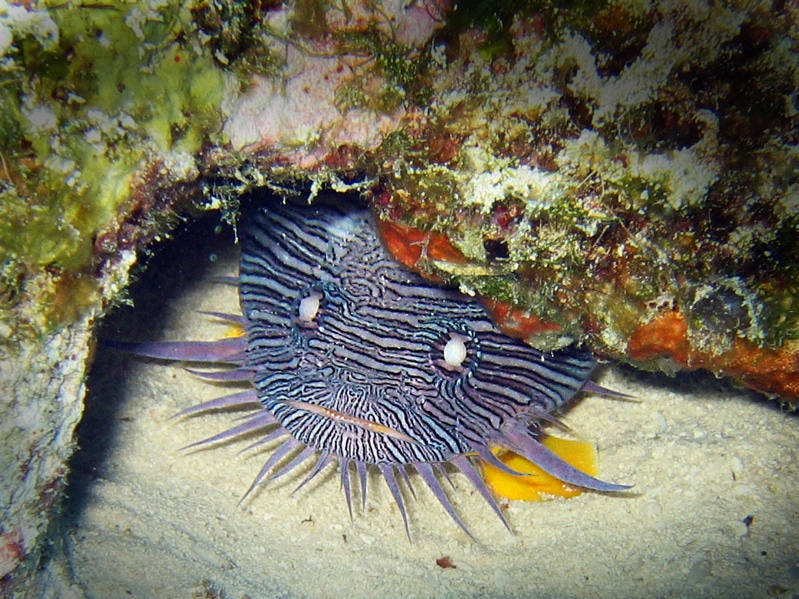
Sanopus splendidus, the Splendid Toadfish is the single most iconic marine species associated with Cozumel. It is found nowhere else on the planet. If you see one, you are seeing an animal that only exists in these waters. That is a remarkably rare experience in modern diving.
What Makes It Endemic and Spectacular
Endemism, being native to and restricted to one specific place, is unusual for fish, which typically have wide pelagic larval stages that disperse across ocean currents. The Splendid Toadfish appears to have evolved in isolation on Cozumel’s specific reef system, and its larvae apparently do not disperse far enough to colonize neighboring reefs. The result is a species uniquely tied to this island.
Its appearance matches its name. The body is broad and flattened, typical of the family Batrachoididae, but the coloration is anything but typical: bold white and dark brown horizontal stripes running the length of the body, vivid yellow-tipped fins, and fleshy facial barbels (whisker-like appendages) that give it a whimsical, slightly grumpy expression. It is unmistakable once you know what you’re looking for.
Size-wise, adults reach 20–25 cm (8–10 inches). They are not fast movers, toadfish are ambush predators that sit motionless and wait for prey (small fish and invertebrates) to wander within striking range. This sedentary behavior is exactly why they’re so rewarding to photograph: unlike reef fish that dart away, a toadfish will hold its pose while you frame your shot.
Where and How to Find One: Local Knowledge
This is where local expertise matters. The Splendid Toadfish is not rare on Cozumel’s reefs, but you need to know how to look. They are exclusively found under things: coral ledges, plate corals with undercut edges, shallow cave entrances, and recessed reef crevices. They do not swim in the open water column.
The technique our guides use is simple: slow down, drop to within 30cm of the reef surface, and shine your light into every undercut and dark recess. The toadfish’s stripes are highly visible once illuminated, the challenge is remembering to look low and slow rather than scanning mid-water for movement.
A critical note on reef etiquette: never attempt to remove or “herd” a toadfish from its ledge. This is not only damaging to the animal’s habitat relationship, it’s also prohibited under national marine park rules. Part of the magic of finding one is discovering it in its natural position, undisturbed and fully at home.
| Guide Tip: Fernando, one of our lead dive guides at Pelagic Ventures, can find a Splendid Toadfish on almost every dive at Yucab Reef. His advice: “Look for the yellow fin tips first. Once you see one flash of yellow under a ledge, the whole fish comes into focus. Patience and a good torch, that’s all you need.” |
Best Dive Sites for the Splendid Toadfish
- Yucab Reef: Consistently the most reliable site. Shallow enough (10–15m) to allow extended bottom time for searching. Multiple resident individuals have been documented at the same ledges for years.
- San Francisco Reef: Shallow reef with complex undercut coral structure; excellent toadfish habitat.
- Chankanaab Reef: Accessible and toadfish-friendly. Also good for night encounters when they’re more active.
- Santa Rosa Wall (shallower sections): Less common here but certainly possible on the shallow plateau before the wall drops away.
At night, toadfish behavior changes noticeably, they become more active and may move short distances away from their ledge to hunt. A night dive at Yucab is one of our favorite experiences to offer guests specifically for this reason.
Sharks & Rays of Cozumel
The word “shark” reliably produces two reactions from first-time visitors: excitement and nerves. Let us address both directly. Cozumel’s sharks are not a threat to divers. In over 30 years of operations at Pelagic Ventures, including thousands of guided dives, we have never had a dangerous shark encounter. What we have had, repeatedly, reliably, are awe-inspiring encounters with animals that make Cozumel feel alive in ways no aquarium ever could.
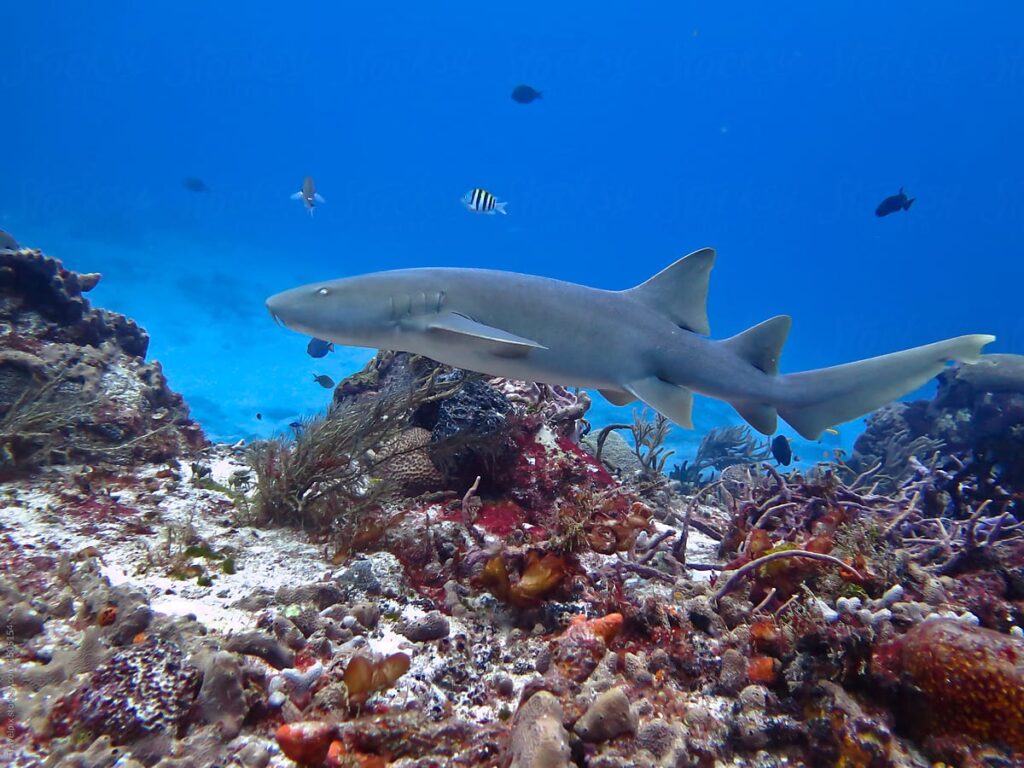
Nurse Shark
Ginglymostoma cirratum
The reef’s permanent residents. Found resting under overhangs during daylight. Completely non-aggressive.
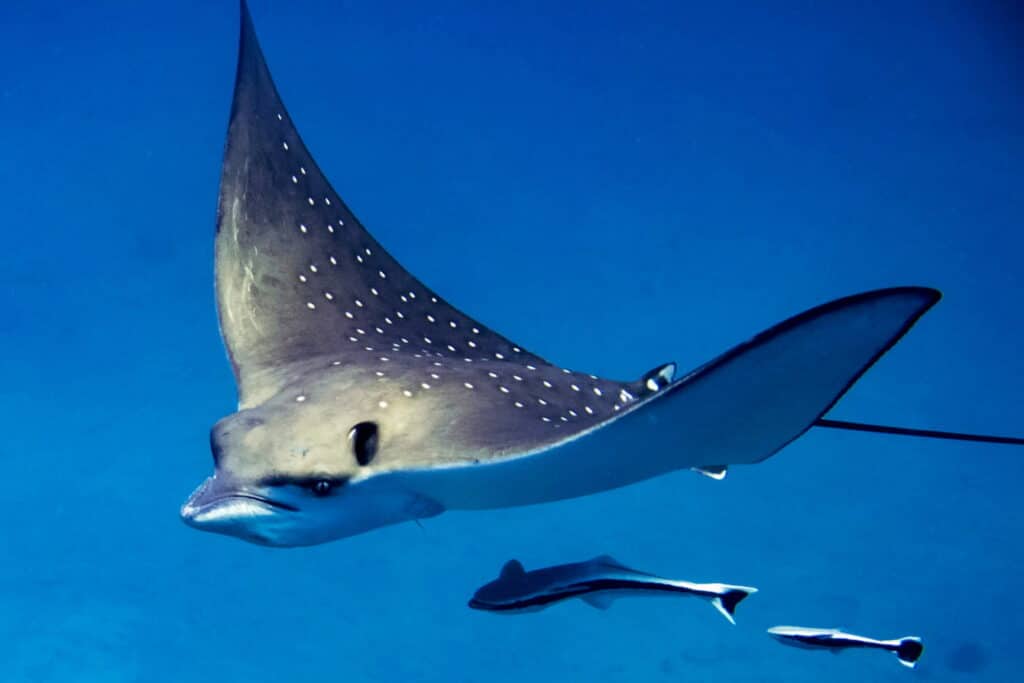
Spotted Eagle Ray
Aetobatus narinari
White-spotted black wings. Glide in formation along the wall.
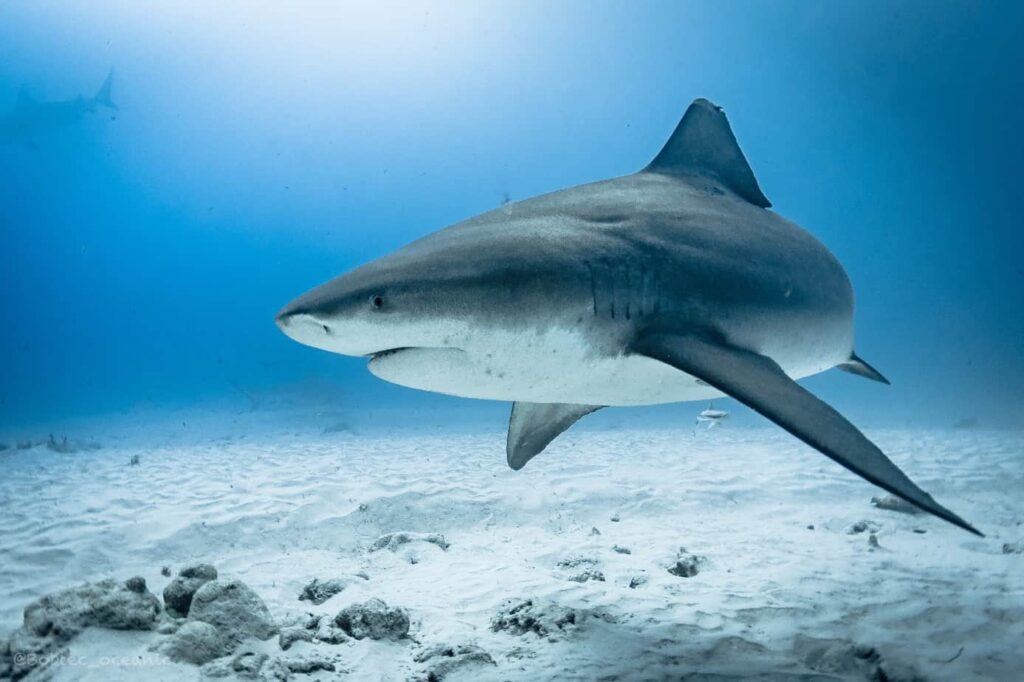
Bull Shark
Carcharhinus leucas
Occasional winter visitor. Rare in Cozumel. More commonly seen in nearby Playa del Carmen.
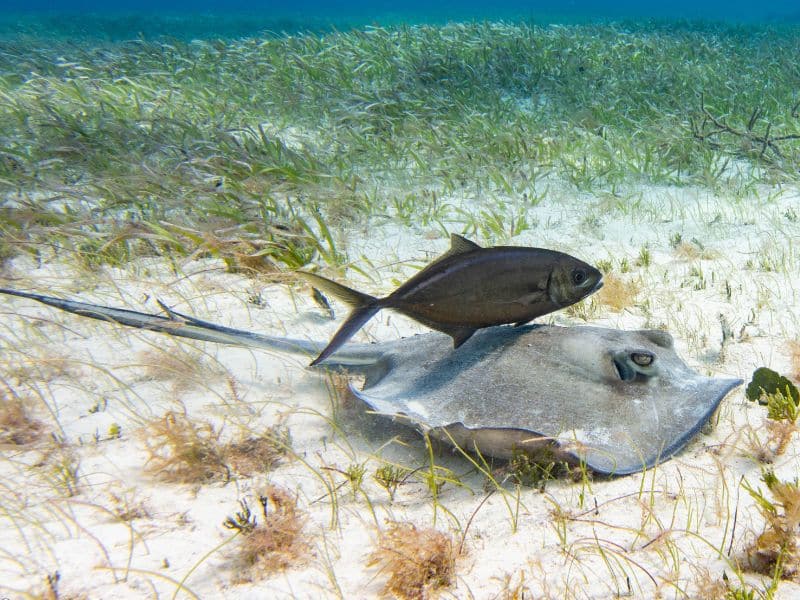
Southern Stingray
Hypanus americanus
Often buried in sand near reef edges. Flat diamond shape. Startles easily, give them space.
Nurse Sharks: The Reef’s Permanent Residents
The nurse shark (Ginglymostoma cirratum) is Cozumel’s most reliable shark encounter, present year-round. These are bottom-dwelling sharks, broad, brownish, and almost entirely disinterested in divers. During daylight hours, nurse sharks are almost entirely nocturnal hunters resting under reef overhangs in groups of up to half a dozen animals, stacked almost on top of one another in their preferred shaded spots.
They are harmless unless deliberately provoked. Our guides at Pelagic Ventures will always point them out, wedged under a coral head, tail hanging out into the current, completely unbothered by your presence at a respectful distance. Sites like Palancar Horseshoe and Santa Rosa Wall are particularly reliable for nurse sharks, but honestly, you would be unusual not to see one on almost any Cozumel reef dive.
Spotted Eagle Rays: The Winter Spectacle
If the nurse shark is Cozumel’s most reliable shark encounter, the spotted eagle ray (Aetobatus narinari) is arguably its most spectacular one. These large rays, wingspans reaching 3 meters (10 ft), are identifiable instantly by the constellation of white spots and rings across their black dorsal surface, and the elegant undulating “flight” of their pectoral fins as they cruise through the water column.
Eagle ray sightings peak dramatically during the winter months, November through March, when the cooler, nutrient-rich water brings them inshore along Cozumel’s western wall. On a good winter drift dive along the Santa Rosa Wall or Columbia Wall, it is possible to encounter groups of 5–20 eagle rays in a single dive, one of the defining wildlife experiences in the Caribbean. They tend to cruise at mid-water depth (15–25m), slightly below the reef crest, often gliding in loose formation.
Are Cozumel Sharks Dangerous?
This question deserves a direct, honest answer: No, not in normal diving conditions. Nurse sharks are docile. Spotted eagle rays are rays, not sharks. The occasional blacktip reef shark sighting is a retreat, they are shy of divers and will typically accelerate away before you’ve had time to register what you’ve seen.
The one caveat worth naming is the bull shark (Carcharhinus leucas). Bull sharks are occasionally sighted in Cozumel’s waters, primarily in winter, and they are a genuinely large, powerful animal. However, unprovoked bull shark encounters in Cozumel are extremely rare, this species is far more commonly associated with the purpose-built shark dive operations in Playa del Carmen (45 minutes by ferry), not Cozumel’s reef dives. In three decades on these reefs, our guides have encountered bull sharks a handful of times. Every encounter ended with the shark departing.
Sea Turtles in Cozumel
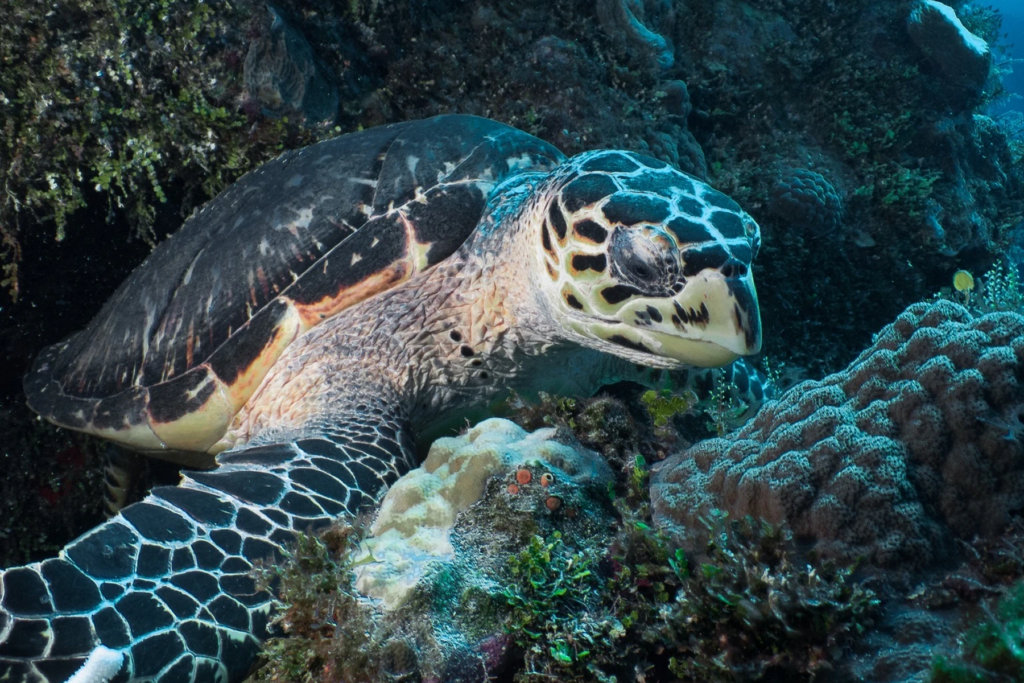
Of all the promises we can make about diving in Cozumel, the sea turtle is the one we make with the most confidence. Sea turtles are so common on Cozumel’s reefs that a dive without one is the exception, not the rule. We have guided guests who had never seen a wild sea turtle in their life, and within 20 minutes of their first descent at Palancar Reef, they were hovering 2 meters above a feeding hawksbill. Few things in diving compare to that moment.
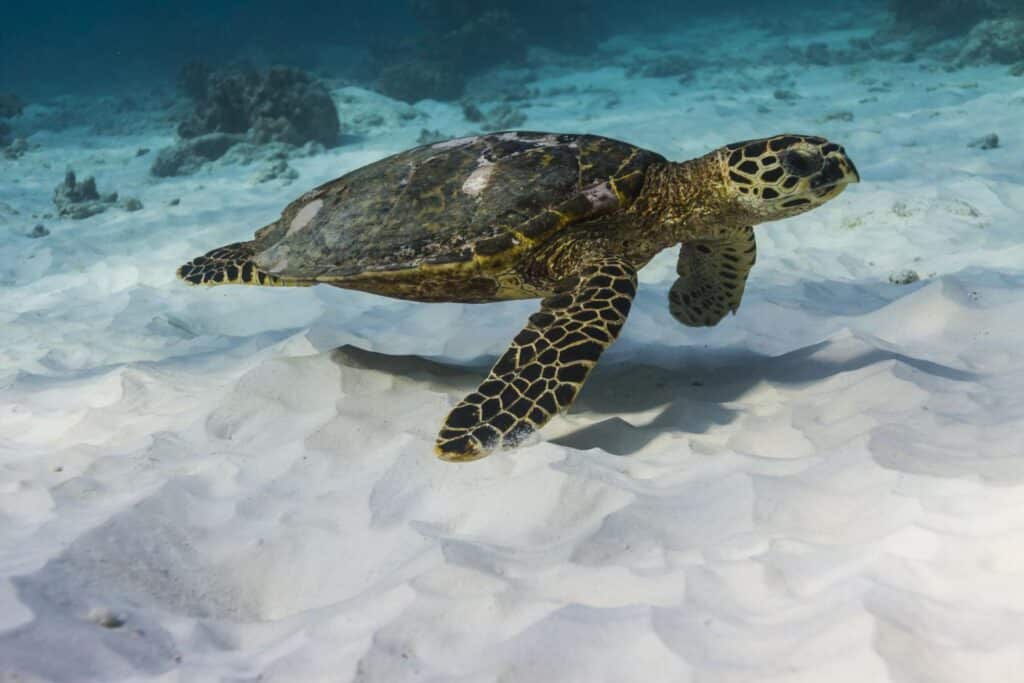
Hawksbill Sea Turtle
Eretmochelys imbricata
Most common species in Cozumel. Narrow, pointed beak. Often seen feeding on sponges in coral heads. Critically endangered globally.
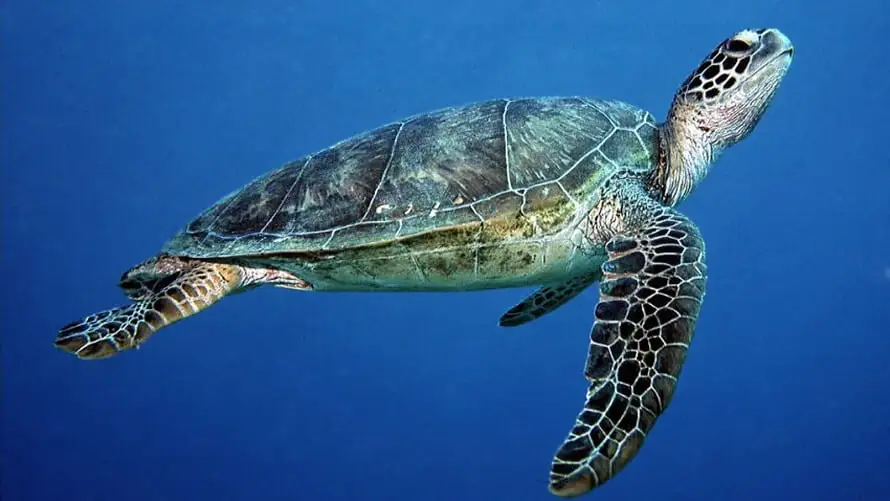
Green Sea Turtle
Chelonia mydas
Rounder head and shell than the hawksbill. Often found resting on the seabed or grazing on seagrass in shallower areas.
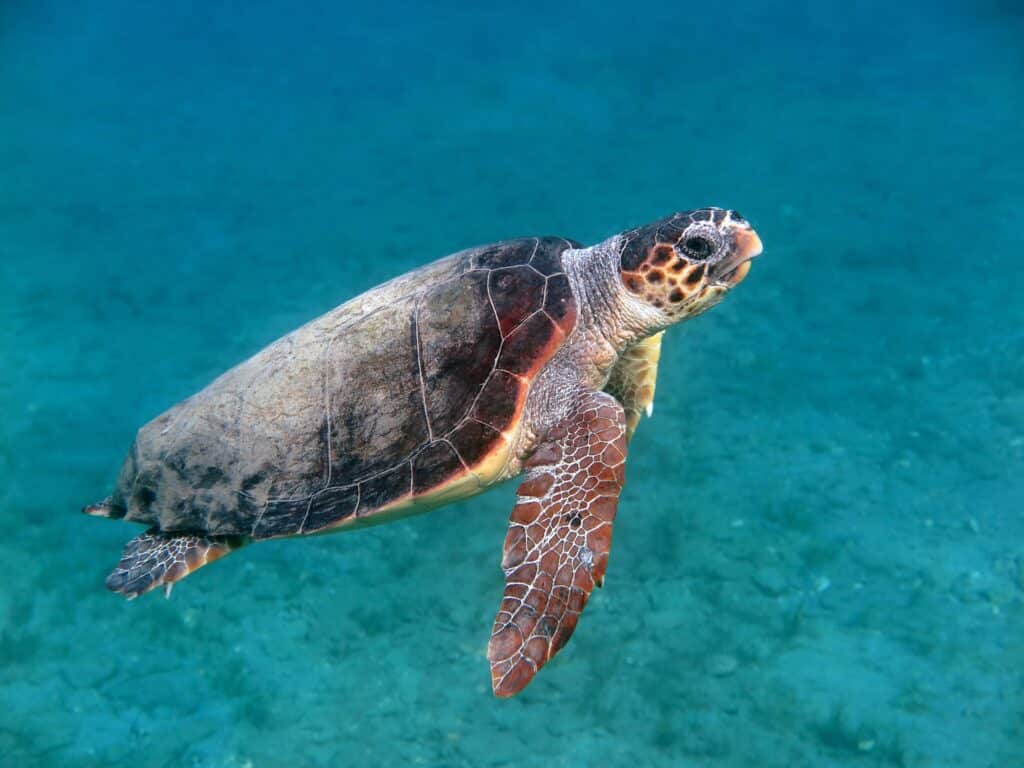
Loggerhead Sea Turtle
Caretta caretta
Less common than hawksbill or green. Identifiable by its large, broad head. Occasional deep-water and pelagic encounters.
Three Species: Hawksbill, Green & Loggerhead
Cozumel hosts three species of sea turtle, all protected under both Mexican federal law and the national marine park regulations:
The Hawksbill Sea Turtle (Eretmochelys imbricata) is the species you will almost certainly encounter on a reef dive. The hawksbill is a reef specialist, its narrow, pointed beak is perfectly adapted for extracting sponges from reef crevices, which make up the majority of its diet. This specialization keeps them on the reef structure constantly, which is why encounters are so reliable. Globally, the hawksbill is critically endangered; in Cozumel, it is a conservation success story in progress.
The Green Sea Turtle (Chelonia mydas) is slightly larger and rounder than the hawksbill, with a smooth, dome-shaped shell and a blunt head. Green turtles feed primarily on seagrass and algae, so they are more frequently encountered on sandy substrate or shallow seagrass beds. They are also commonly seen resting on the seabed, turtles can slow their heart rate dramatically and sleep underwater for hours.
The Loggerhead (Caretta caretta) is the least commonly sighted of the three in Cozumel. They are identifiable by their disproportionately large, broad head (hence the name) and are more wide-ranging than the hawksbill, so encounters tend to be chance open-water sightings rather than reliable reef encounters.
Nesting Season & Conservation
Cozumel’s beaches serve as nesting sites for hawksbill and green turtles. Nesting season runs from May through October, with peak activity in June and July. Female turtles return to the same beach where they hatched, sometimes decades earlier, to lay their eggs. The northern beaches of Cozumel, including Playa Bonita and Punta Molas, host active nesting activity each season, monitored by local conservation volunteers.
Responsible Diving with Turtles:
The rule is simple and non-negotiable: observe, never touch. A turtle’s shell looks robust, but contact from a diver can cause stress responses that disrupt feeding and natural behavior. Maintain a minimum 2-meter distance, approach slowly from below or alongside (never from above, that blocks their path to the surface to breathe), and if a turtle approaches you, stay still and let it lead the interaction. These animals are not photo props. They are a critically endangered species doing the work of surviving. Our job underwater is to be invisible witnesses, not participants.
Vibrant Reef Fish
If the turtles, toadfish, and eagle rays are Cozumel’s marquee attractions, the reef fish are the 500-piece living tapestry that makes every dive a completely different experience. No two dives look alike on Cozumel’s reef, the combinations of species, behaviors, and light conditions produce something new every single time you descend.
Angelfish, Royalty of the Reef
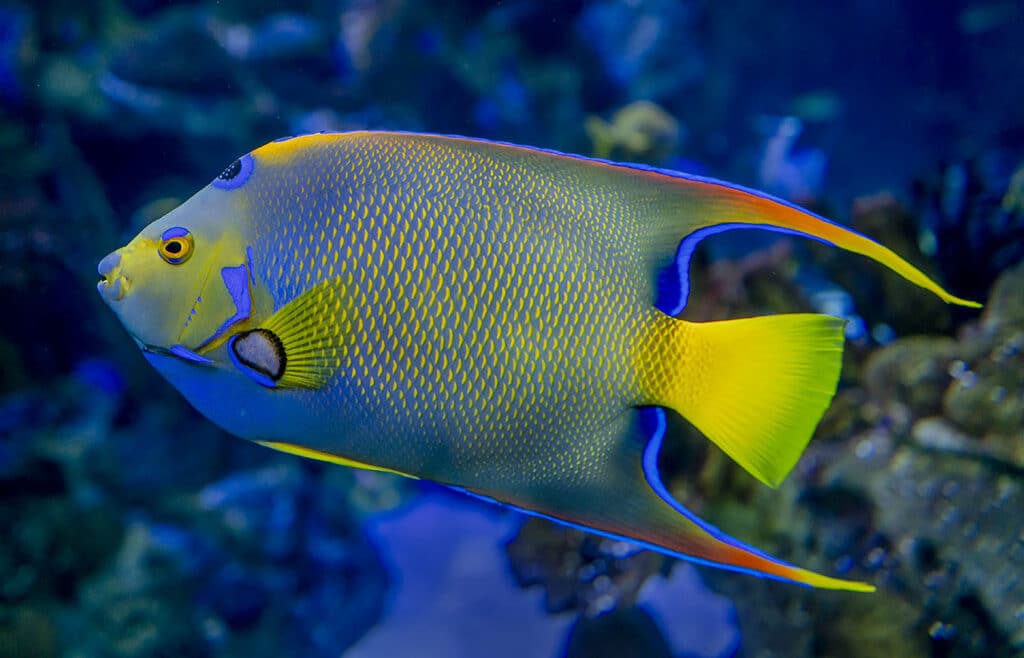
Queen Angelfish
Holacanthus ciliaris
Electric blue body, yellow tail, distinctive crown. Often seen in pairs. Among the most photographed fish in the Caribbean.
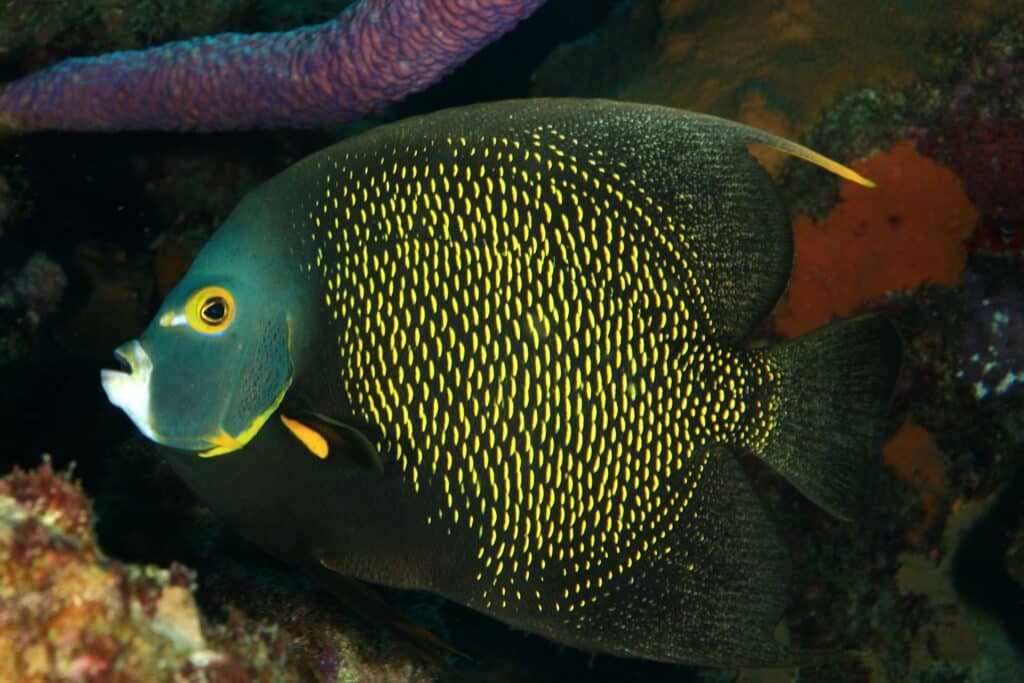
French Angelfish
Pomacanthus paru
Bold black body with yellow scale edges. Often more inquisitive than Queen Angelfish, approaches divers curiously.
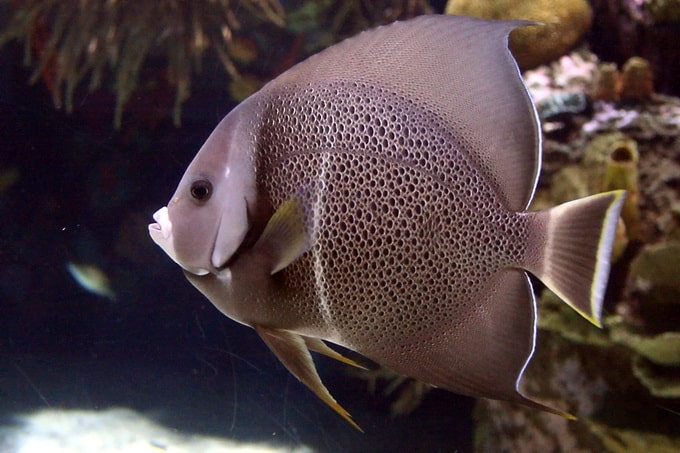
Gray Angelfish
Pomacanthus arcuatus
Larger than French angelfish. Pale gray with a distinctive white mouth. Calm and approachable.
The Queen Angelfish (Holacanthus ciliaris) is Cozumel’s most photographed reef fish. The combination of electric blue body, rich yellow tail and fins, and a distinctive iridescent “crown” marking on the forehead is simply startling in real life, photographs do not fully convey it. They are typically seen in pairs, moving slowly and deliberately around coral heads, grazing on sponges and algae.
The French Angelfish (Pomacanthus paru) is equally common and often more curious, a behavior our guides take advantage of by pausing neutrally buoyant near coral structures, letting the fish approach of its own accord.
Parrotfish: The Reef’s Architects
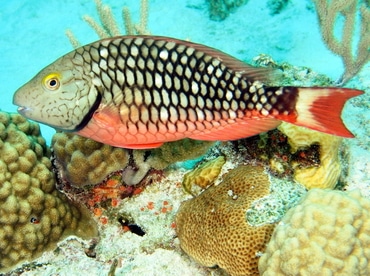
Stoplight Parrotfish
Sparisoma viride
Vivid green-and-orange terminal phase males. Creates Cozumel’s white sand beaches with its reef-grazing waste.
Rainbow Parrotfish
Scarus guacamaia
The largest parrotfish in the Atlantic is up to 1.2m. Magnificent, slow-moving. Green and orange with a distinctive beak.
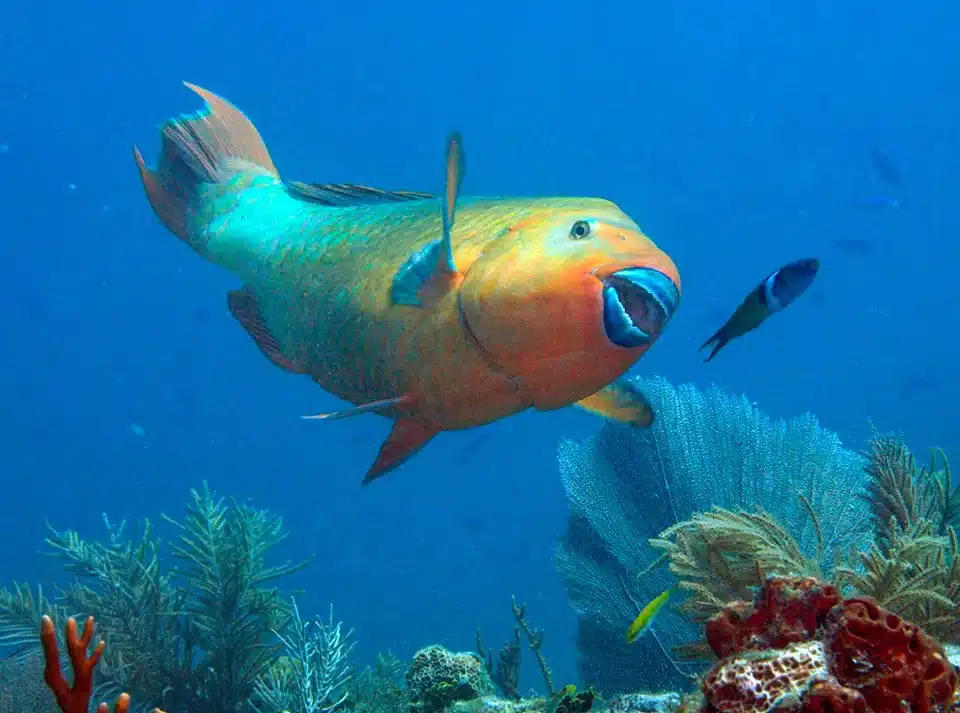
Parrotfish deserve special mention not just as beautiful reef fish, but as engineers of the ecosystem. Using their fused, beak-like teeth, parrotfish scrape algae from dead coral, and in doing so, they ingest the coral skeleton itself, grinding it to fine white sand in their digestive systems and excreting it as the powder-fine white sand Cozumel’s beaches are famous for. A single large parrotfish can produce hundreds of kilograms of sand per year. Next time you walk on a white sand beach in Cozumel, thank a parrotfish.
Moray Eels, Ancient Predators of the Reef
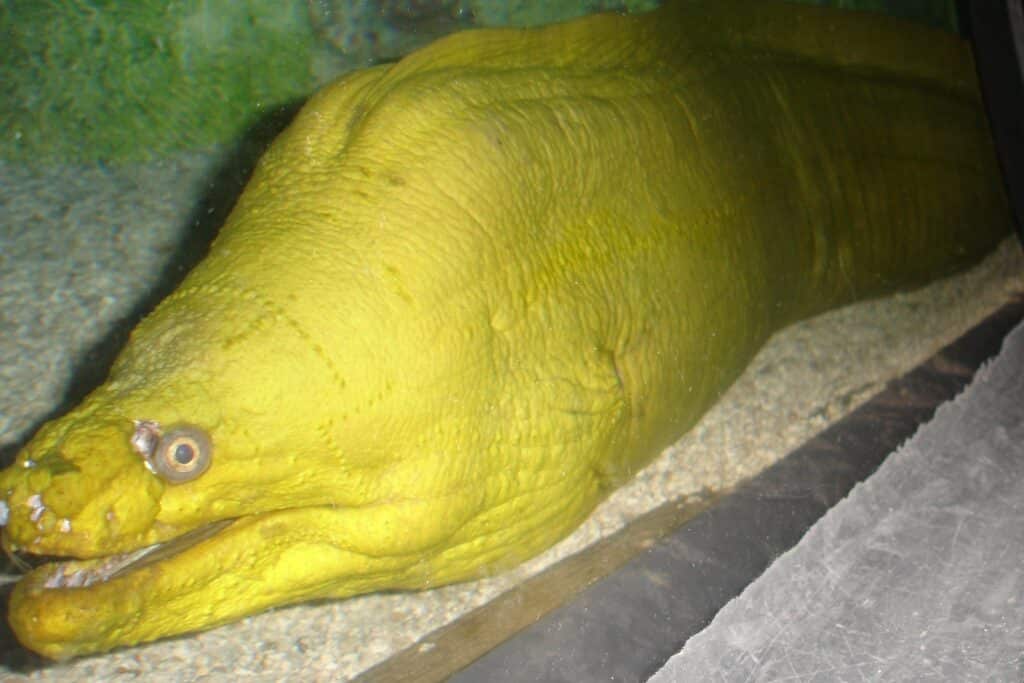
Green Moray Eel
Gymnothorax funebris
Largest moray in the Atlantic, reaching 2.4m. Vivid green body, constantly opening and closing jaw to breathe.
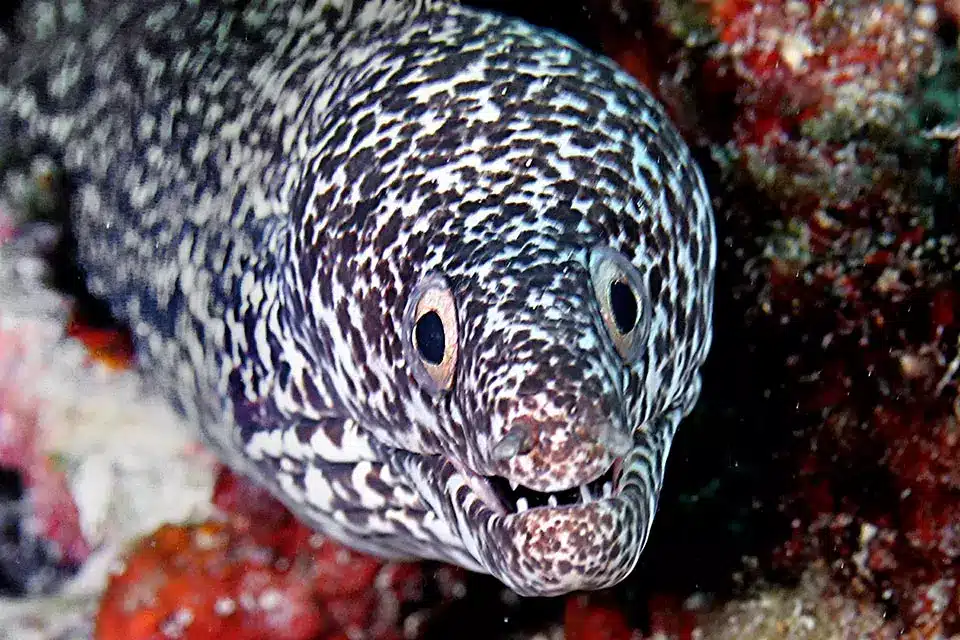
Spotted Moray
Gymnothorax moringa
White body with dark brown spots. Smaller than the green moray. Often seen in shallower reef crevices.
The Green Moray (Gymnothorax funebris) is the largest moray eel in the Atlantic, capable of reaching 2.4 meters in length and representing something genuinely ancient and impressive when you encounter one with its head out of a reef crevice, jaw working rhythmically. That opening-and-closing jaw is not aggression, it is how the eel circulates water over its gills to breathe. They are not interested in divers. They are interested in octopuses and small fish.
Other Iconic Reef Fish
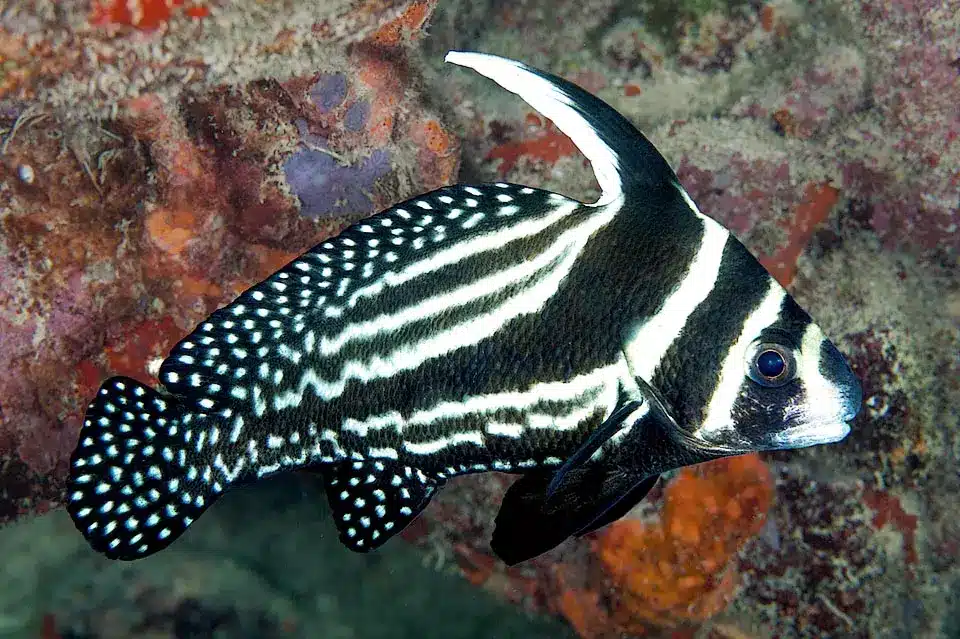
Spotted Drum
Equetus punctatus
Surreal black-and-white striped fish with an impossibly long dorsal fin. Circles slowly in shaded overhangs.
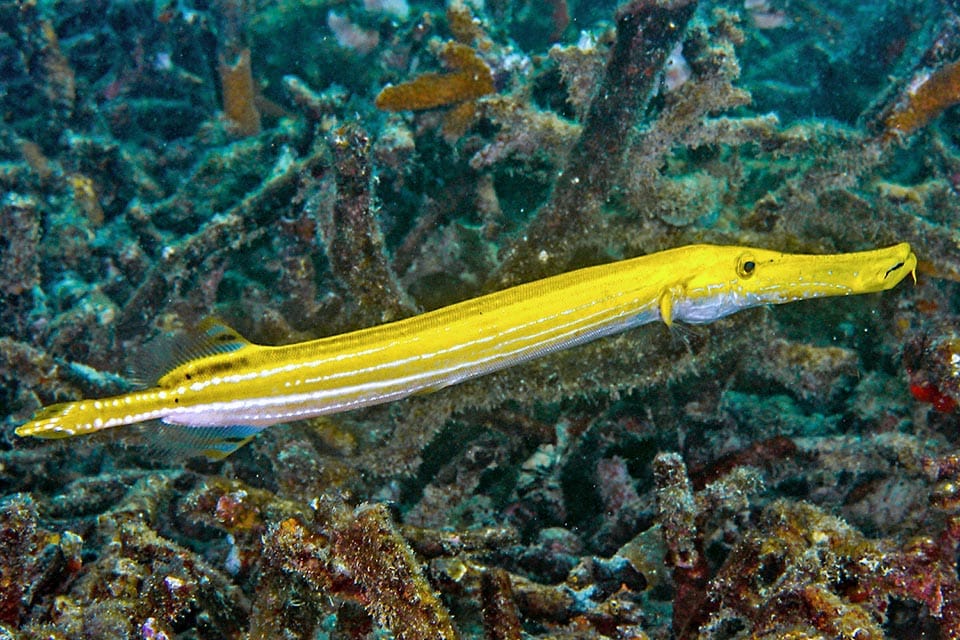
Trumpetfish
Aulostomus maculatus
Long, pipe-shaped body. Hangs vertically in the water column disguised as coral. Strikes prey with lightning speed.
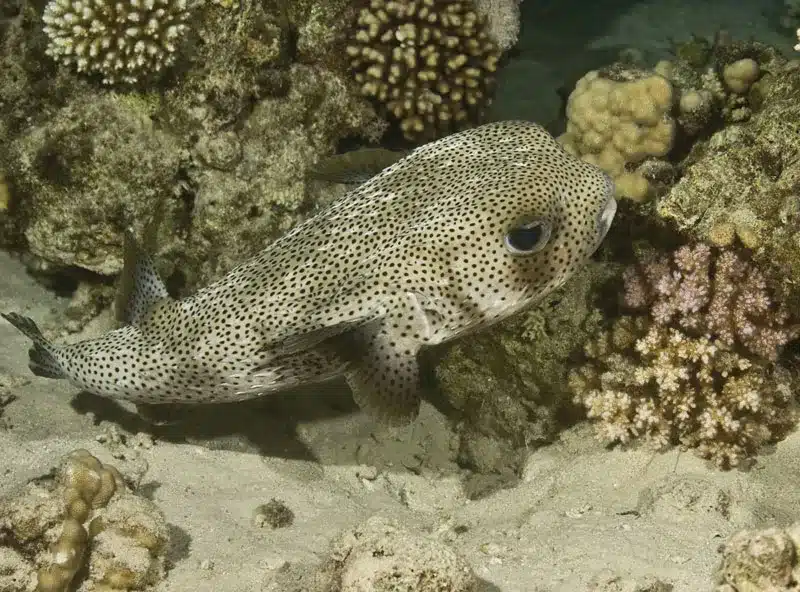
Porcupine Pufferfish
Diodon hystrix
Large, round, spiny. Its big “puppy eyes” make it a favorite with underwater photographers. Do not stress them, they can inflate.
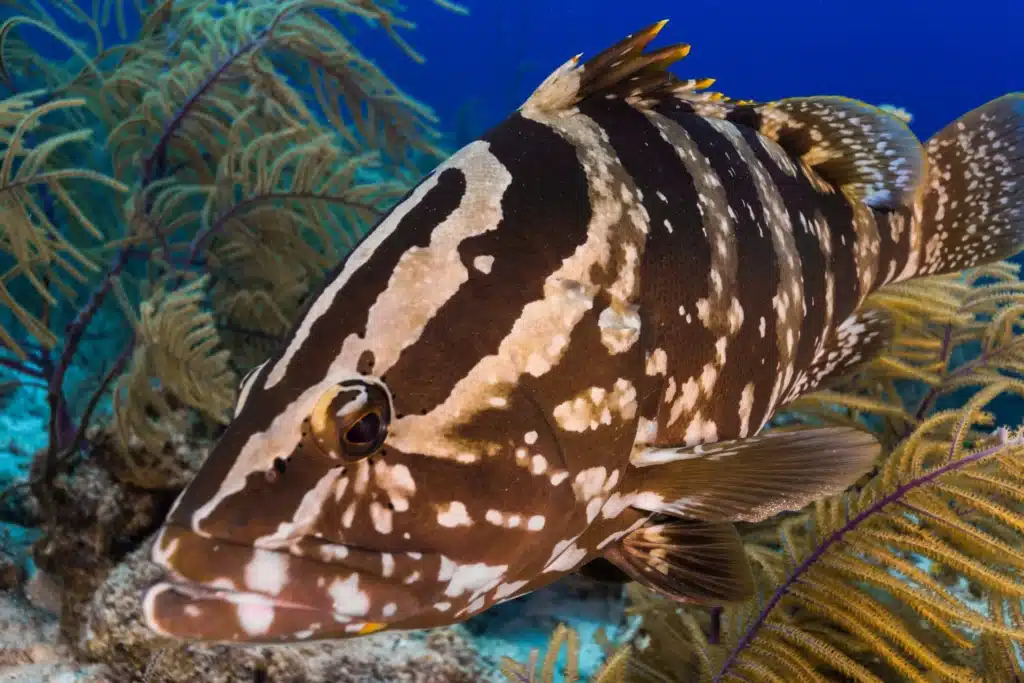
Nassau Grouper
Epinephelus striatus
A conservation comeback story. Bold vertical stripes, big mouth. Recovering well in Cozumel’s protected waters.
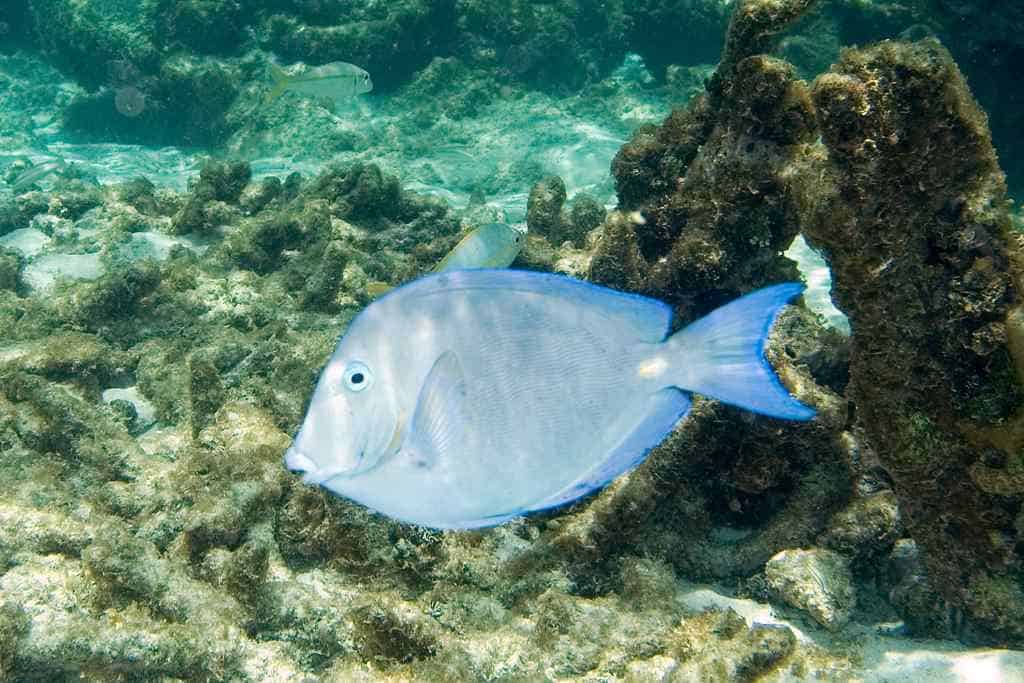
Blue Tang
Acanthurus coeruleus
Vivid cobalt blue with a yellow tail spine (as a juvenile). Travels in large schools across the reef crest, grazing continuously on algae.
The Spotted Drum (Equetus punctatus) is one of those fish that stops even experienced divers in their tracks. Its black-and-white striped pattern with an impossibly elongated dorsal fin creates a visual effect unlike any other reef fish, it seems to circuit the reef in slow, hypnotic circles beneath shaded overhangs, as if performing a private ritual. The Trumpetfish (Aulostomus maculatus) has mastered a different kind of visual trick: it hangs almost perfectly vertical in the water column, mimicking gorgonian sea rods, waiting for small fish to swim within striking range before lunging with explosive speed.
Macro Life, Invertebrates & Reef Creatures
Most dive guides will show you turtles and sharks. The truly great guides know that the macro world, creatures under 10 centimeters is where Cozumel’s reef reveals its deepest complexity. This is the layer most visitors never see, and the one our experienced guides take particular pleasure in revealing. Slow down, look closer, and the coral surfaces become a world of their own.
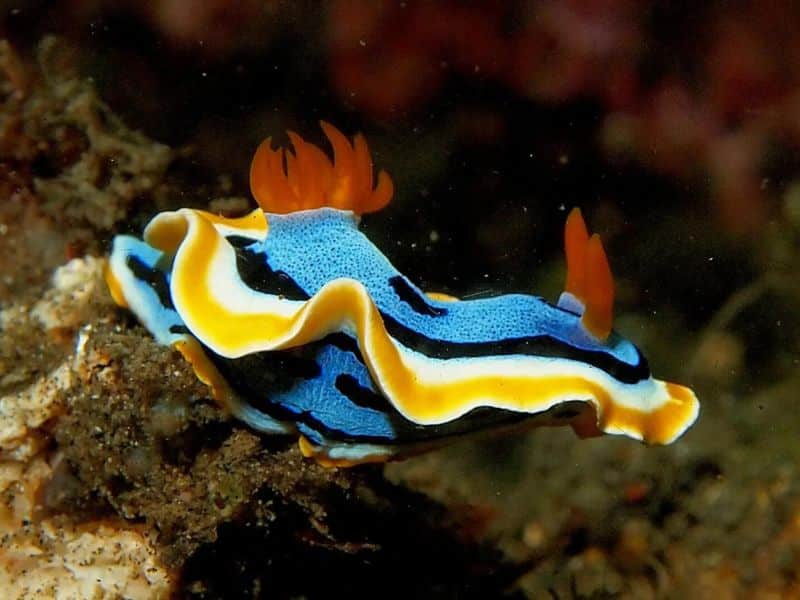
Nudibranchs
Order Nudibranchia
Spectacular slug-like creatures in vivid patterns. Found on coral rubble and sponge surfaces. Multiple species recorded in Cozumel.
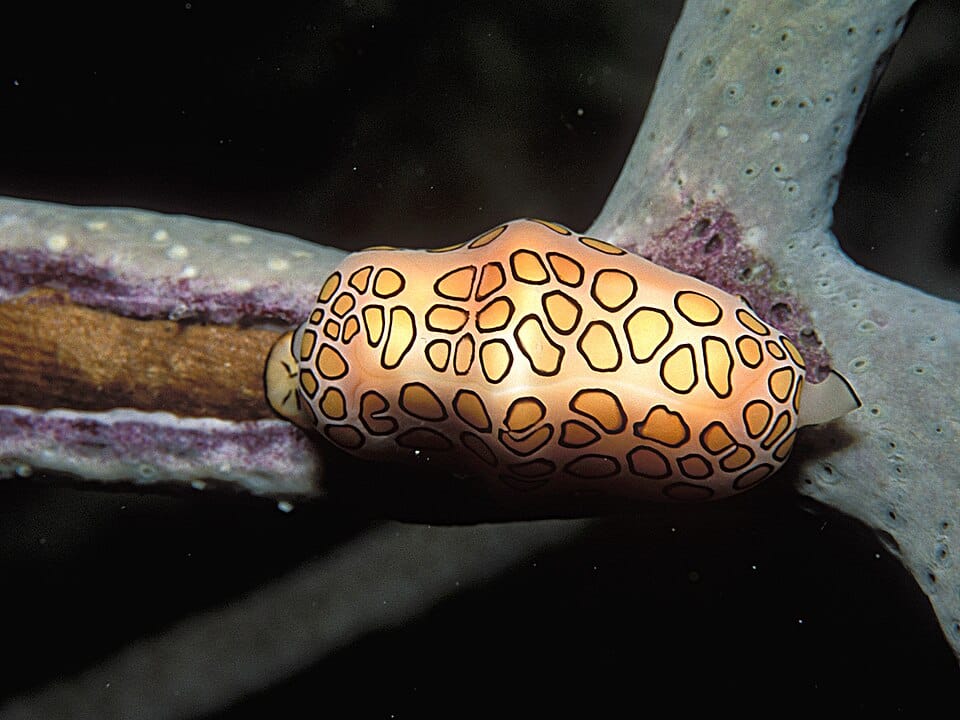
Flamingo Tongue Snail
Cyphoma gibbosum
Creamy shell with vivid orange-spotted mantle. Found on sea fans and gorgonians. Its vivid coloring actually comes from its soft body, not its shell.
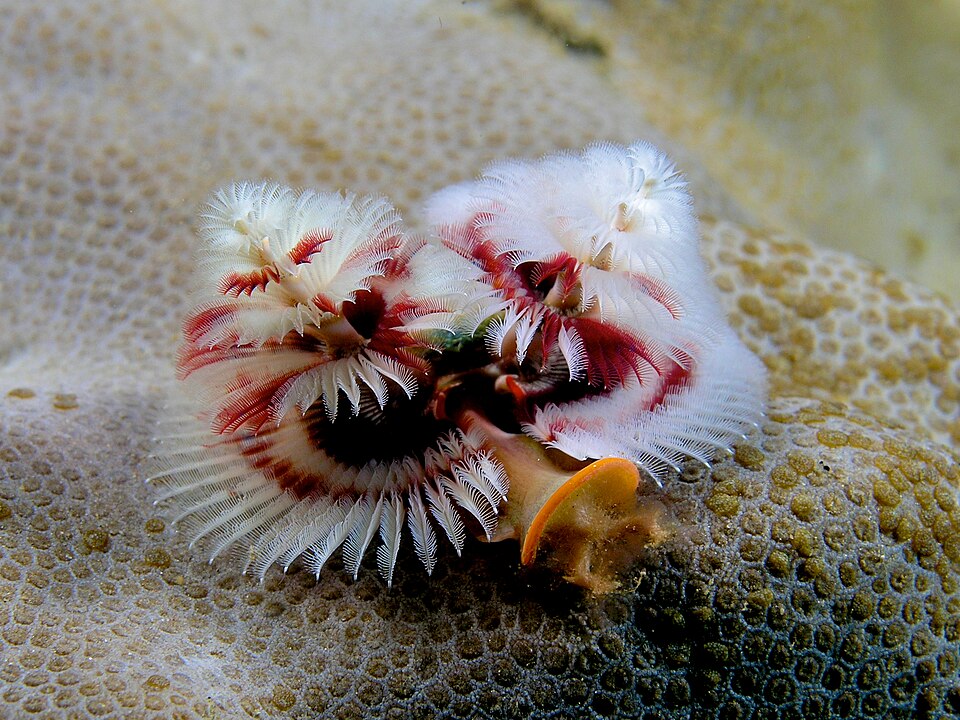
Christmas Tree Worm
Spirobranchus giganteus
Twin spiral plumes erupt from massive star coral. Snaps shut instantly when your shadow passes over — incredibly fast. Every color of the spectrum.
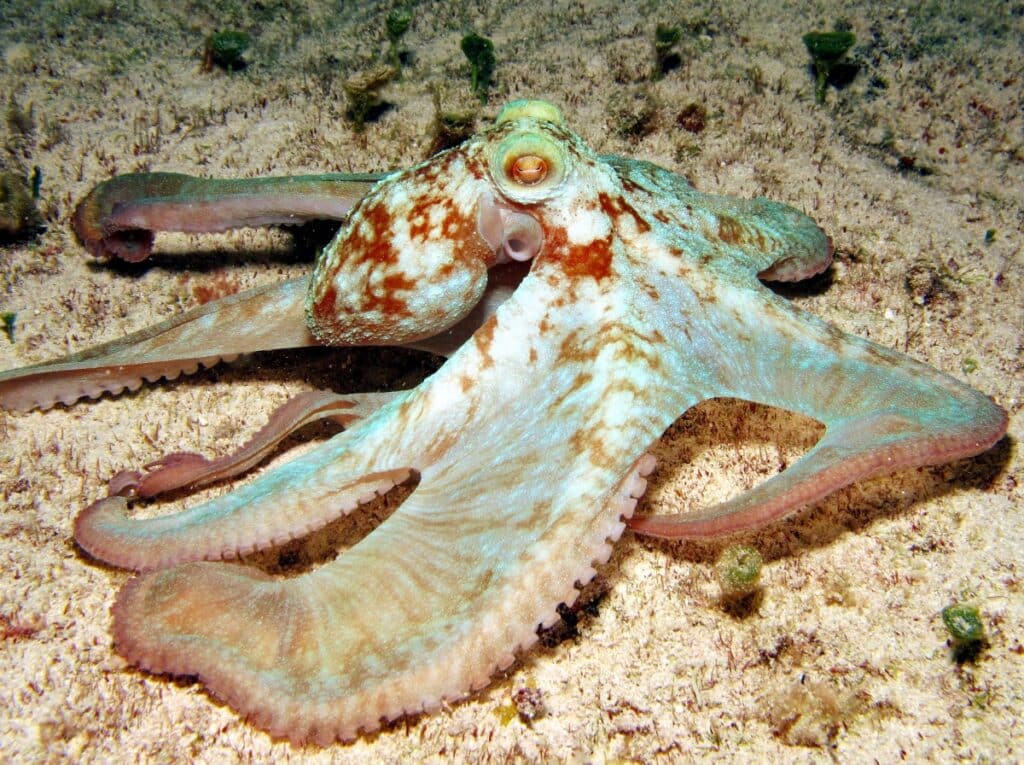
Caribbean Reef Octopus
Octopus briareus
Master of camouflage — capable of matching texture and color perfectly. Day encounters are rare; night dives are almost guaranteed.
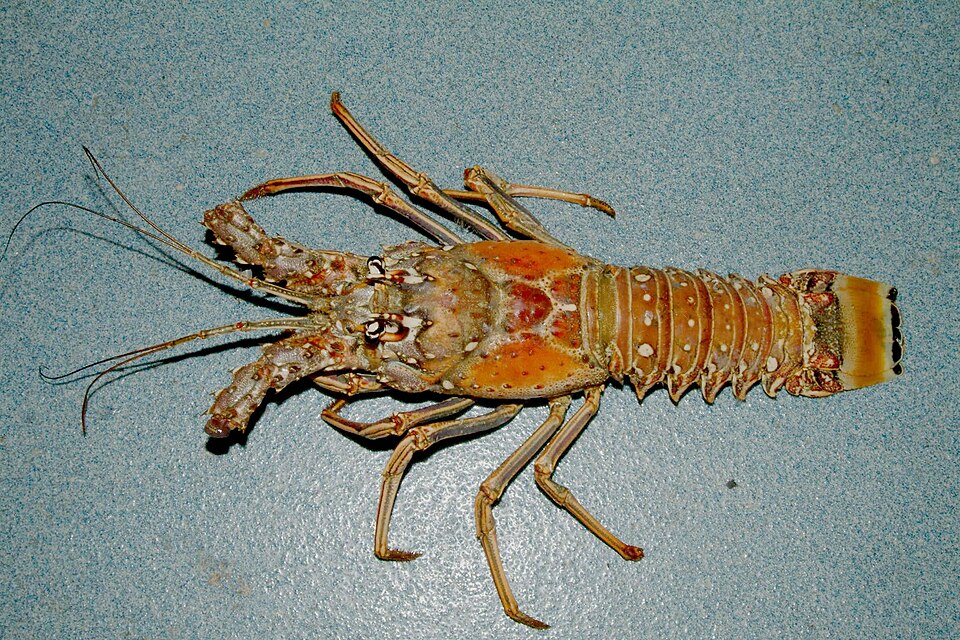
Caribbean Spiny Lobster
Panulirus argus
Hides in reef crevices by day; walks openly across sand at night. Lacks large claws, defended by long antennae instead.
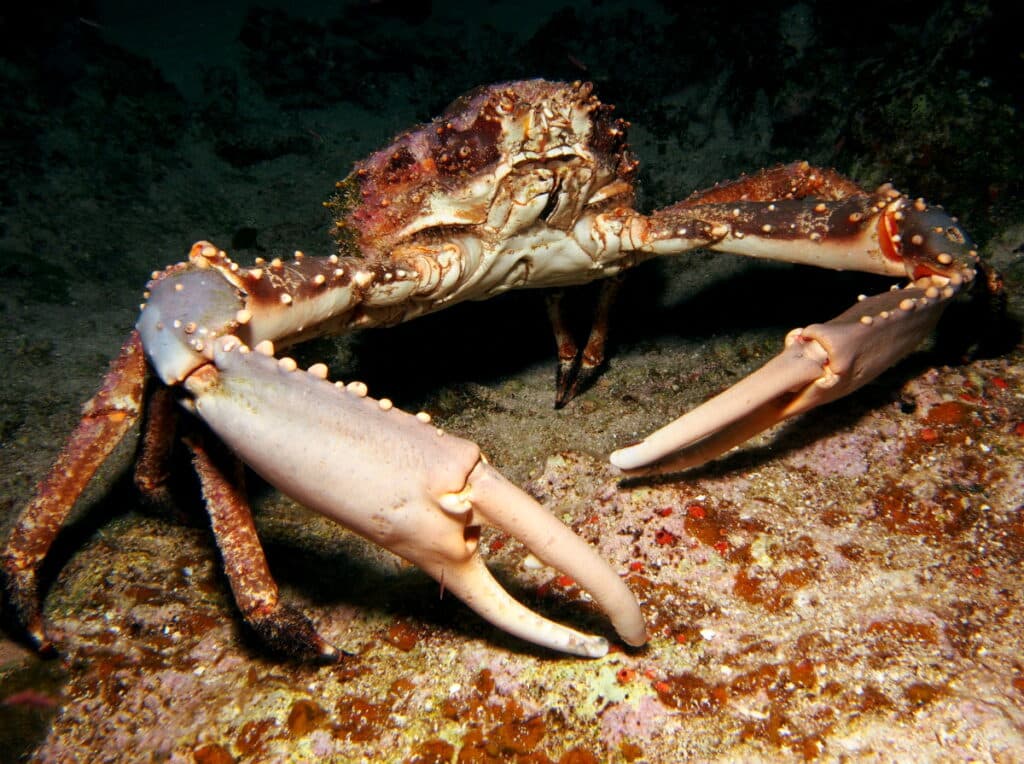
Channel Clinging Crab
Mithrax spinosissimus
One of the largest crabs in the Caribbean. Heavily armored, scales reef walls at night. Surprisingly fast when disturbed.
Cleaning Stations: Where Fish Queue Up
One of the most fascinating behavioral phenomena on Cozumel’s reef is the cleaning station, a specific location, typically on a coral head or large sponge, where small cleaner shrimp and tiny wrasses (Labroides spp.) set up shop and advertise their services through distinctive dancing movements.
Larger fish, groupers, moray eels, even barracuda approach these stations and adopt a submissive, mouth-open posture, allowing the cleaners to enter their mouths, gill slits, and eye areas to remove parasites and dead tissue. It is a perfect example of marine mutualism: the cleaner gets a meal, the larger fish gets pest control. Finding an active cleaning station and watching it for 10 minutes is one of our favorite “slow diving” experiences, watching a 1.5-meter moray eel hold perfectly still while a shrimp the size of your thumbnail walks across its tongue.
Cozumel Night Dive Marine Life After Dark
The reef you dove at 10am is a completely different ecosystem at 10pm. After dark, the cast of characters changes entirely, daytime fish retreat into coral crevices and enter a state of torpor, while a new shift of nocturnal hunters emerges. A night dive in Cozumel is not just a dive with less light. It is a fundamentally different ecological experience.
What Changes After Sunset
As light fades, parrotfish, those vivid, active grazers that dominate daytime reef scenes, find a crevice, secrete a mucous cocoon around themselves (a chemical “sleeping bag” thought to mask their scent from nighttime predators), and become completely inert. Meanwhile, the soft corals that retracted their polyps during daylight hours begin to extend them fully, and the reef suddenly appears to bloom in slow motion as filter-feeding invertebrates open to catch the night current’s plankton pulse.
Nocturnal Hunters: Octopus, Lobster & Tarpon
The Caribbean Reef Octopus is the night dive’s signature animal. During daylight it is almost impossible to find, its camouflage is too perfect, and it is deep in a rock crevice anyway. At night, it hunts openly across the reef surface, skin rippling through extraordinary patterns of color and texture. Following an octopus on a night dive, watching it change color as it crosses different substrates, pouncing on a sleeping fish, is one of the defining wildlife encounters in Caribbean diving.
Caribbean Spiny Lobsters emerge from their daytime reef crevices and walk openly across the sandy seafloor, their antennae probing ahead of them. Cozumel’s protected status means lobster populations are healthy, it is common to see three or four in a single night dive. Channel Clinging Crabs scale the reef walls with surprising speed, their heavily armored bodies clinging to vertical surfaces that would challenge much smaller animals.
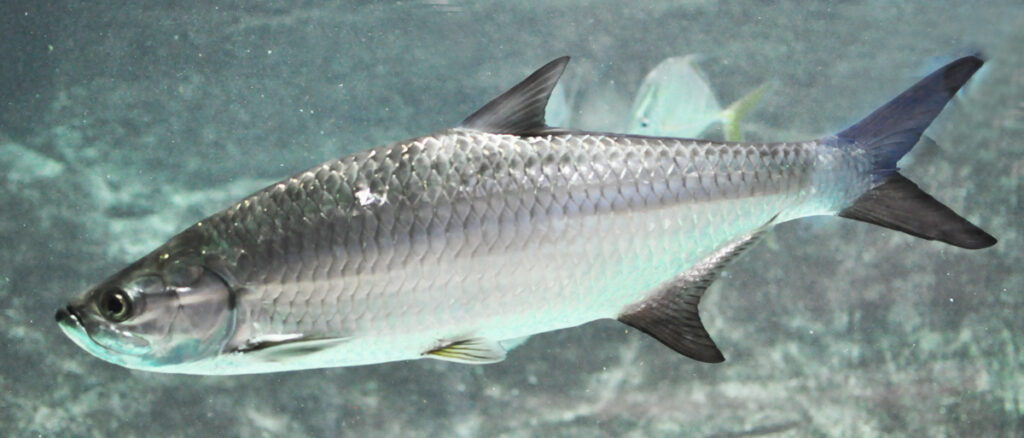
Tarpon (Megalops atlanticus) are drawn by torch lights on night dives, your beam attracts the small fish and invertebrates that tarpon hunt, and these large, silver-scaled prehistoric-looking fish will follow your dive group, darting through the torchlight to ambush prey. The sudden flash of a 1.5-meter tarpon through your light beam is a reliable night dive adrenaline moment.
Bioluminescence in Cozumel’s Waters
On very dark nights, new moon, minimal boat traffic, calm conditions it is possible to experience one of the ocean’s most extraordinary phenomena in Cozumel’s waters: bioluminescence. Caused by single-celled dinoflagellates (Noctiluca scintillans and related species) that emit blue-green light when disturbed, bioluminescence makes every movement through the water trail sparks of cold blue fire. Wave your hand through the dark water: it glows. Every fin kick leaves a dissolving constellation. This is not a guaranteed experience, conditions must align, but when it happens, it redefines what a night dive can be.
Pelagic & Open-Water Species
Beyond the reef wall lies the open water column, and occasionally, something very large moves through it. Cozumel’s position on the outer edge of the Caribbean shelf means that pelagic species from the deep ocean occasionally venture close to the wall dives, especially during seasonal migrations.
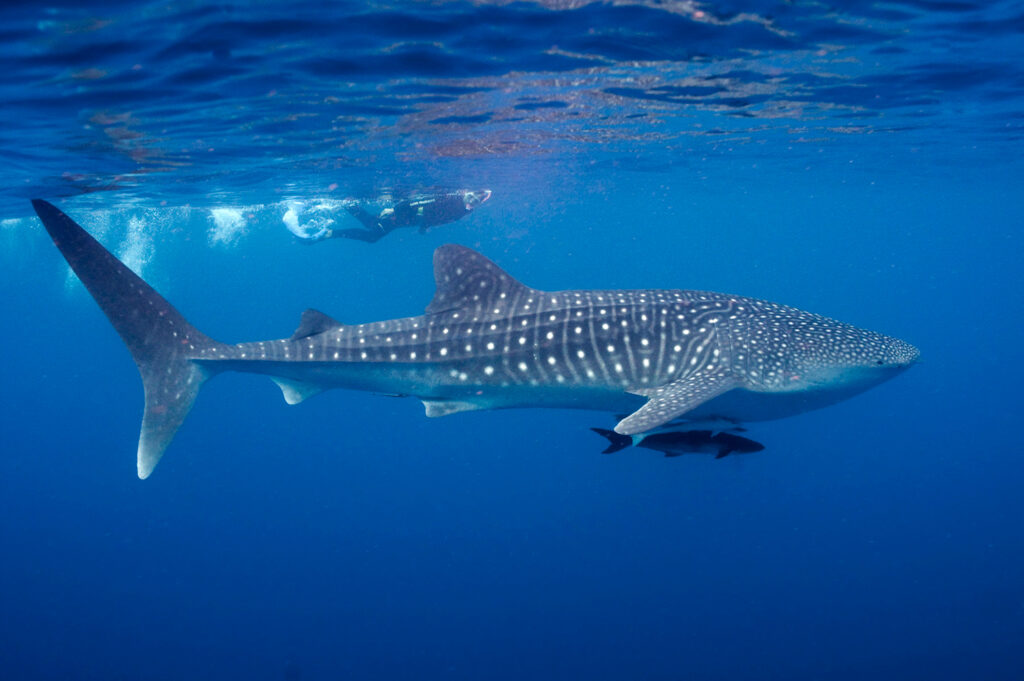
Whale Shark
Rhincodon typus
Occasional sightings May–June near Cozumel. More reliably encountered in mass aggregations off Isla Holbox (3–4hrs north) and Isla Mujeres during the same season.
Tarpon
Megalops atlanticus
Ancient silver giants up to 2.4m. Hunt near the reef surface at dusk and dawn. Drawn to torch lights on night dives, spectacular.
Manta Ray
Mobula cf. birostris
Rare but extraordinary. Occasional open-water sightings at deeper wall sites. When one appears, it commands the entire water column.
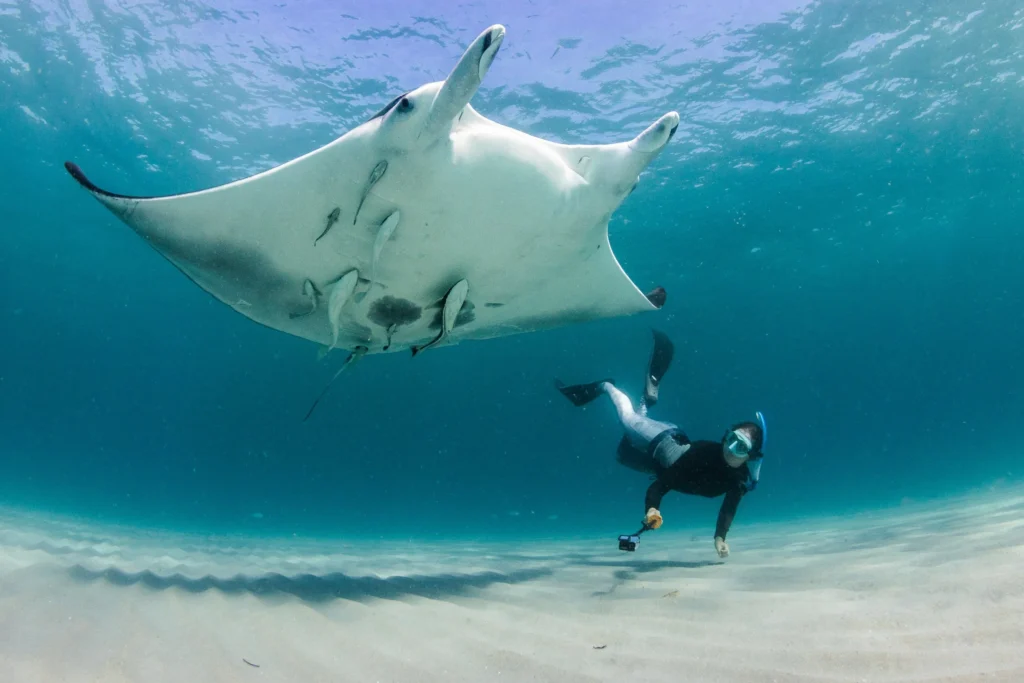
| Honest Local Knowledge: We want to give you accurate expectations. Whale sharks are occasionally sighted near Cozumel but if seeing a whale shark is your primary goal, we recommend a dedicated excursion to Isla Mujeres (May–September), where mass aggregations of 50+ whale sharks are reliably encountered. Cozumel’s deep walls and exceptional reef life are its true strengths; the Yucatán region as a whole offers whale shark encounters, and we’ll always give you honest advice about where to go for what you want to see. |
Cozumel Marine Life by Dive Site
Where to Go for What You Want to See
Knowing that Cozumel has 500+ fish species is one thing. Knowing which reef to be on when you want to find a Splendid Toadfish before heading to a wall for eagle rays is the local knowledge that makes the difference between a good dive trip and a great one. Here is how we plan dives at Pelagic Ventures based on what guests most want to encounter.
| Dive Site | Depth | Type | Signature Species | Best For |
| Palancar Reef(Gardens, Horseshoe, Caves, Bricks) | 5 – 40m | Reef / Wall | Hawksbill turtles, nurse sharks, Nassau grouper, brain corals, eagle rays | All levels. The most complete dive in Cozumel. |
| Santa Rosa Wall | 15 – 40m+ | Wall / Drift | Spotted eagle rays, large groupers, turtles, black coral at depth, sea fans | Experienced divers. Best eagle ray site (winter). |
| Columbia Wall | 20 – 35m | Wall / Drift | Nudibranchs, black coral, eagle rays, large barrel sponges, massive coral formations | Advanced divers. Best macro photography wall. |
| Yucab Reef | 10 – 18m | Shallow Reef | Splendid Toadfish, nurse sharks, spotted drums, angelfish, moray eels | All levels. Best toadfish site. Night dives excellent. |
| Punta Sur (Maracaibo) | 10 – 30m | Reef / Wall | Crocodilefish, eagle rays, green turtles, sea fans, large coral buttresses | Intermediate+. Crocodilefish specialists. |
| San Francisco Reef | 5 – 22m | Shallow Reef | Splendid Toadfish, barracuda, angelfish, parrotfish, flamingo tongue snails | All levels. Excellent for beginners and macro. |
| Chankanaab Reef | 5 – 18m | Shallow Reef | Toadfish, trumpetfish, parrotfish, moray eels, sea turtles | Beginners, discovery scuba, snorkelers. |
| C-53 Felipe Xicotencatl Wreck | 15 – 56m | Wreck | Schooling silversides, large groupers, moray eels, soft coral growth on hull | Open Water+ (upper sections). Advanced for deep sections. |
| Tormentos Reef | 5 – 18m | Shallow Reef | Seahorses (rare but documented), flamingo tongue snails, cleaning stations, spotted drums | Macro photography. Slow, patient divers. |
| Dalila Reef | 8 – 20m | Shallow Reef | Garden eels (open sandy areas), rays, juvenile fish, Christmas tree worms | All levels. Garden eel colony, unique Cozumel experience. |
| Pelagic Ventures Guide Strategy: When planning a two-tank day with Pelagic Ventures, we typically pair a shallow reef (Yucab or San Francisco for toadfish and reef fish variety) with a wall dive (Santa Rosa or Columbia for the full drift experience and pelagic encounters). This combination gives you the broadest cross-section of Cozumel marine life in a single day, and is the format we recommend for first-time visitors. |
Best Time to See Marine Life in Cozumel: Month-by-Month Guide
The honest answer to “when is the best time to dive Cozumel?” is: any time. The reef is spectacular year-round. But different seasons bring different highlights, and knowing what’s peak when can help you plan a trip built around the specific animals and experiences you most want. This is the seasonal knowledge our team has built over 30+ years on these reefs.
Winter Season
November – March
- Spotted Eagle Rays: Peak season. Groups of 5–20 on wall dives.
- Bull Sharks: Rare but most likely winter sightings.
- Cooler water (24–26°C): 5mm wetsuit recommended.
- Fewer crowds: quieter reefs, more personal encounters.
- Water clarity: often the best visibility of the year.
- Recommended sites: Santa Rosa Wall, Columbia Wall, Palancar.
Spring Season
April – June
- Sea Turtle Nesting begins (May–June). Beach activity increases.
- Whale Sharks: Occasional near-reef sightings. Aggregation season off Isla Mujeres/Holbox.
- Tarpon in larger numbers near reef edges at dusk.
- Water temp rising (26–28°C): 3mm wetsuit comfortable.
- Spawning aggregations: Nassau grouper and snapper begin grouping.
- Recommended sites: Palancar, Punta Sur, San Francisco Reef.
Summer / Autumn
July – October
- Turtle nesting peak (July–August). Hatchlings emerging in September.
- Macro life peak: Nudibranchs, juvenile fish, seahorse season.
- Spawning aggregations: Impressive multi-species events at specific sites.
- Warmest water (28–29°C): 3mm wetsuit or shorty.
- Hurricane season: October can bring choppy conditions; flexible scheduling recommended.
- Recommended sites: Yucab, Tormentos, Columbia Wall for macro.
Can Snorkelers See Good Marine Life in Cozumel?
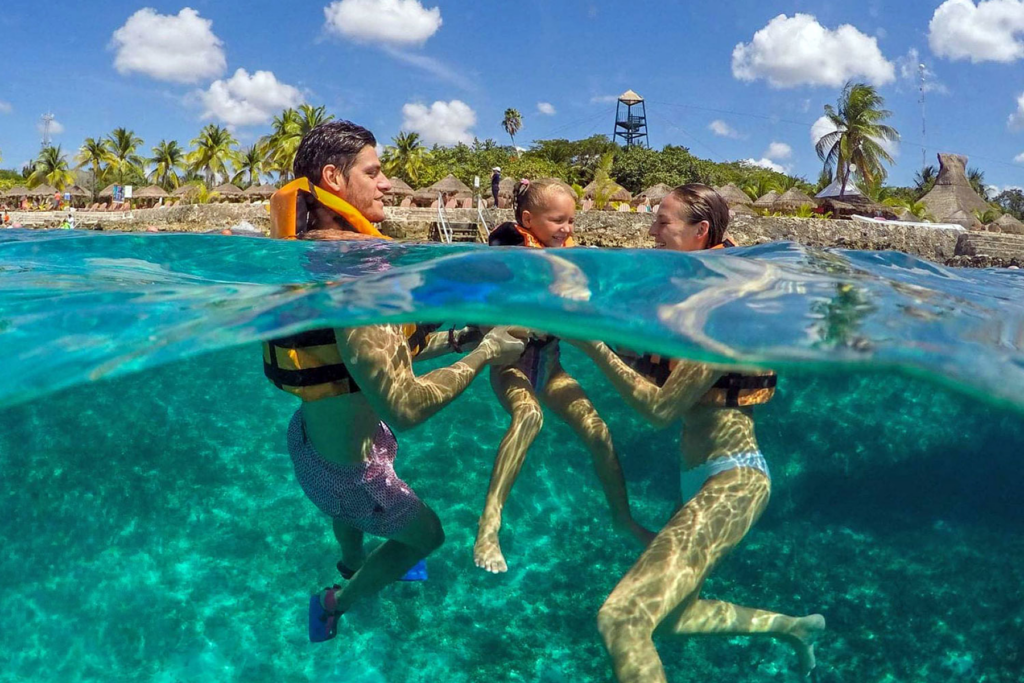
Absolutely, and we say this without the qualifications you might expect. Cozumel’s exceptional visibility and the presence of several shallow reef systems (1–8 meters deep) means that snorkelers access a quality of marine life encounter that is simply not available in most snorkeling destinations. Sea turtles are regularly spotted from the surface. Parrotfish, angelfish, barracuda, nurse sharks, and moray eels all inhabit the shallow reef zones.
Best Shallow Sites for Snorkelers
- Chankanaab National Park: Managed, sheltered, and beginner-friendly. Excellent shallow coral gardens with angelfish, parrotfish, and nurse sharks visible from the surface. Turtles are frequently encountered.
- Palancar Shallows (Gardens): The shallower sections of Palancar Reef, 2–8m, offer snorkelers an extraordinary window into one of the Caribbean’s most celebrated reef systems. Hawksbill turtles feed here regularly.
- El Cielo Seagrass Bed: A snorkeling specialty: a shallow seagrass meadow where spotted eagle rays and sea turtles are consistently encountered. The sandy, open bottom makes spotting animals easy even from the surface.
- Colombia Shallows: Exceptionally clear water over a diverse shallow reef. Good for groups of mixed ability.
What to Expect Compared to Scuba Diving
Snorkeling accesses roughly the top 0–8 meters of the reef, which is a significant portion of its biodiversity. You will not reach the deeper wall habitats where eagle rays cruise in winter, and some species (nudibranchs, toadfish, deep black coral) require scuba depth. But the turtle and reef fish encounters available to a good snorkeler at Cozumel will rival the scuba experiences at many other destinations.
If snorkeling leads you to want to see what’s below, we offer Discover Scuba Diving experiences through Pelagic Ventures that require no prior certification and can be completed in a single afternoon. Many of our guests have made exactly that decision mid-trip.
How Cozumel Protects Its Marine Life
The marine life you’ll encounter in Cozumel does not exist in spite of human activity, it exists because of deliberate, sustained human effort to protect it. After 30 years on this reef, the Pelagic Ventures team has witnessed firsthand both the damage that thoughtless diving can cause and the remarkable resilience a reef can demonstrate when given protection and time. Here is what that protection looks like in practice.
The National Marine Park, Rules Every Diver Must Know
The Arrecifes de Cozumel National Marine Park rules are not suggestions: they are federal law. Key requirements: all boats use mooring buoys (no anchor drops on reef). No spearfishing, no collection of any marine organism, alive or dead (that includes coral fragments and empty shells). No gloves (prevents careless reef contact). No feeding of fish or marine animals. Divers are asked to maintain neutral buoyancy at all times, fin contact with coral is the most common and most damaging form of reef damage. Your dive fee (approximately USD $3–5 collected at the port) directly funds park enforcement and monitoring.
The Lionfish Problem An Invasive Threat to the Reef
The Indo-Pacific Lionfish (Pterois volitans) arrived in Caribbean waters via the aquarium trade, released or escaped from home tanks, and has become one of the most serious ecological threats to Atlantic reef systems. Lionfish have no natural predators in the Caribbean, reproduce at extraordinary rates, and eat juvenile reef fish voraciously. Cozumel’s reef managers and dive operators, including our team at Pelagic Ventures, actively participate in lionfish culling programs, which are one of the few permitted “fishing” activities in the marine park. If you see a dive guide spearing a lionfish, they are doing conservation work. The irony is complete: spearing is prohibited to protect the reef, except for the one species that threatens it.
Coral Bleaching & Climate Change
Cozumel’s reef is not immune to the wider threats facing coral systems globally. Elevated sea surface temperatures, a consequence of climate change, cause coral bleaching events when corals expel their symbiotic algae under thermal stress, turning white and becoming vulnerable. Cozumel has experienced bleaching events, most significantly in recent years during periods of prolonged marine heat waves. The reef’s strong base of diverse coral species and its protected status give it greater resilience than many Caribbean reefs, but the threat is real, ongoing, and requires global action beyond what any local marine park can address alone.
How Responsible Diving Protects What You Came to See
The single most important thing you can do as a diver, beyond following all park rules, is to master your buoyancy. A diver with perfect buoyancy hovers effortlessly above the reef, never touches coral, and disturbs nothing. A diver struggling to control their depth and trim crashes into the very ecosystem they came to experience. At Pelagic Ventures, we prioritize buoyancy coaching for all divers, regardless of certification level, because we believe it is the foundational skill that separates a diver who visits a reef from one who genuinely belongs on it.