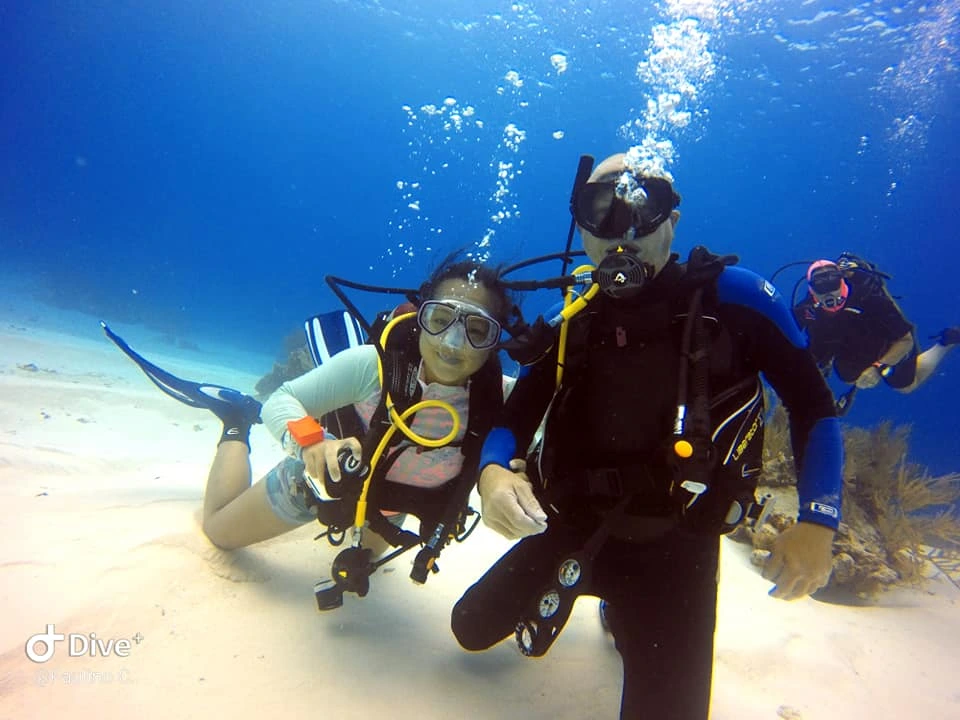
Boat diving in Socorro Island, Mexico means one thing: liveaboard-only access to the Revillagigedo Archipelago, a UNESCO World Heritage Site 400 km off Mexico’s Pacific coast, where giant oceanic manta rays, schooling hammerhead sharks, and humpback whales define every single dive. Advanced certification required. The season runs November through June. All departures leave from Cabo San Lucas.
Picture this: you’re hovering at 20 meters, completely still, when a shadow appears from the blue. It grows wider, wider, until a giant oceanic manta ray, wingspan stretching nearly seven meters from tip to tip, glides directly beneath you, rolls slightly, and locks eyes with your mask. She’s not fleeing. She’s curious. She lingers.
That moment is what makes Socorro Island unlike any other dive destination on the planet. And it happens on nearly every dive.
Socorro isn’t a place you stumble into. It sits 400 kilometers off Mexico’s Pacific coast, accessible only by liveaboard, requiring an advanced certification, 50+ logged dives, and a 24-hour open-ocean crossing. The barriers are real, and they’re exactly why diving rewards you so completely.
At Pelagic Ventures Scuba, we live and breathe Mexico’s underwater world from our home base in Cozumel. We’ve watched hundreds of divers move through Mexico’s incredible dive landscape, and we know that Socorro, for the diver who’s ready for it, sits at the very top of that world. This guide covers everything you need to plan your liveaboard trip: the dive sites, the marine life, the logistics, the gear, the costs, and, honestly, how to know if you’re ready.
If you’re still building your logged dives, don’t skip to the end. We’ve got something for you too.
What Is Socorro Island? (The Revillagigedo Archipelago Explained)
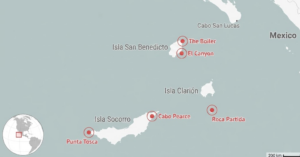
Socorro Island is the largest of four volcanic islands that form the Revillagigedo Archipelago, officially recognized as a UNESCO World Heritage Site since 2016 and the heart of North America’s largest Marine Protected Area. The archipelago includes:
- Socorro Island, the largest, with Cabo Pearce, The Aquarium, and Punta Tosca
- San Benedicto Island, home to The Boiler, Socorro’s most iconic dive site
- Roca Partida, a lonely volcanic spire and the most dramatic dive in Mexico
- Clarión Island, restricted access; rarely dived
What makes it biologically exceptional is geography. The California Current from the north and the Equatorial Counter-Current from the south converge at the Revillagigedo Archipelago, creating a cold, nutrient-rich upwelling that fuels an entire food chain from plankton to apex predators. The numbers speak for themselves: 366 species of fish (26 endemic to the islands), 37 species of rays and sharks, plus whales, dolphins, and sea turtles that use the archipelago as a migratory waypoint and calving ground.
This is why divers and marine biologists alike call it “Mexico’s Galápagos.” It’s not hype. It’s oceanography.
What Marine Life Will You See at Socorro?
If your bucket list is a checklist of underwater giants, a single Socorro liveaboard trip is capable of ticking most of it.
Giant Oceanic Manta Rays | The Star of Socorro
The giant oceanic manta ray (Mobula birostris) is the undisputed headliner of Socorro. These are not the smaller, reef-dwelling mobula rays common elsewhere in Mexico, these are open-ocean giants, with wingspans commonly reaching 5–7 meters (16–23 feet). They are bigger, rarer, and, at Socorro, uniquely interactive.
The reason Socorro’s mantas approach divers so closely comes down to cleaning station behavior. At sites like The Boiler, small cleaner fish (wrasse and other species) remove parasites from the mantas’ skin and gill plates. The mantas hover in place while being cleaned, and diving bubbles appear to mimic the tactile sensation of the cleaning process. Mantas have been observed actively seeking out diver bubbles, rolling and banking overhead to feel them on their bellies.
The Pacific Manta Research Group has been studying and photographically identifying individual mantas in the Revillagigedo Archipelago for over 30 years. Their work has been instrumental in securing UNESCO protections for the area and advancing our understanding of this species globally. When you dive with a manta at Socorro, you may be meeting an individual animal with a research file and a name.
Sharks More Species Than Almost Anywhere on Earth
Socorro regularly delivers encounters with more than 10 shark species in a single week-long trip:
- Scalloped hammerhead sharks, the signature species at Roca Partida; schools of dozens to hundreds circle the pinnacle in open water
- Silky sharks, sleek, fast, and frequently encountered mid-water
- Galapagos sharks, common at most sites; often patrol the walls at depth
- Whitetip reef sharks, rest in the overhangs at Roca Partida and Cabo Pearce
- Tiger sharks, reported regularly at Punta Tosca; rare but very real
These are not “managed” shark encounters. No bait, no cages, no chum. Just sharks going about their lives in a protected marine environment where they have no reason to fear divers.
Dolphins, Humpback Whales & More
The megafauna doesn’t stop at mantas and sharks:
- Bottlenose dolphins arrive in playful pods from January through March, often intercepting divers mid-descent and weaving through bubbles
- Humpback whales migrate down from Alaskan feeding grounds each winter, using the Socorro Islands as calving grounds, peak presence January through April; underwater encounters are possible and occasionally extraordinary
- Whale sharks have been recorded throughout the season, particularly November through May
- Roughly 2,000 humpbacks migrate to the archipelago annually, one of the largest Pacific aggregations in Mexican waters
The Best Dive Sites in Socorro Island
The Boiler (San Benedicto Island)
The Boiler is a submerged volcanic pinnacle off the south coast of San Benedicto Island, rising to within a few meters of the surface. It is the most famous dive site in all of Mexico, possibly one of the most famous on Earth.
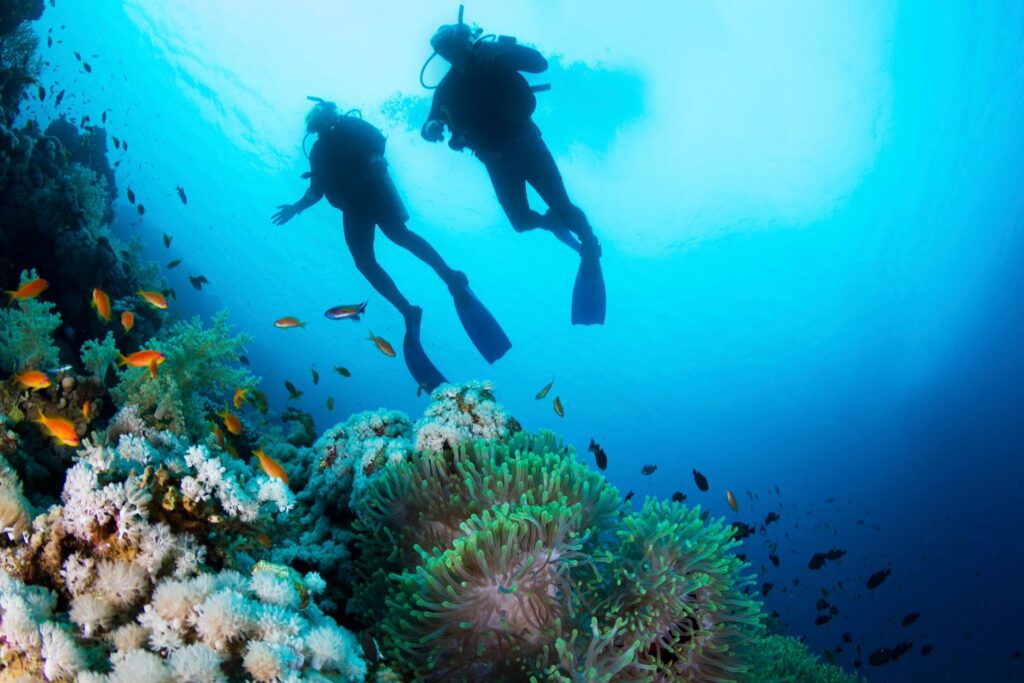
The site functions as a cleaning station, and the mantas know it. On a good day at The Boiler, you’ll hover at 15–20 meters while giant oceanic mantas circle overhead, banking and rolling to feel your bubbles. Multiple mantas in a single dive is routine. Close approaches of less than a meter happen regularly.
Conditions: moderate current, excellent visibility (typically 20–30m). Accessible for Advanced Open Water divers comfortable with current.
Roca Partida | The Shark Pinnacle
Roca Partida is Socorro in its rawest form, a single narrow spire of volcanic rock rising from the ocean floor, barely wider than a boat at the surface, dropping to 60+ meters on all sides into open, blue water. There is nothing around it. Just rock, ocean, and life.
The walls are stacked: whitetip reef sharks rest in every overhang. Hammerheads circle in open water at mid-depth. Silky sharks and Galapagos sharks patrol the perimeter. Tiger shark sightings are not uncommon. Massive schools of jacks and tuna sweep past in the current.
This is advanced diving, strong, unpredictable currents and deep open-water exposure require experience and solid buoyancy control. It is also, without question, the most dramatic dive in Mexico.
Cabo Pearce (Socorro Island)
Cabo Pearce is located on the eastern tip of Socorro Island and is identifiable topside by a distinctive finger-shaped rock formation jutting from the sea. Below the surface, it’s a wide dive characterized by a mix of reef structure, sandy slopes, and open-blue pelagic zones.
Dolphins are the signature species here, bottlenose pods frequently intercept divers mid-dive, circling and passing at close range. Humpback whales are possible during January–April. The site is slightly more sheltered than Roca Partida, making it a strong choice for building confidence early in a liveaboard itinerary.
El Canyon & Punta Tosca | The Underrated Sites
Most Socorro guides cover the top three sites and stop there. Two more sites reward the diver who pays attention:
El Canyon (San Benedicto) features a dramatic underwater ravine where manta rays funnel through in the current, often accompanied by Galapagos sharks and dolphins. The topography makes for one of the more photogenic dives in the archipelago.
Punta Tosca (Socorro Island) is where tiger shark encounters are most consistently reported. Two volcanic lava fingers extend into the water, creating a semi-protected cove where pelagics, including mantas in chains of three or more, move in sweeping, balletic patterns. This is a site that experienced Socorro divers specifically request.
Trip Logistics: How to Get to Socorro Island
Getting There
- Fly into San José del Cabo (SJD), served from Los Angeles, Houston, Dallas, Phoenix, and most major US hubs. Direct international connections available.
- Transfer to Cabo San Lucas marina, approximately 40 minutes by road (some liveaboards include airport transfers; confirm when booking).
- Board your liveaboard, most boats depart in the late afternoon or evening.
- Cross the Pacific, the open-ocean crossing to the archipelago takes approximately 24 hours. Conditions vary; the outbound crossing is typically calmer than the return.
Arrive a day early. Flight delays happen. Missing your liveaboard departure because of a domestic connection means missing the entire trip. Budget the extra night, it’s worth it.
What to Expect on the Water
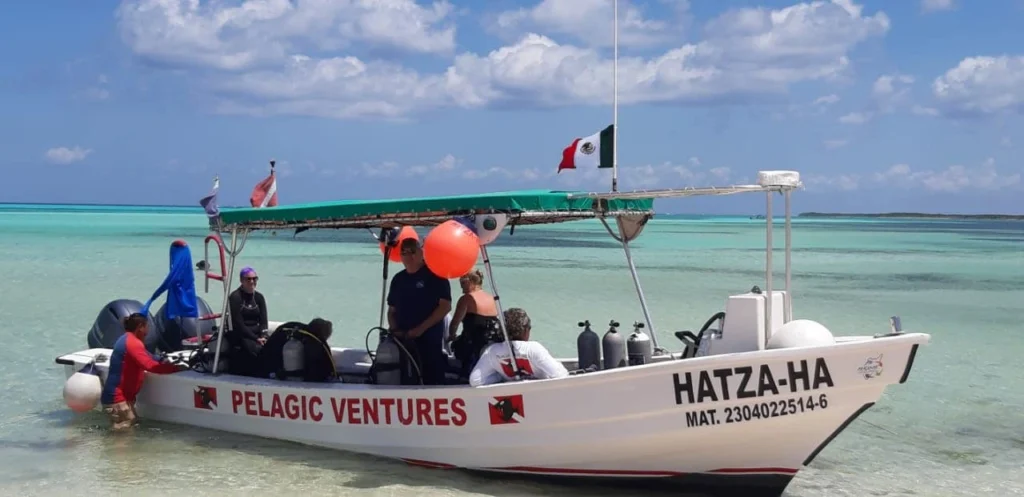
All diving at Socorro is conducted from pangas (small rigid inflatable tenders launched from the mothership). Entry is via backward roll into open water, there are no ladders, no platforms, no shore. Your SMB is your lifeline for pickup.
A standard Socorro itinerary covers 8–10 nights aboard with 18–20 dives total across 5–7 days of active diving, typically running 3–4 dives per day.
When Is the Best Time to Boat Dive on Socorro Island?
The Socorro season runs November through mid-July. The marine park closes August through October due to tropical storm activity.
| Period | Water Temp | Conditions | What to Expect |
| November – January | 21–24°C (70–75°F) | Cooler, humpbacks arriving | Sharks peak, whale shark sightings begin |
| February – March | 21–23°C (70–73°F) | Calmer seas, coolest water | Tiger sharks, dolphin pods peak |
| April – May | 24–27°C (75–81°F) | Warming, excellent visibility | Manta numbers highest; best overall conditions |
| June – mid-July | 26–28°C (79–82°F) | Shoulder season | Final departures; still world-class |
| August – October | — | Park closed | No liveaboards operating |
Visibility typically runs 20–30 meters. Plankton blooms occasionally reduce clarity to 10–15 meters, but the same blooms that cloud the water often bring marine life closer.
Booking timeline: The nine licensed liveaboards operating at Socorro sell out 6–12 months in advance during peak season. If you’re targeting February–April, start looking now.
What Certification and Experience Do You Need?
This question deserves a straight answer, not a marketing hedge.
Minimum requirements (most operators):
- Advanced Open Water certification (PADI, SSI, or equivalent)
- 50+ logged dives
- Comfort in moderate to strong current
- Strong buoyancy control, demonstrated, not theoretical
Strongly recommended:
- Nitrox certification, Socorro runs 3–4 dives per day; Nitrox extends your no-decompression limits and bottom time on repetitive dives at 20–30 meters, meaningfully improving your experience
- Drift diving experience before you arrive
- At least some experience with open-water (blue-water) entry and pickup
Honest assessment: Socorro is not a destination for newly certified divers, and responsible operators won’t let you pretend otherwise. The currents are real. The depths are real. The remoteness is real. A diver who arrives undertrained won’t be safe, and more importantly, won’t fully enjoy what the place has to offer.
If you’re building toward 50 dives and want to develop the drift skills and buoyancy confidence that Socorro demands, Cozumel is the single best place in Mexico to do it. The drift reefs and wall diving on our boat diving trips in Cozumel are where many experienced Socorro divers got their foundational Pacific-ready hours. That’s not a coincidence, it’s a logical progression.
What to Pack for a Socorro Liveaboard
Essential Dive Gear
- Wetsuit: 5mm minimum; 7mm if you run cold, water drops to 21°C in February/March; core temperature drops across a week of repetitive diving even in warmer months
- Hood, booties, gloves, standard kit; gloves and reef hooks are prohibited by park rules at certain sites; confirm with your operator
- Strong, powerful fins, current-ready; leave the snorkeling fins at home
- SMB (Surface Marker Buoy), minimum 5 feet / 1.5 meters; red preferred (yellow is used for emergencies and may be confused with distress signals); this is non-negotiable
- Dive computer with Nitrox capability if certified
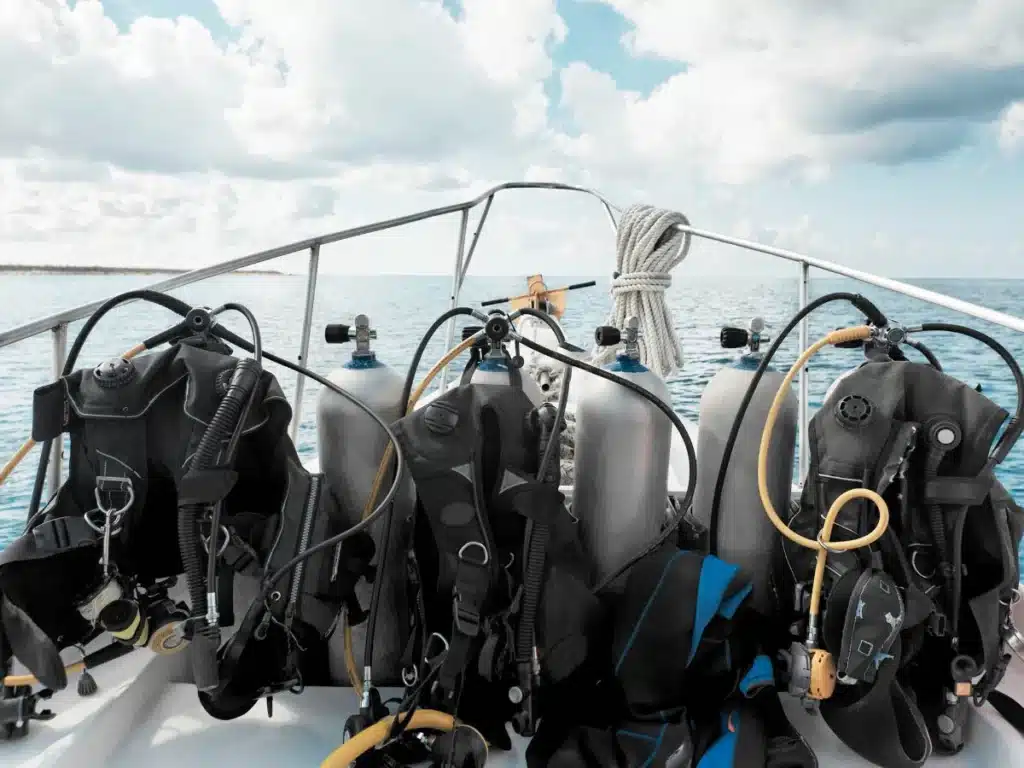
- BCD and regulator, rental is available on most boats with advance notice, but your own gear is strongly preferred
- ⚠️ No dive knives, prohibited within the marine park
- ⚠️ No detachable dive lights, lights attached to cameras are permitted; standalone dive torches are not
Safety Equipment
- Nautilus Lifeline GPS or equivalent marine rescue device, many operators provide these; confirm in advance
- Scopolamine patch (seasickness), put it on before you board, not after you feel sick; the 24-hour Pacific crossing is the moment this earns its weight
- Travel insurance, comprehensive, including dive accident and medical evacuation coverage; the islands are remote
Underwater Photography
Socorro rewards wide-angle shooters. Leave the macro lens at home.
- Fisheye or 16–35mm equivalent for manta close-encounters
- Strobes or video lights (most dives at 20–25m; natural light falls off at depth)
- Extra batteries, SD cards, no reliable Wi-Fi onboard; no charging opportunities between dives
- Gopro works well; housed mirrorless/DSLR systems give the best results
Life Aboard
- 3–4 swimsuits (you’ll be wet constantly)
- Warm layers for evenings (ocean wind is cold after sunset)
- Windbreaker or light rain jacket
- Leave-in hair conditioner (saltwater, repeated dives, trust the advice)
- Books, downloaded podcasts, offline content, assume no usable internet for 10 days
How Much Does a Socorro Liveaboard Cost?
Socorro is premium diving, and the pricing reflects it.
| Category | Cost Range |
| Liveaboard (8–10 nights, all-in) | $1,500 – $3,500+ USD |
| Marine park fees | ~$65 USD per person (payable onboard; increased in 2025) |
| Equipment rental (if needed) | $20–$60 USD/day |
| Crew gratuity (customary) | $150–$250 USD per trip |
| Nitrox fills (if certified) | Included by some boats; ~$10/fill on others |
What’s typically included: accommodation, all meals, diving, tanks, weights, guide services.
What’s typically extra: airport transfers, gear rental, bar, park fees, tips.
Cost-per-dive reality check: At 18–20 dives over an 8–10 night trip, even a $2,500 liveaboard works out to $125–$140 per dive, comparable to or less than a two-tank day trip at many premium Caribbean destinations. For what those dives deliver, it is among the best value-per-experience propositions in world diving.
For a full breakdown of boat diving Mexico’s seven major destinations, see our Best Places for Boat Diving in Mexico guide.
Socorro vs. Cozumel: Two Different Worlds, Both Essential
This isn’t a competition, it’s a progression.
Socorro and Cozumel represent Mexico’s two completely different underwater personalities: the wild Pacific and the technicolor Caribbean. They attract the same diver at different stages of the same journey.
Socorro is the bucket-list expedition. Remote, advanced, logistically demanding, biologically exceptional. It rewards divers who arrive prepared. It does not forgive divers who don’t.
If you want to handle the intense conditions of Socorro, you train in Cozumel. As you drift along the Mesoamerican Barrier Reef, the second-largest in the world, you’ll master the precise buoyancy control, current reading, and open-water confidence you need for bigger adventures. Plus, the diving here is incredible in its own right: you can experience world-class wall dives, spot eagle rays, turtles, and nurse sharks year-round, or test your skills during bull shark season.
Many of the most experienced Socorro divers we’ve spoken with logged their foundational drift diving hours on Cozumel’s reefs first. The current at Santa Rosa Wall and Barracuda Reef isn’t Socorro, but it teaches you exactly what Socorro will test.
If Socorro is on your list and you’re not at 50 dives yet, or you want to sharpen your drift skills before the Pacific crossing, our guided boat diving trips in Cozumel are designed for exactly this kind of progression. Local guides. Small groups. The best reefs in the Caribbean.
The journey to Socorro starts somewhere. For most serious Mexico divers, it starts in Cozumel.
Frequently Asked Questions
Is Socorro Island safe to dive?
Yes, for qualified, experienced divers. Socorro is a remote, advanced destination with genuine currents and deep-water exposure. Reputable liveaboard operators enforce certification and dive count minimums and won’t put undertrained divers in sites beyond their ability. If you meet the experience thresholds, it is a well-managed, well-guided dive environment.
Can a beginner dive on Socorro Island?
Not yet, and any operator who tells you otherwise isn’t one worth booking. Advanced Open Water certification and 50+ logged dives are the baseline. Strong buoyancy control and comfort in the current are non-negotiable. The good news: you can build exactly those skills on excellent diving closer to home. Our boat diving trips in Cozumel are a proven path toward Socorro-readiness.
How many dives will I do on a Socorro liveaboard?
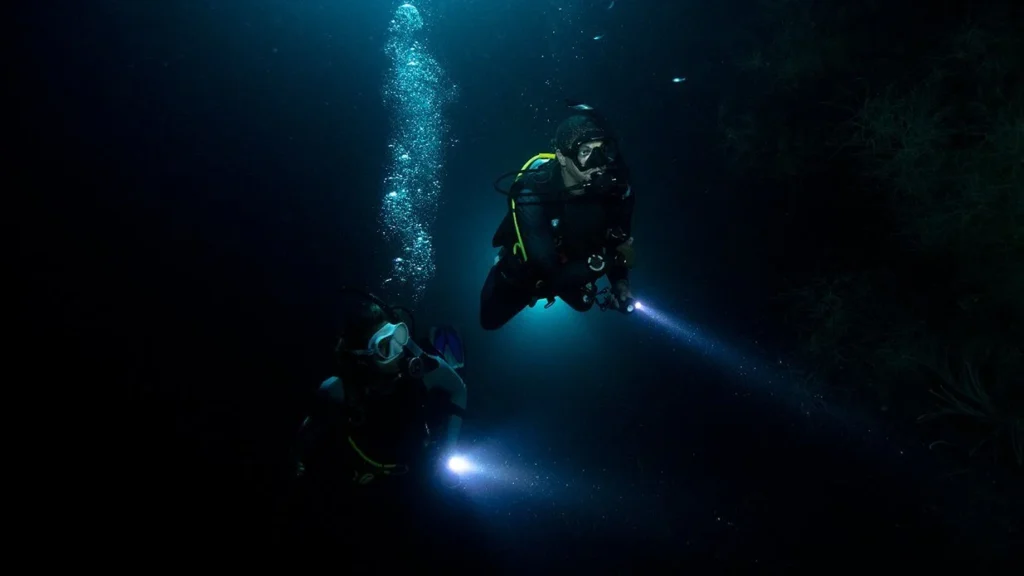
Most 8–10 night itineraries include 18–20 dives across 5–7 active diving days, running 3–4 dives per day. Night dives are occasionally offered depending on operator and conditions.
What sharks will I see at Socorro?
Realistically: whitetip reef sharks (almost guaranteed), Galapagos sharks (very common), silky sharks (frequent), scalloped hammerheads (likely at Roca Partida), tiger sharks (possible, especially at Punta Tosca). A full week at Socorro with multiple dives per day across all four islands regularly produces 6–8 species.
Do I need travel insurance for Socorro?
Yes, comprehensive coverage including dive accidents, medical evacuation, and trip cancellation. The islands are remote. The nearest decompression chamber is in Cabo San Lucas. This is not a situation where you want to discover the limits of a basic travel policy.
Is Socorro better than the Galápagos for diving?
They’re comparable in quality but different in character. The Galápagos offers more overall marine biodiversity and perhaps more consistent hammerhead sightings at Darwin and Wolf. Socorro’s mantas are widely regarded as the most interactive in the world, and the trip is significantly easier and cheaper to organize from the United States or Mexico. For most North American divers, Socorro is the more accessible “big animal” liveaboard, and not a consolation prize.
Can I combine Socorro with Cozumel on one Mexico trip?
Absolutely, and it makes excellent logistical sense. Fly into Cancún for a week of boat diving in Cozumel, then fly down to Cabo San Lucas (SJD) to board your Socorro liveaboard. Both legs of the trip cover Mexico’s best diving. The Caribbean reef experience and the Pacific pelagic expedition are complementary, not redundant.
Final Word: The Pacific Is Waiting
Socorro Island doesn’t offer the most comfortable introduction to diving. The crossing is long, the water is cold by Caribbean standards, and the experience level required is real. It asks something of you before it gives you everything in return.
But when that first manta ray banks overhead and locks eyes with your mask, when you understand that she chose to come to you, the 24-hour crossing, the cold water, the months of logging dives to get ready: all of it disappears.
This is what Mexico’s Pacific has been hiding. And for the diver who’s ready, there is nothing on Earth quite like it.