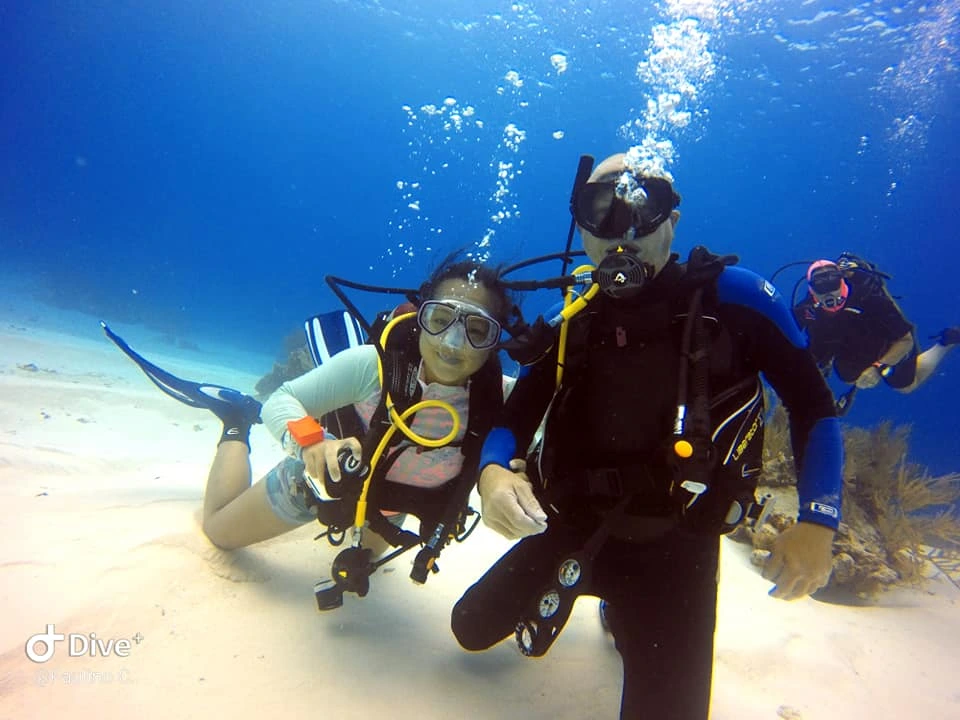
Boat diving in Cancun, Mexico puts you on the Mesoamerican Barrier Reef, the world’s second-largest coral reef system, within just 15 to 25 minutes of leaving the marina. Water temperatures hold steady at 78–82°F year-round, dive sites exist for every certification level, and standard 2-tank reef trips start around $50. For divers looking to explore Mexico’s Caribbean coast, Cancun is the most accessible and affordable entry point on the map.
Why Cancun Is One of Mexico’s Best Boat Diving Destinations
Cancun is not simply a beach resort city. It sits along the northern end of the Mesoamerican Barrier Reef, a 1,000-kilometre coral structure stretching from Mexico’s Yucatán Peninsula down to Honduras. That geography makes every boat dive in Cancun an authentic Caribbean reef experience, not just a shallow, tourist-grade splash.
Moreover, the logistics here are genuinely exceptional. Most dive operators launch from marinas inside the Hotel Zone, and the reef is close enough that you spend your surface interval watching pelicans, not burning through diesel. Here is what makes boat diving in Cancun, Mexico stand out:
- Year-round conditions: Cancun averages roughly 300 diveable days per year. Water temperatures stay between 78–82°F (25–28°C) in every season, so a wetsuit choice of 3mm is comfortable for most divers all year.
- Short crossings: Boats clear the Hotel Zone marina and reach most reef sites in 15 to 25 minutes. You arrive in the water fresh, not fatigued from a long surface transit.
- Depth range: Sites range from 9 metres (30 feet) at MUSA to 25 metres (82 feet) at the wrecks, meaning beginners and advanced divers can both find exactly the right challenge.
- Skill-building platform: Cancun’s calm, shallow reef conditions are ideal for new divers building confidence before upgrading to stronger drift currents further south, a progression we will address in detail below.
But what exactly will you see when that boat clears the marina and the crew calls “Gear up”?
Boat Diving Sites in Cancun | From Shallow Reefs to Deep Wrecks
Cancun’s dive sites fall into four clear categories. Understanding each one helps you choose the right trip for your certification level and goals.
MUSA, The Cancun Underwater Museum (Museo Subacuático de Arte)
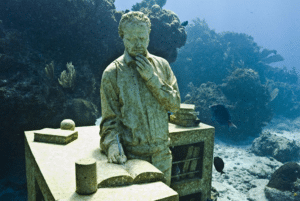
MUSA is the most photographed dive site in Mexico, and for good reason. British sculptor Jason de Caires Taylor created more than 450 life-sized human sculptures, which were then deliberately submerged between 4 and 9 metres (13–30 feet) along the seafloor. Over 15 years, coral, sponges, and encrusting algae have colonised the figures, turning them into surreal living reef structures.
The shallow depth makes MUSA ideal for Open Water divers, Discover Scuba participants, and underwater photographers who want long bottom times without decompression concerns. Snorkellers can access the shallower gallery sections from the surface. Importantly, MUSA was designed with a conservation purpose: by attracting divers away from overvisited natural reefs, the sculptures directly reduce human pressure on the surrounding ecosystem.
- Depth: 4–9 metres (13–30 feet)
- Certification required: Open Water (or Discover Scuba with instructor)
- Best for: Beginners, photographers, families
- Marine life: Coral-encrusted sculptures, sea turtles, tropical reef fish, occasional nurse sharks
Manchones Reef, Herradura & Aristos | Cancun’s Living Coral Reefs
These three reef systems form the core of boat diving in Cancun, Mexico for certified divers. Each reef sits within the marine protected area managed by CONANP (Mexico’s National Commission of Natural Protected Areas), which enforces reef-safe sunscreen rules and controls the number of divers entering each zone.
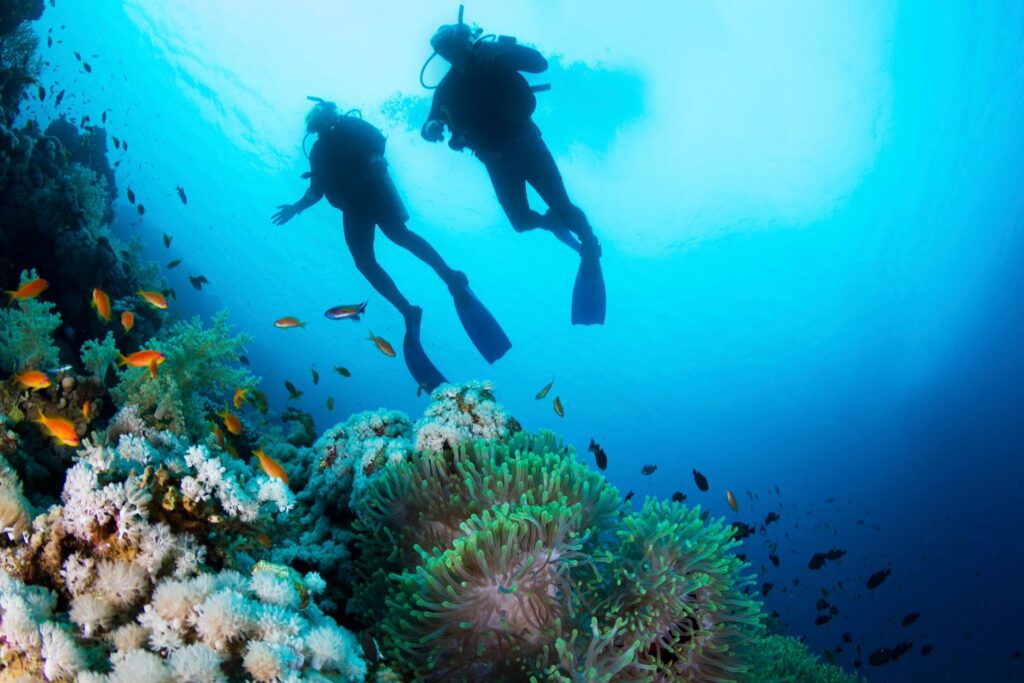
Manchones Reef is the most popular and largest of the three. At depths of 9 to 14 metres, it offers consistent visibility and a dense coral landscape populated by green and loggerhead sea turtles, eagle rays, nurse sharks resting on sandy patches, and sweeping schools of yellowtail snapper. Manchones run parallel to Isla Mujeres, and on good days the clear water lets you see the island’s silhouette from underwater.
Herradura and Aristos sit slightly deeper, between 12 and 20 metres, and tend to attract slightly more experienced divers looking for sections with mild current and larger pelagic visitors. Moray eels anchor themselves in coral heads, while the occasional Caribbean reef shark passes through on the outer edges.
A note on visibility: Cancun’s reefs see their best visibility between November and April, typically reaching 15 to 25 metres. During summer months, warmer surface temperatures fuel plankton blooms, which can reduce visibility to 8–12 metres. A thermocline, a distinct temperature boundary layer, often sits around 15–18 metres and can cause a brief visibility dip as you cross it. Neither condition spoils a dive; both are part of the dynamic Caribbean marine environment.
- Depth: 9–20 metres (30–65 feet)
- Certification required: Open Water
- Best for: All certified levels
- Marine life: Sea turtles, nurse sharks, eagle rays, moray eels, snappers, parrotfish
C-58 and C-55 | Cancun’s World War II Shipwreck Dives
For advanced certified divers, Cancun has two decommissioned US Navy minesweepers sitting on the sandy bottom at approximately 25 metres (82 feet). Both wrecks were deliberately sunk as artificial reefs and have since become some of the most impressive boat dive destinations accessible from Cancun’s Hotel Zone marinas.
C-58 Felipe Xicoténcatl is the larger and better-known of the two. Sunk in 2000, the 70-metre vessel now lists slightly on its side, allowing divers to penetrate the wheelhouse, explore the deck, and navigate along the hull while groupers, barracudas, and large moray eels have established permanent residence. The penetration sections require Advanced Open Water certification or equivalent experience.
C-55 USS Ransom is the second wreck, mentioned in the AI Overview but rarely covered in depth by other dive operators. It sits close to the C-58, also at around 25 metres, and offers a slightly less trafficked alternative for divers wanting to dive both structures on the same boat trip. Marine life is comparable: large groupers, resident barracudas, and the occasional Caribbean reef shark circling the superstructure.
Both wrecks are advanced dives. Strong boat diving experience, comfortable buoyancy control at depth, and a current Advanced Open Water certification are strongly recommended before attempting either site.
- Depth: ~25 metres (82 feet)
- Certification required: Advanced Open Water
- Best for: Experienced divers seeking wreck penetration
- Marine life: Groupers, barracuda, moray eels, nurse sharks, reef sharks
Open-Water Whale Shark Zone (Seasonal | June to September)
Between June and September, the waters north of Cancun near Isla Mujeres host one of the world’s largest seasonal whale shark aggregations. These are boat-only encounters, operators hold a license from CONANP, which strictly regulates vessel numbers, in-water time, and no-touch rules.
This is not a scuba dive but rather a snorkelling encounter in open water. You enter from a panga boat and swim alongside whale sharks that can exceed 10 metres in length. For divers already planning a boat diving trip to Cancun in summer, adding a whale shark day is a straightforward extension of the same trip logistics.
Boat Diving Packages and Prices in Cancun (2025)
Boat diving in Cancun, Mexico is highly competitive on price. Here is a current breakdown of what you can expect to pay in 2025, along with context on what each package actually includes:
| Package Type | Typical Price (USD) | What’s Included | Notes |
|---|---|---|---|
| Certified 2-Tank Reef Dive | $50 – $80 | 2 open-water dives, full gear rental, marine park fee | Best value for regular divers |
| MUSA + Reef Combo (Certified) | $115 – $132 | 1 tank at MUSA, 1 tank at Manchones Reef | Ideal first-day itinerary |
| Beginner Boat Dive (No Cert) | $139 – $149 | 1-hour pool training + 2 shallow ocean dives | Discover Scuba format |
| Multi-Day Passport (Cancun + Cozumel) | $365 – $545 | 3–5 day combination including cenotes or Cozumel reef dives | Best value for 5+ days |
| Private Boat Charter | $640+ | Dedicated dive boat for 4–16 passengers + Divemaster | Groups, families, special occasions |
What do marine park conservation fees fund? Every diver entering Cancun’s marine protected area pays a conservation contribution collected by CONANP. These funds finance underwater reef monitoring, mooring buoy maintenance (which protects coral from anchor damage), and enforcement patrols that keep poaching and illegal net fishing out of the protected zone. When you pay the fee, you are directly contributing to the reef’s long-term health.
Reef-safe sunscreen is not optional. Mexican federal law prohibits the use of sunscreens containing oxybenzone, octinoxate, and other synthetic UV filters in all marine park areas. These compounds bleach coral tissue and accumulate in reef organisms. Bring zinc oxide-based sunscreen, or buy it locally. Any responsible dive operator in Cancun will enforce this rule at the dock.
Equipment rental typically adds $20–$40 per day and covers BCD, regulator, wetsuit, mask, and fins. Confirm what your specific operator includes in the package price before booking, as inclusions vary.
What Skill Level Do You Need for Boat Diving in Cancun?
Beginners and First-Time Divers
Cancun is genuinely welcoming to first-time divers. Discover Scuba Diving programs follow a structured format: a morning pool session (typically one hour) covering basic regulator use, mask clearing, and buoyancy drills, followed by two shallow ocean dives at sites like MUSA or the shallower sections of Manchones Reef. A certified instructor stays within arm’s reach at all times.
One administrative detail that catches many first-time divers off guard: Mexican maritime law requires a physician’s signed medical authorization for anyone with certain pre-existing conditions who wishes to dive. These conditions include, but are not limited to asthma, epilepsy, high blood pressure, diabetes requiring insulin, and any major surgery within the past 12 months. If any of these apply to you, obtain a signed physician’s authorization letter before your trip. Your dive operator is legally required to ask, and without documentation, they cannot allow you in the water.
First-time divers who complete their Discover Scuba experience in Cancun frequently find themselves wanting to continue. The logical next step is a full Open Water certification, which can be completed in Cancun or continued in Cozumel.
Intermediate Divers (Open Water Certified)
If you hold an Open Water certification and have 10 to 30 logged dives, Cancun’s reef system offers the ideal training ground for building the skills you will need for more advanced Caribbean diving. Herradura and the outer sections of Manchones provide mild current conditions, just enough to practice deploying a surface marker buoy (SMB) and reading water movement before you encounter the real drift conditions found further south.
This is also the stage where buoyancy control matters most. Cancun’s reefs are intact and healthy precisely because of how they are managed, and divers who hover at a safe distance from coral rather than kneeling on it are divers who are ready for the next level. If you find yourself consistently comfortable at 18 metres, reading the reef, and managing your air consumption efficiently, you are very close to being ready for drift diving in Cozumel.
Advanced Divers | Wrecks and Pelagic Encounters
Divers holding an Advanced Open Water certification will find the C-58 and C-55 wrecks to be the highlight of any Cancun boat diving itinerary. Both structures reward careful exploration, and the wreck diving experience here translates directly to the kind of structured dive planning needed at deeper sites.
For advanced divers who have already explored Cancun’s wrecks and want to understand what comes next, Cozumel’s C-53 wreck offers a different challenge: a deeper, larger structure with stronger ambient current and a richer marine life density. The C-53 is the natural progression from Cancun’s C-58.
Best Time to Go Boat Diving in Cancun
Cancun supports year-round boat diving, but conditions shift meaningfully by season. Here is a month-by-month summary:
| Months | Conditions | Signature Species / Events | Visibility |
|---|---|---|---|
| November – February | Calmest seas, coolest water (26–27°C) | Whale sharks departed; eagle rays, turtles, reef sharks | 18–25 metres |
| March – May | Calm, warm, excellent visibility | Spawning aggregations begin; large schools of fish | 15–25 metres |
| June – September | Warmer water, occasional afternoon chop | Whale sharks near Isla Mujeres (Jun–Sep) | 8–15 metres |
| October | Transitional; hurricane risk low but present | End of whale shark season; reef recovers | 10–18 metres |
Why is winter visibility better? The mechanism is straightforward. During summer months, elevated sea surface temperatures accelerate phytoplankton growth, creating the plankton blooms that reduce underwater clarity. In contrast, the cooler, drier winter months suppress phytoplankton production and calm the thermoclines, producing the crystal-clear 20-metre visibility that makes November through April the premium season for boat diving in Cancun, Mexico.
It is worth noting that even “reduced” summer visibility at 8–12 metres is still excellent by global standards. A whale shark encounter in 10 metres of visibility is an extraordinary experience. Do not write off the summer season simply because visibility peaks are lower.
Practical Tips for Boat Diving in Cancun
These are the logistical details that make the difference between a smooth dive day and an avoidable complication:
- Reef-safe sunscreen only: Zinc oxide-based products are compliant. Chemical sunscreens with oxybenzone are banned in all Mexican marine parks and may be confiscated at the dock.
- Bring your certification card: Mexican dive operators are legally required to sight your certification card before every dive. Physical card or digital format (e.g., PADI eLearning) is acceptable.
- SMB: Some operators require divers to carry their own surface marker buoy. Confirm with your operator in advance. If you do not own one, most shops have rentals.
- Dive computer: Boats may not provide one. Bring yours, or confirm the rental includes it.
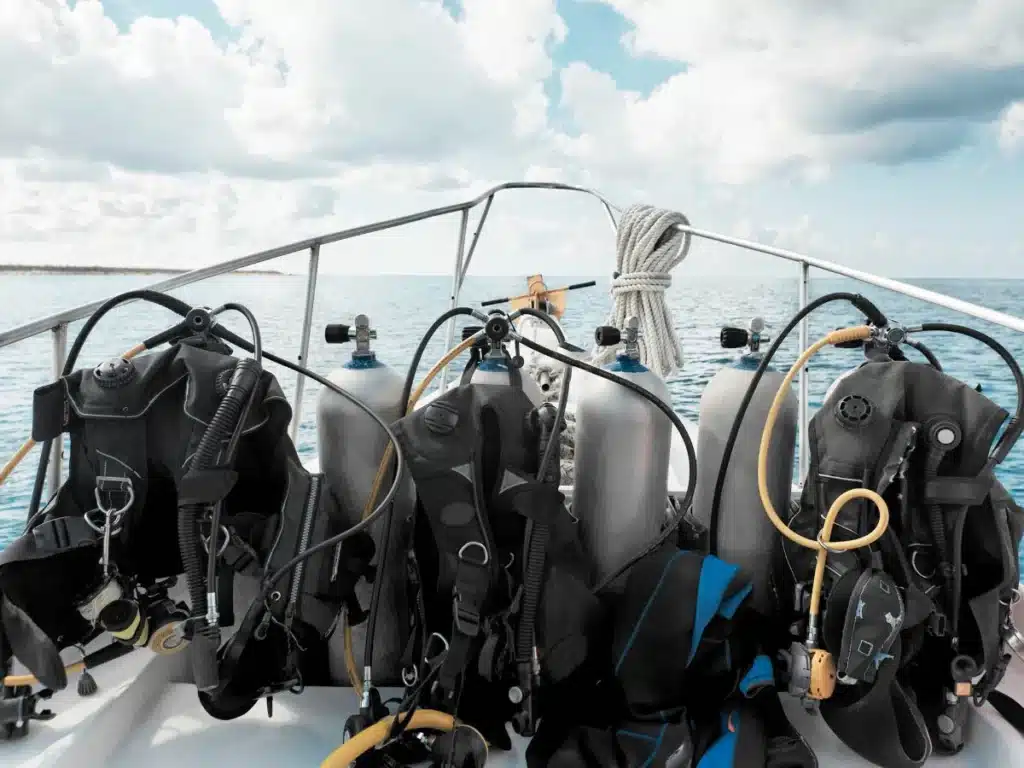
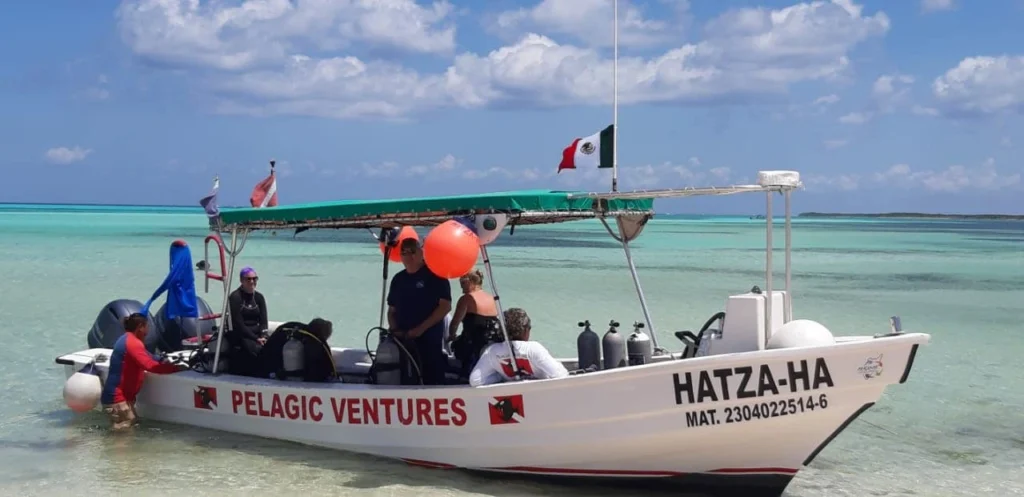
- What to expect on a Cancun dive boat: Most Hotel Zone operators use either a panga (a flat-bottomed open skiff) or a medium-sized fiberglass dive boat. Entry is typically a backward roll from the gunwale. Smaller pangas have less shade and a wetter surface ride; larger boats offer more comfort on rougher days.
- Seasickness: The 15–25 minute crossing is usually benign in calm conditions, but November-to-April north swells occasionally make for a bumpy ride. If you are susceptible, take preventive medication the night before, not the morning of the dive, when certain antihistamine-based remedies can increase nitrogen narcosis risk.
- Medical documentation: Carry a signed physician’s authorization letter if you have any of the conditions listed under Mexican maritime diving regulations. The operator will ask.
- Confirm inclusions: Before booking, verify whether the package price includes tanks, full equipment rental, marine park fee, weights, and the boat ride. These are not always bundled together.
Cancun vs. Cozumel | When It’s Time to Upgrade Your Dive
This is the conversation that most honest dive guides will eventually have with you, and it is worth having clearly.
Cancun is an outstanding place to start diving and to build genuine underwater competence. The reef is real, the marine life is abundant, and the conditions are forgiving. However, Cancun is not the apex of Caribbean diving in Mexico. That title belongs to Cozumel, located 45 minutes south by ferry, and the difference between the two is not merely distance.
Here is how the two destinations compare honestly:
| Feature | Cancun | Cozumel |
|---|---|---|
| Current | Mild to moderate on outer reefs | Strong drift diving; walls and channels |
| Visibility | 10–25 metres seasonally | 25–40 metres year-round |
| Marine Life Density | High; turtles, rays, nurse sharks | Very high; bull sharks (Nov–Mar), eagle rays, hawksbill turtles |
| Wall Diving | Not available | World-class walls (Santa Rosa, Palancar) |
| Wreck Diving | C-58 and C-55 (25m) | C-53 (deeper, stronger current) |
| Best For | New divers, confidence building | Intermediate to advanced; drift specialists |
Many divers who begin in Cancun find that after 10 to 15 logged dives, especially after experiencing mild current on Herradura Reef, they are genuinely ready for something more. Cozumel’s Santa Rosa Wall and Palancar Reef are among the most celebrated dive sites on the planet, and they are a short ferry ride from where you are already standing.
The progression is natural: Cancun teaches you the foundation. Boat diving trips in Cozumel with Pelagic Ventures give you the next chapter.
Frequently Asked Questions About Boat Diving in Cancun
Is boat diving in Cancun good for beginners?
Yes, it is one of the best beginner boat diving environments in the Caribbean. MUSA sits at just 4–9 metres, and the shallow sections of Manchones Reef are calm, clear, and instructor-friendly. Discover Scuba Diving programs include supervised pool training before any ocean entry. If you are considering your first Open Water certification, Cancun is an excellent place to take the first steps.
How much does boat diving in Cancun cost?
A standard certified 2-tank reef dive costs $50–$80 USD, typically including full gear and the marine park conservation fee. MUSA combo packages run $115–$132. Beginner programs without a certification start around $139–$149, covering the pool training session and two shallow ocean dives. Private boat charters begin at $640 for groups of four or more.
Do I need a certification to go boat diving in Cancun?
Not for a Discover Scuba Diving experience, that program is designed for uncertified participants and is supervised by a certified instructor at all times. However, to dive independently (without an instructor at your side), you need a minimum of an Open Water certification from a recognised agency such as PADI or SSI. If you want to take a course while in Mexico, scuba diving courses are available in Cozumel year-round.
What is the best dive site in Cancun?
It depends on your certification level. Beginners and photographers, MUSA is unmatched, there is nothing else like it in the Caribbean. For intermediate certified divers who want marine life density, Manchones Reef consistently delivers sea turtles, nurse sharks, and eagle rays in one dive. For advanced divers, the C-58 Felipe Xicoténcatl wreck is the headline attraction.
Can I see whale sharks while boat diving in Cancun?
Yes, seasonally. Between June and September, boat trips operating from the Cancun area access the whale shark aggregation near Isla Mujeres. These are snorkelling encounters rather than scuba dives, CONANP regulations restrict in-water activity to snorkelling only to protect the animals. Boats are CONANP-licensed and limit group size. It is one of the most extraordinary marine wildlife experiences in the world, and it can be combined with a morning reef boat dive on the same day.
Do I need a physician’s note to go boat diving in Cancun?
If you have certain pre-existing medical conditions, yes. Mexican maritime law requires a signed physician’s medical authorization for divers with conditions including asthma, epilepsy, uncontrolled high blood pressure, insulin-dependent diabetes, and recent major surgeries, among others. This is not a recommendation, it is a legal requirement that operators must enforce. Obtain documentation from your doctor before traveling if any of these conditions apply.
What is the difference between diving in Cancun vs. Cozumel?
The primary differences are current strength, visibility, and marine life intensity. Cancun offers calmer conditions ideal for building skills; Cozumel delivers world-class drift walls, 25–40 metre visibility year-round, and encounters with bull sharks between November and March. Most divers visit Cancun first and Cozumel once they are ready to step up. See our boat diving trips in Cozumel for full details on what that upgrade looks like.