The sharptail eel (Myrichthys breviceps) is a harmless, spot-patterned fish of the snake eel family (Ophichthidae) found throughout Cozumel’s sandy shallows and reef rubble. Despite its serpentine shape, it is not a sea snake, true sea snakes don’t exist in the Caribbean. It hunts crabs at night and spends its days buried tail-first in the sand.
Diver's Quick-Facts | Sharptail Eel
Scientific Name
Myrichthys breviceps
Family Ophichthidae
Best Time to Spot
Night (7 PM+)
Occasional late afternoon emergence
Dangerous?
No, completely harmless
Not a sea snake; breathes with gills
Depth Zone
15–60 ft
4.5–18 m | sand flats & rubble
Top Local Sites
Paradise Reef & Villa Blanca
Shore dive sand flats
Conservation Status
Least Concern (IUCN)
Stable, widely distributed population
Difficulty Level
All levels
OW cert sufficient; night dive = Advanced+
Photography Tips
Macro, f/16, ISO 200
Strobe off-axis to pop yellow spots
Wait, Did You Just See a Sea Snake in Cozumel?
You’ve just surfaced from a dive at Paradise Reef, heart still racing, and you’re absolutely sure something long, yellow-spotted, and serpentine just slithered past your fin. Your brain fired one word: snake. Take a breath, because what you saw is far cooler, and completely harmless.
True sea snakes belong to the family Hydrophiidae, and they simply do not exist anywhere in the Caribbean Sea. The animal weaving through Cozumel’s sand flats is the sharptail eel (Myrichthys breviceps), a bony fish that breathes through gills, has no venom, and is so unbothered by divers that our guests routinely get face-to-face with one inside arm’s reach.
True venomous sea snakes (Hydrophiidae) have never been recorded in the Caribbean Sea or the Gulf of Mexico. Every “sea snake” sighting in Cozumel is a sharptail eel, a harmless, gill-breathing fish. If it didn’t surface to breathe air, it was not a snake.
The confusion is entirely understandable. The sharptail eel moves in slow, sinuous S-curves across the seafloor. Its elongated body and distinctive yellow spots echo the warning coloration of venomous sea snakes found in the Pacific and Indian Oceans. Evolution played a clever visual trick, but once you know what to look for, the two animals are impossible to confuse.
What Is a Sharptail Eel? Identity, Anatomy & Classification
The sharptail eel belongs to Ophichthidae, the snake eel family, a group of roughly 300 eel species worldwide whose name literally means “snake fish.” Within that family, Myrichthys breviceps is one of the most commonly encountered Caribbean species, especially by divers exploring shallow rubble and sand habitats between the surface and about 60 feet.
Taxonomic Classification
Kingdom
Animalia
Class
Family
Common Names
Phylum
Chordata
Order
Anguilliformes
Genus / Species
Myrichthys breviceps
First Described
What Does a Sharptail Eel Look Like?
The body is long and cylindrical, narrowing toward a distinctive finless, hard-tipped tail, the anatomical feature that gives the species its name. Adult coloration is a bluish-gray to dark brown base, overlaid with pale, diffuse yellow spots. Those spots are notably small and densely packed on the head, then grow progressively larger and more circular along the mid-body, a pattern so consistent that field ID is usually instant.
Most adults in Cozumel run 2.5 to 3 feet (75–90 cm) in length, though exceptional individuals push past 40 inches (102 cm). Despite their length they remain quite slender, more like a thick rope than a moray eel’s muscular bulk. Two tubular nostrils protrude prominently from the snout, giving the head an almost comical, submarine-periscope appearance that macro photographers absolutely love.
Pectoral fins are small and nearly invisible in motion. The dorsal fin is low and runs most of the body length. Because there are no scales, the skin has a smooth, slightly iridescent quality in good dive lighting, another detail that rewards a patient photographer.
3 ft
300+
58–63%
0–9 m
Sharptail Eel vs. Sea Snake: The Definitive ID Guide
Even experienced naturalists do a double-take the first time. Use this comparison table, our divemasters hand this to every guest before a night dive briefing at Villa Blanca.
Feature | Sharptail Eel | True Sea Snake |
|---|---|---|
| Present in Cozumel? | ✓ Yes, common | ✗ Never recorded in Caribbean |
| Breathing method | Gills, stays underwater | Lungs, must surface for air |
| Venomous? | ✓ Completely harmless | ✗ Highly venomous (Pacific/Indian only) |
| Tail shape | Hard, sharp, finless point | Paddle-shaped (for swimming) |
| Scales | None, smooth skin | Overlapping reptile scales |
| Coloration | Gray-brown + yellow spots | Varies; often banded |
| Locomotion | Slithers along seafloor | Active swimmer, mid-water |
| Diet | Crabs & buried invertebrates | Fish & eels (Pacific species) |
| Diver interaction | Docile; tolerates close approach | Rarely encountered; avoid if seen |
The One-Second Field Test
Watch the animal for 30 seconds. Did it surface to breathe? No? Then it’s an eel, not a snake. A true sea snake must surface regularly for air, every animal you see in Cozumel that never comes up for a breath is a fish.
Behavior, Diet & the Art of Sand Burrowing
The Backward Burrowing Trick
Here’s the detail that reliably drops jaws during our dive briefings: the sharptail eel burrows into sediment tail-first. That rigid, spike-like tail tip, the feature that names the whole species, acts as an anchor and auger simultaneously. The eel reverses into soft sand with a corkscrew motion until only the very tip of its snout remains visible, two tubular nostrils poking above the surface like a tiny submarine’s periscope.
This isn’t just hiding. Buried in the sand with nostrils exposed, the eel can monitor chemical signals in the passing water, essentially “smelling” for the crabs and crustaceans that pass overhead. It is a supremely patient sit-and-sniff predator during daylight hours. On afternoon drift dives along the rubble zones near Paradise Reef, our divemasters routinely spot just the tip of a snout, easily missed unless you know exactly what you’re scanning for.
Nocturnal Hunting: When the Eels Come Out
After sunset is when Myrichthys breviceps fully earns its reputation as a nocturnal hunter. The animal emerges from its burrow and begins a methodical patrol across sand flats, keeping its snout angled toward the substrate, sampling every chemical signal. When it detects a buried crab, the strike is surprisingly rapid for such an apparently sluggish animal, that long snout punches downward into the sand and comes back up with prey.
On our Villa Blanca night shore dives, one of Cozumel’s premier shallow-water night dive sites, we regularly track two or three sharptail eels working the sand flat simultaneously. They move with remarkable purpose, covering 20–30 feet of ground in a single dive window. Watching one freeze mid-glide, reverse its head angle, and then punch into the sand is genuinely one of the most cinematic moments in Caribbean macro diving.
Night Diver Tip
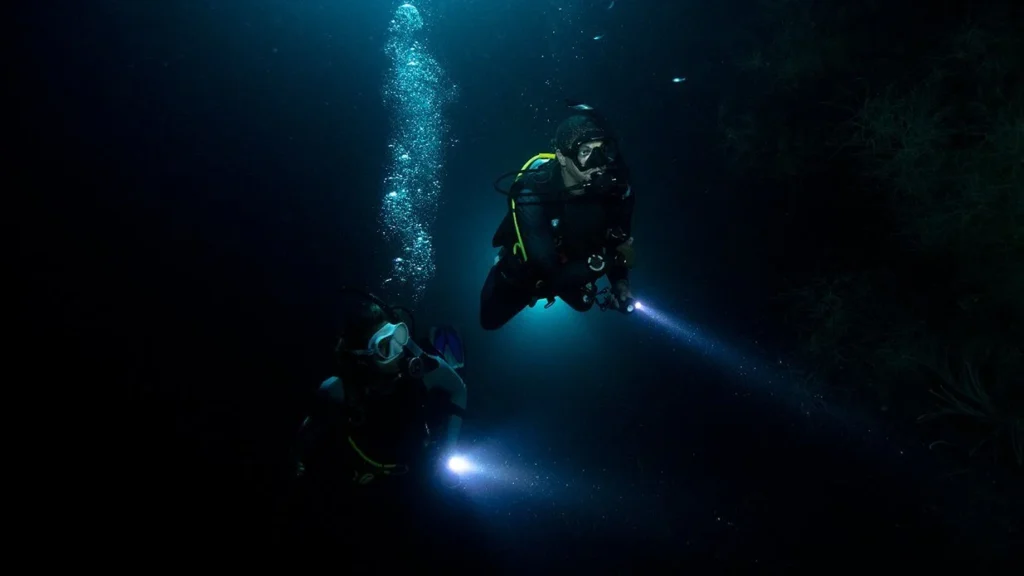
Sharptail eels have very poor eyesight and navigate almost entirely by smell. They often glide directly toward dive lights, not because they’re aggressive, but because your torch illuminates the same patch of sand they’re already hunting. Don’t mistake their approach for a threat. Simply hold still and let the encounter unfold naturally.
Are Sharptail Eels Social?
Primarily solitary hunters, sharptail eels don’t school or display territorial aggression toward conspecifics. Multiple individuals sharing a sand flat simply ignore each other, each working its own chemical trail. Their docility around divers is equally pronounced, the IUCN notes that the species “allows close approach by divers and can easily be photographed.” Our guests frequently photograph them at distances under two feet with zero stress to the animal.
Where to Find Sharptail Eels in Cozumel: Site-by-Site
The sharptail eel is a Western Atlantic species with a range stretching from Bermuda and southern Florida through the Bahamas, the Gulf of Mexico, the entire Caribbean, and down to the coast of northern South America. Cozumel sits squarely in the heart of that range, and the island’s diverse mix of shallow sand flats, seagrass beds, harbor rubble, and reef-fringe rubble provides exactly the habitat this species prefers.
Paradise Reef
Day Dive | 15–40 ft
Classic Cozumel beginner-to-intermediate drift. The shallow rubble zone at the south end produces consistent late-afternoon sharptail sightings when eels start emerging before full dark. Look for protruding snouts in the sandy patches between coral heads.
Villa Blanca
Night Shore Dive | 15–35 ft
The go-to Cozumel night shore dive for macro life. The broad sand flat north of the entry point is the island’s most reliable sharptail eel hunting ground after 7 PM. Our divemasters have counted up to four individuals active simultaneously here.
El Cielo
Drift Dive | 25–50 ft
Famous for starfish but the broad seagrass and sand corridors also host sharptail eels on afternoon drifts. Excellent for photography, the open sandy background gives your strobe nowhere to bounce except directly onto your subject.
Want our full dive site breakdown? Our site guide covers depths, currents, and macro hotspots across 20+ Cozumel reefs.
Underwater Photography Guide: Capturing the Perfect Sharptail Eel Shot
The sharptail eel is arguably one of the most photogenic animals in Cozumel’s macro catalogue. The challenge isn’t proximity, these animals will let you settle in centimeters away, it’s lighting the yellow spots correctly without blowing out the pale base color or throwing harsh shadows from sand particulate your fins kicked up on approach.
Camera Settings | Sharptail Eel Macro
Aperture
f/14 – f/18
Strobe Position
45° off-axis, low angle
Focus Point
Tubular nostrils / eye
ISO
ISO 100 – 200
Lens
100mm macro (or 60mm for context shots)
Night vs. Day
Night = active subject; Day = stationary portrait
Shutter Speed
1/160 – 1/200s
Approach Protocol
Horizontal descent, no fin kicks
The Single Most Important Photography Tip
Sand is the enemy of sharptail eel photography, not the animal. A gentle approach that kicks up a cloud of fine white sand behind you will coat your subject in particulate that scatters strobe light into gray murk. Our most experienced underwater photographers approach from downcurrent, let the current carry away any disturbed sand, and position the strobe upstream. On a calm night at Villa Blanca with no current, they simply wait 90 seconds after settling before firing the first frame.
The tubular nostril shot, both nostrils in sharp focus, protruding from the sand, with the spotted head blurring gently into bokeh, is the defining image of this species. We’ve had guests publish that exact frame in Alert Diver and several major diving Instagram accounts after a single Pelagic Ventures night charter.
Macro photography dives are available on all our private and small-group charters. Tell us your targets and we build the dive plan around them.
Fun Facts for the Eco-Conscious Family & Fish-ID Checklist
Heading to Cozumel with younger divers or curious snorkelers? The sharptail eel is one of the island’s best family-friendly marine-life encounters, dramatic enough to generate genuine excitement, harmless enough for complete peace of mind. Here’s your family-ready fact sheet:
- It burrows backward. That sharp tail isn’t just for show, the eel uses it like a corkscrew, drilling tail-first into sand until only its nostrils are visible. Try explaining that to a ten-year-old and watch their face light up.
- It’s nearly blind. Those small, mid-sized eyes are largely decorative. The sharptail eel navigates its entire world through the twin tubular nostrils that protrude from its snout, sniffing out crabs buried in sand it cannot see.
- It’s a fish, not a reptile. This one surprises adults as much as children. The sharptail eel has gills, scales (actually, none at all; it has smooth skin), and breathes water like any other reef fish. The “snake” appearance is pure convergent evolution.
- It grows up to one meter long, which is roughly the height of a six-year-old child. Seeing that length undulating across a sand flat at night is an experience that tends to stick with young divers for life.
- It’s harmless and doesn’t bite divers. The sharptail eel’s blunt, multi-row teeth are designed for crushing crabs, not confronting divers. There are no recorded bites on humans in scientific literature.
- Its conservation status is “Least Concern.” The IUCN assessment notes stable, widely distributed populations. Watching one here tonight helps support the case for Cozumel’s marine park protections that keep it that way.
Cozumel’s waters host four species of snake eel. The sharptail eel’s closest local look-alikes are the Goldspotted eel (Myrichthys ocellatus, dark-ringed gold spots on a pale background) and the Blackspotted snake eel (Quassiremus ascensionis, small dark spots on the head). The sharptail’s yellow-centered spots on a gray body, and its distinctly hard tail tip, make it the easiest of the three to identify in the field.
Ecology & Conservation: Why Sharptail Eels Matter to Cozumel's Reef
The sharptail eel is a benthic mesopredator, occupying the critical middle tier of the food web between primary consumers (crabs, small crustaceans) and apex predators like large grouper and sharks. By keeping crab populations in check, the species indirectly supports healthy populations of the invertebrates those crabs prey on, threading through Cozumel’s reef ecosystem in ways science is still mapping.
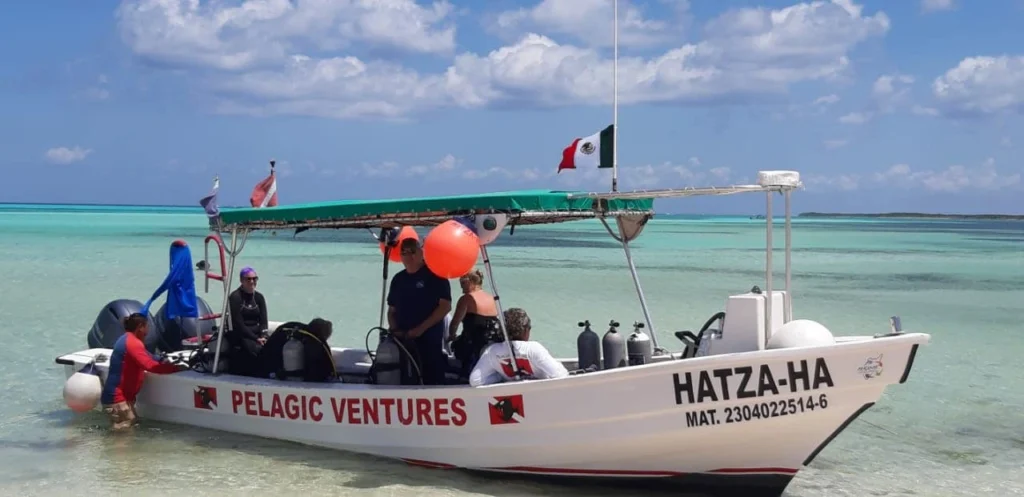
The species’ classification as Least Concern by the IUCN reflects stable populations across its Western Atlantic range. However, that stability is not unconditional, it depends on the continued health of the shallow sand flat and rubble reef habitats the eel requires. Cozumel’s status as a protected biosphere reserve under Mexico’s SIMEC/CONANP system directly supports the preservation of these habitats. Every dive conducted with a licensed local operator like Pelagic Ventures contributes to the park fee system that funds that protection.
The sharptail eel is also poorly studied. Mexican-fish.com researchers note that “specific details on age, diet, growth, habitat, longevity, movement patterns, and reproduction” remain largely unknown for this species. Every documented sighting, including citizen science observations logged through iNaturalist during dives with our team, contributes to the scientific baseline that future conservation decisions will depend on.
See a Sharptail Eel Tonight
Our night shore dives at Villa Blanca and Dzul-Ha are led by divemasters who’ve logged thousands of Cozumel nights underwater. They know exactly where the eels patrol, and they’ll put you right in front of one.
Sharptail Eel FAQ
Are there sea snakes in Cozumel?
No, and this is one of the most persistent myths in Caribbean diving. True venomous sea snakes (family Hydrophiidae) evolved in the Indo-Pacific and have never colonized the Atlantic Ocean or Caribbean Sea. Every elongated, slithering animal you encounter underwater in Cozumel is either a snake eel (most commonly the sharptail) or one of Cozumel’s moray eel species. Neither is dangerous to a diver who maintains respectful distance.
What does a sharptail eel eat?
Primarily crabs and buried benthic crustaceans. The eel uses its chemosensory tubular nostrils to detect prey hidden under sand, then strikes with a rapid downward lunge. Some sources also document small fishes as occasional prey items. The blunt, multi-row teeth are adapted for crushing hard-shelled prey rather than gripping slippery fish.
How deep do sharptail eels live?
The species is primarily a shallow-water animal, most commonly found between the surface and about 30 feet (9 m), though FishBase documents recorded depths to 400 feet (123 m) in exceptional cases. In Cozumel, our divemasters encounter virtually all sharptail eels in the 15–50 foot range on sand flats adjacent to reef rubble zones.
Can a sharptail eel bite you?
There are no documented human bite incidents in the scientific literature for this species. The animal is consistently described as docile, and its blunt teeth are designed for crushing crabs, not a threat to human skin. Harassment (attempting to handle or corner the animal) could theoretically prompt a defensive response, which is why we always observe without touching.
Is the sharptail eel related to the moray eel?
Distantly. Both are members of the order Anguilliformes (true eels), but they belong to different families. Morays are Muraenidae; sharptail eels are Ophichthidae (snake eels). The two groups share elongated body form through evolutionary convergence but diverged millions of years ago and have very different ecologies, habitat preferences, and behaviors.
What is the difference between a sharptail eel and a goldspotted eel?
Both are Ophichthidae and both occur in Cozumel, but the pattern differs clearly on close inspection. The sharptail eel (Myrichthys breviceps) has pale yellow spots on a gray-brown background. The goldspotted eel (Myrichthys ocellatus) has dark-rimmed, gold-centered spots on a pale background, essentially the color inversion. The sharptail’s body also tends to be darker overall, and that hard, sharply pointed tail is diagnostic for breviceps.