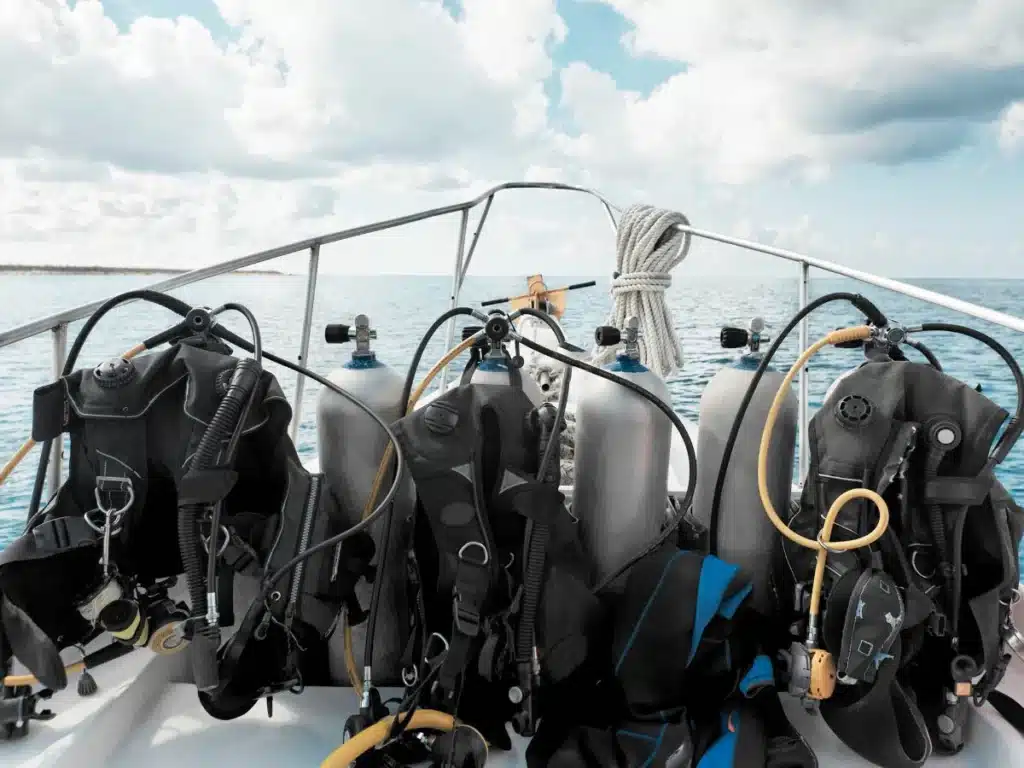
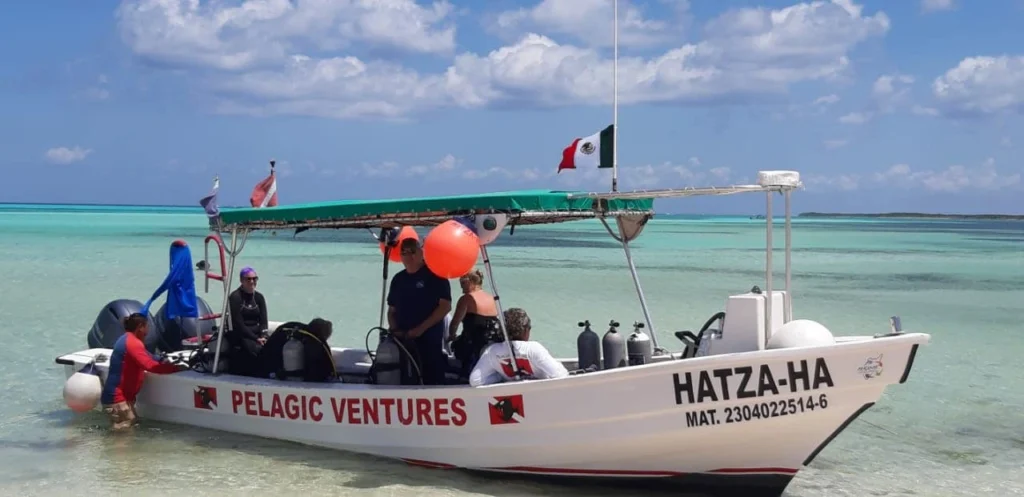
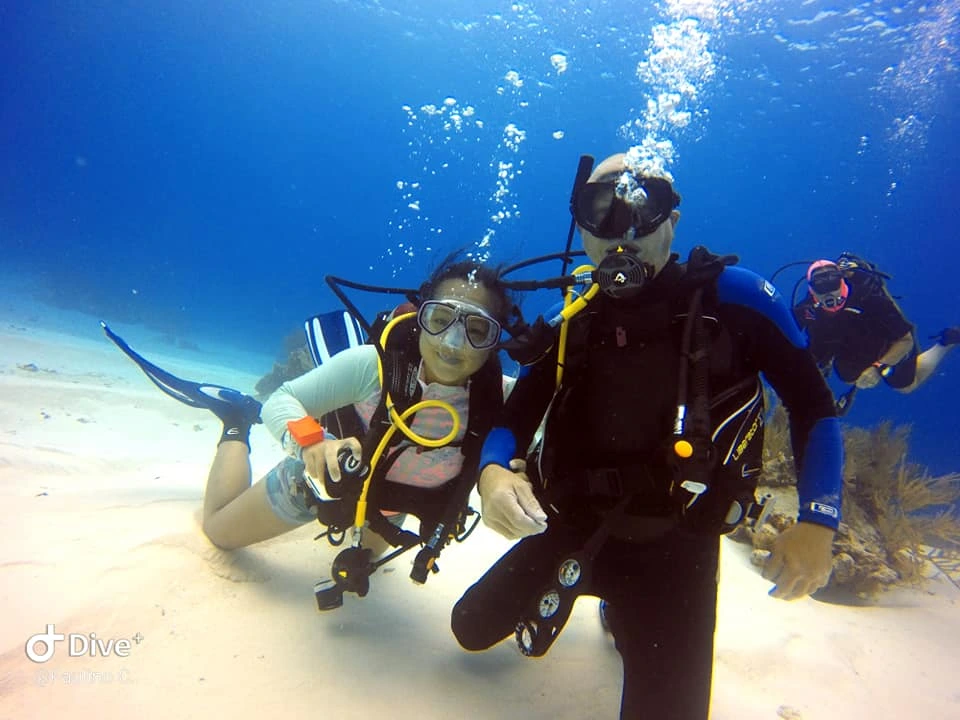
If you’re packing for boat diving gear in Cozumel, bring a high-visibility SMB, a dive light, a 3mm wetsuit or rash guard for the warm water, and a dry bag for the ride between tanks. Everything else, tanks, weights, and rental equipment, your local operator handles. Here’s exactly why, and what our own boat carries every single day.
We’re Pelagic Ventures Scuba, a family-run dive shop that’s been running boats out of Marina Cozumel since 1994. Paulino and Mary Castillo are on the water with our guests daily, not sitting behind a desk, and Captain Hugo has probably crossed more of these currents than anyone reading this article. What follows isn’t a generic packing list pulled from a manufacturer’s catalog, it’s what we actually tell divers to bring before they step onto one of our boats.
Packing before you fly? Save this guide or contact us and we’ll send you our printable Cozumel boat dive packing checklist so you’re not scrolling through this on your phone at the airport.
Why Cozumel Boat Diving Gear Is Different From a Standard Packing List
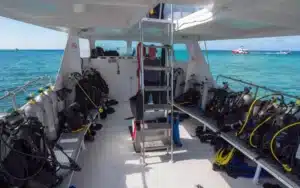
Most scuba packing guides are written for anchored, shore-adjacent diving. Cozumel doesn’t work that way, and that changes what belongs in your bag.
Drift Diving, Not Anchored Diving, What That Means for Your Gear
Nearly every dive here follows the reef wall in a current rather than staying put over an anchored boat. Our boats don’t drop anchor and wait; they follow your bubbles and pick divers up wherever the current lets them out. That single fact drives most of the gear decisions in this guide, from why a personal signaling device matters to why bulky, drag-heavy gear becomes a liability rather than a convenience. If you haven’t dived a true drift site before, it’s worth reading our breakdown of drift diving in Cozumel before your trip so the current doesn’t catch you off guard.
Fast Pangas & Small Boats, Why Streamlined Kit Matters
We cap our trips at eight divers per boat, which keeps things personal, but it also means deck space is limited. Dangling accessories, oversized bags, and loose gear become tangled or misplaced fast on a boat this size. A streamlined setup isn’t a luxury here, it’s what lets you gear up quickly and get in the water while the captain is still lining up the drop.
The Essential Cozumel Boat Dive Gear Checklist
This is the core kit we recommend every diver bring, regardless of experience level. Items marked with an asterisk are ones we rent on board.
Safety Gear
- Surface Marker Buoy (SMB) with a finger spool, a 6-foot, high-visibility neon orange or pink sausage is the standard here, and it’s the one item we consider genuinely non-negotiable
- A whistle or dive alert clipped to your BCD
- A basic save-a-dive kit: spare mask strap, o-rings, and zip ties, especially useful if you’re diving multiple days in a row
How to actually deploy an SMB from depth: at your safety stop (around 15–20 feet), fill it partway using your alternate air source or a low-pressure inflator hose, not your regulator, while holding the spool with slight tension so it doesn’t tangle on the way up. Let it feed out as it rises rather than releasing the spool all at once, and keep your other hand free to manage buoyancy. If you’ve never practiced this in open water, do a dry run in the shallows on your first dive with us before you actually need it in a current.
Illumination
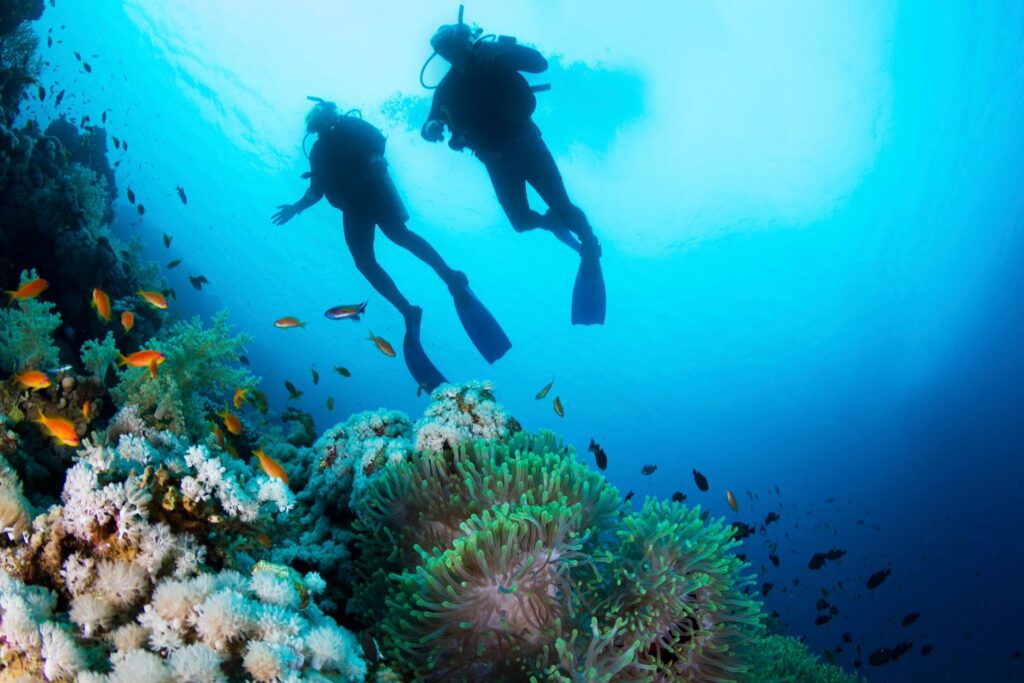
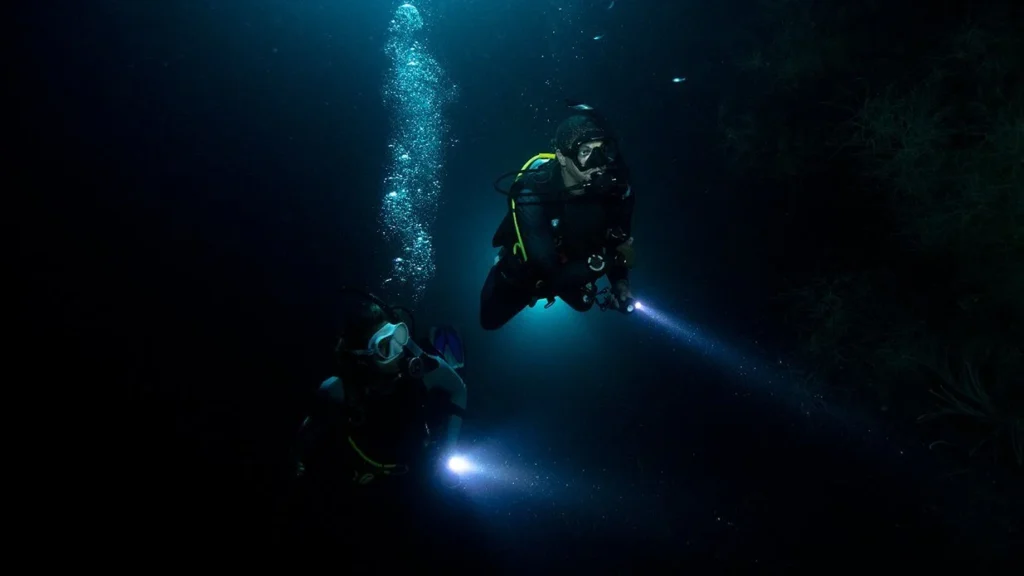
- A compact dive light, Palancar and Colombia are full of overhangs, swim-throughs, and crevices where marine life hides from direct sun, and a light turns a wall dive into a completely different experience
Exposure Protection
- A 3mm full wetsuit for most of the year, or a lighter option in peak summer (see the seasonal breakdown below)
- A rash guard for surface intervals and sun protection
Fins, Mask & Boots
- A low-volume mask you already trust, this isn’t the trip to test a new one
- Stiff paddle or channel fins. Cozumel’s currents reward power over finesse; softer, flexible fins tend to leave divers fighting the water instead of working with it
- Open-heel fins with boots if you run cold, or full-foot fins if you’re comfortable in warm water
Dive Computer
- A nitrox-compatible computer with an easy-to-read display. We run standard air and nitrox fills, and most of our repeat divers upgrade to nitrox once they see how much more bottom time it buys them
Surface Comfort
- A windproof, water-resistant jacket for the run between your first and second tank, the boat ride is often the coldest part of the day, even in a place known for 78–84°F water
- Sunglasses with a retainer strap
Protecting Your Gear
- A 10–20L heavy-duty dry bag. Spray comes over the sides on the crossing to sites like Palancar and Colombia, and there’s no dry deck to set a phone or camera down on
Gear Priorities by Diver Type
The checklist above covers everyone, but a few groups have specific needs worth calling out directly.
Underwater Photographers
Our boats don’t have a dedicated dry deck, so camera handling takes a bit more planning than on a liveaboard. A few habits make a real difference:
- Use a locking lanyard or coiled tether, not a wrist strap, when shooting near current-driven walls like Santa Rosa, a dropped camera in a 2-knot current is gone for good
- Know which rinse bucket is for cameras before the boat leaves the dock; masks with anti-fog residue in the camera bucket can fog a dome port fast
- Secure your rig in a padded case during the surface crossing, not loose on a bench seat, the ride between sites is bumpier than the dive itself
- Hand your camera up to the crew before you climb the ladder, never attempt the climb one-handed
Mature Divers (50+)
If ease of movement matters more to you than streamlining, a few small choices help: open-heel fins with a spring strap are far easier to don and doff on a rocking boat than a bungee or buckle strap, and a dive computer with a large, high-contrast display is worth the upgrade over a compact console gauge. Stiff paddle fins still outperform soft ones in our currents, but a shorter blade length reduces leg fatigue on longer drift dives without sacrificing power.
Family Groups
If you’re traveling with kids or teens who are certified divers, color-coded or clearly labeled gear (fin straps, mask straps, dry bag tags) saves real confusion on an 8-diver boat where everyone’s kit looks similar at a glance. It’s a small thing, but it’s the difference between a smooth gear-up and someone grabbing the wrong fins right before a roll entry.
Solo Divers Paired With a Buddy On-Site
If you’re traveling alone and will be buddied with another guest, lean toward redundancy: your own SMB and spool rather than assuming your buddy has one, a backup mask, and a computer you don’t have to share readings from mid-dive. You won’t know your buddy’s gear or habits going in, so your own kit should be able to stand on its own.
Thermal Protection Matrix, What to Wear by Season
Cozumel’s water sits in a narrow, comfortable range most of the year, but the surface conditions shift more than people expect.
| Season | Water Temp | Wind/Surface Conditions | What We Recommend |
| Nov–Feb (“Nortes” season) | ~77–79°F | Cold fronts bring wind and choppier surface intervals | Full 3mm wetsuit plus a windproof jacket for the boat |
| Mar–May | ~79–81°F | Generally calm, transitional | 3mm wetsuit or a lighter 2mm |
| Jun–Sep | ~82–84°F | Hot, humid, minimal wind | Rash guard or a 1.5–2mm shorty for most divers |
| Oct | ~80–82°F | Occasional storm activity | 3mm wetsuit, keep a jacket on board |
Divers who run cold, or who are doing multiple dives a day for several days straight, tend to stay in a 3mm year-round. There’s no wrong answer here, bring what keeps you comfortable enough to stay relaxed and conserve air.
Cozumel National Marine Park Rules That Affect Your Gear
Cozumel’s reefs sit inside a protected national marine park, and the rules aren’t a suggestion, they shape what you should and shouldn’t pack.
Gloves Are Banned
Neoprene gloves are prohibited within the park to reduce accidental contact with coral. If you tend to get cold hands, the honest answer is a thicker wetsuit with attached mitts isn’t standard practice here either, most divers simply accept cooler hands for the dive’s duration, since the water rarely runs cold enough to make this a real problem.
No Sunscreen in the Water
Sunscreen is not permitted before diving with us, chemical or otherwise. This is where a UPF 50+ rash guard earns its place as gear rather than an afterthought, it does the sun protection job that sunscreen would otherwise need to do, without putting anything in the water at all.
No Knives, Spears, or Touching the Reef
Spearfishing, knives, and rods are prohibited inside the park, and the expectation is simple: maintain about 1.5 meters (5 feet) from the reef, never touch it, and never feed or handle marine life. Guests dive with a guide at all times, which also means your gear doesn’t need to include the kind of solo-navigation tools some destinations require.
The Marine Park Fee
Every diver pays a daily marine park fee to help fund reef conservation and enforcement. We include this in our trip pricing rather than adding it at the dock, so there’s no cash surprise waiting for you at check-in.
Rent or Bring Your Own? A Real Cost & Logistics Breakdown
This is the question we get most from first-time visitors, and the honest answer depends on how often you dive and how much you’re checking anyway.
What We Provide On Board
Every trip includes tanks, weights, and full use of the boat’s oxygen and first aid equipment. Beyond that, we rent individual gear pieces at $10 per item per day, and masks and fins are complimentary with any trip. If you’re traveling light or just getting back into diving after time away, there’s no reason to check a full gear bag just to dive with us.
Airline Baggage Fees vs. Local Rental Rates
A full scuba kit easily pushes a checked bag over standard airline weight limits, and those fees add up fast on a round trip. Here’s what the math actually looks like for a typical 4-day trip:
| Scenario | Cost |
| Rent BCD + regulator with us, 4 days ($10/item/day each) | $80 total |
| Rent BCD + regulator + wetsuit, 4 days ($10/item/day each) | $120 total |
| Average round-trip checked bag fee for a dive gear bag (most US/Canada carriers) | $70–$150+ each way |
| Masks and fins | Always complimentary with any trip, never a rental line item |
For most divers doing three or four days with us, renting a BCD and regulator is roughly the same cost as one checked bag fee, and you skip packing wet gear for the flight home entirely. The math shifts in favor of bringing your own once you’re diving five or more days on a single trip, since the per-day rental cost keeps accruing while a checked bag fee is a one-time charge each way.
When It Makes Sense to Bring Your Own Gear
If you’re diving five or more days, traveling with a full trip package, or you simply dive better in gear you already trust, your own regulator, your own fins, bring it. The items worth owning first are almost always your mask, your SMB, and your fins, since fit and familiarity matter most with those three.
Boat Setup & Gear Logistics: What Actually Happens on a Cozumel Dive Boat
Knowing what the actual dive looks like from the deck makes it much easier to know what to pack and how to set it up.
Backward Roll Entries and Securing Your Gear Beforehand
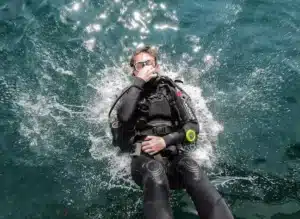
Most of our entries are a backward roll off the side of the boat. Before that roll, tuck your gauges and octopus into your BCD, secure your mask, and make sure nothing is dangling that could snag on the way in. It sounds minor until you’re the diver untangling a hose at the surface while the group is already descending.
Tank Changeovers Between Dives
Between your first and second tank, our crew handles the changeover while you’re on your surface interval, this is where that windproof jacket earns its keep, since you’re sitting on a moving boat in wet gear with the breeze picking up.
Camera Handling on Small Boats
If you’re bringing a camera, hand it directly to a crew member before you climb the ladder, never try to climb with it yourself in any kind of swell. A locking lanyard is worth the small investment if you’re shooting on every trip, particularly at current-driven sites where currents can pick up quickly during a dive.
For divers building out a full week around our boats, our guides to wall diving in Cozumel, night diving in Cozumel, and our boat diving trips break down what gear priorities shift for each type of trip.
Frequently Asked Questions About Cozumel Boat Dive Gear
Do I need my own SMB, or does the divemaster carry one?
Our guides carry signaling gear, but currents can separate a diver from the group faster than people expect. We strongly recommend every diver carry and know how to deploy their own SMB rather than relying solely on the group’s.
Is a 3mm wetsuit warm enough for Cozumel?
For most of the year, yes. During Nortes season (November–February) or on multi-dive days, some divers add a hooded vest or move up to a thicker suit, but a 3mm covers the vast majority of trips comfortably.
Are gloves really banned?
Yes, neoprene gloves are prohibited throughout the marine park to protect the reef from accidental contact.
DIN or Yoke, which tank valve is standard here?
Our tanks use standard Yoke (International) valves. If your regulator is DIN-only, bring a DIN-to-Yoke adapter or let us know in advance so we can set you up properly.
Should I bring or rent a dive computer?
Either works. We recommend nitrox-compatible computers since we offer nitrox fills, and most repeat divers find the extra bottom time worth the switch.
Ready for Your Cozumel Boat Dive? What to Pack, In Short
At minimum: an SMB, a dive light, appropriate exposure protection for the season, a mask and fins you trust, a dive computer, and a dry bag for the crossing. Everything else, tanks, weights, and any rental pieces you’d rather not travel with, we’ve got covered at $10 per item per day, with masks and fins always included.
We’ve been running small-group boats out of Cozumel since 1994, capping every trip at eight divers so our crew can actually keep an eye on everyone in the water, not just count heads. If you’re still deciding on an operator for your trip, our guide on how to choose a boat dive operator in Cozumel walks through what to look for beyond the gear list.
Ready to book your two-tank boat dive? Get in touch with our team and we’ll help you plan the right days, sites, and gear for your trip.