To night dive in Cozumel, you need a valid Open Water certification, a primary and backup dive light, and a licensed local guide, required by Cozumel Marine Park rules. Book a 1- or 2-tank twilight tour departing between 6:00 PM and 7:00 PM, pay the ~$13 USD marine park fee, and prepare to witness one of the most dramatic reef transformations on Earth.
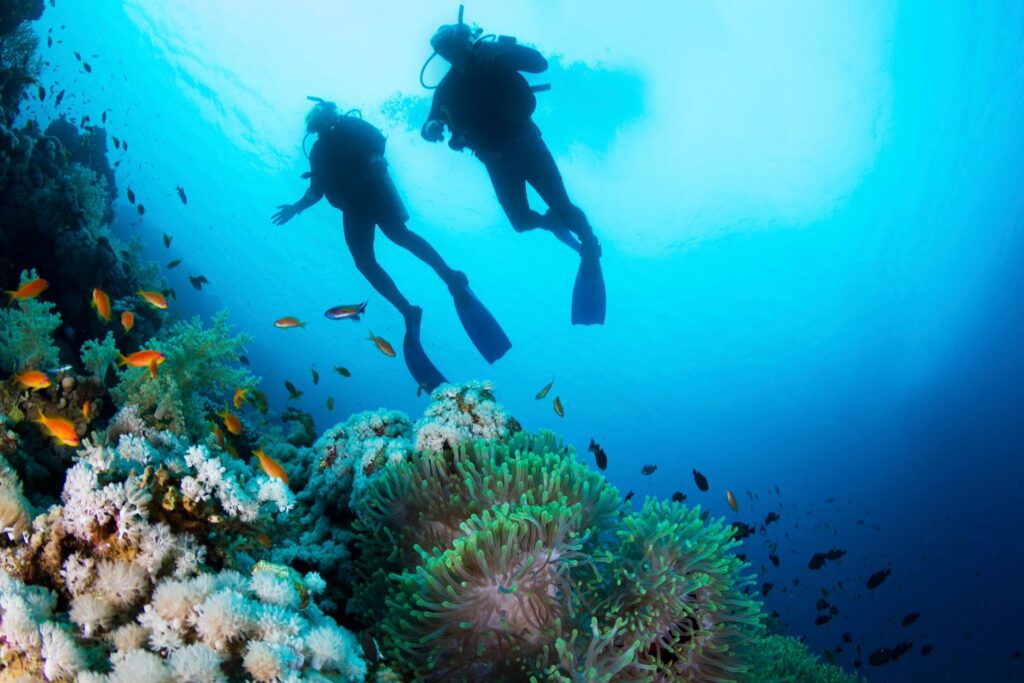
The moment your light sweeps across a coral head after dark, something shifts. The parrotfish that grazed lazily past you this morning is now wrapped in a mucus cocoon, sleeping inside a brain coral. A Caribbean reef octopus, invisible at noon, is now hunting across the rubble with ruthless elegance. Cozumel’s reef does not sleep. It simply changes shifts.
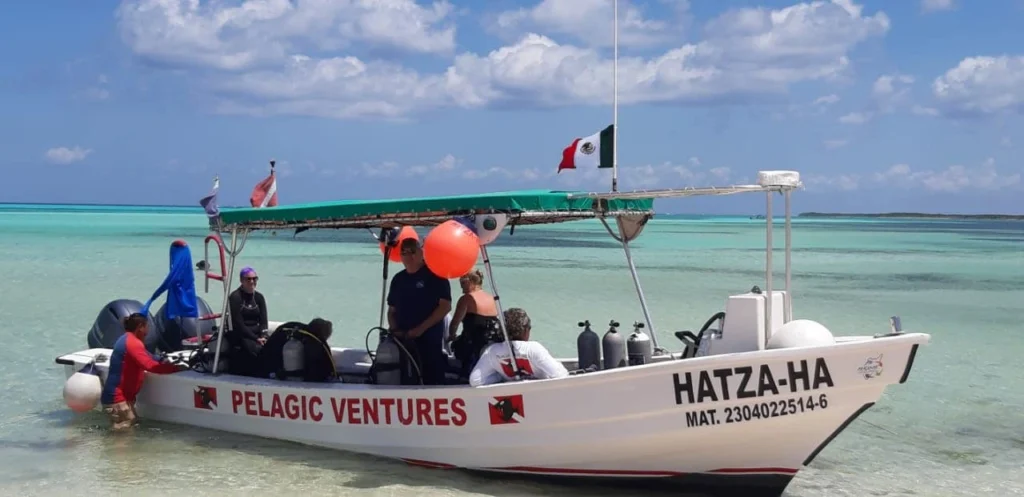
We run night dive charters right here in Cozumel at Pelagic Ventures Scuba, and we have watched nervous first-timers transform into completely awestruck divers during a single 50-minute tank. This guide gives you everything you need to prepare, plan, and make the most of your night dive, whether this is your first time stepping off a boat in the dark, or you are chasing the perfect octopus shot with your camera rig.
Do You Need a Special Certification to Night Dive in Cozumel?
This is the first question nearly every diver asks, and the answer is straightforward: a standard Open Water certification is sufficient for guided night dives in Cozumel. You do not need an Advanced Open Water or a Night Diver Specialty to join a professionally guided boat dive.
That said, there are two important qualifications to keep in mind:
- Recent dive experience matters. If your last dive was more than 12–24 months ago, most responsible dive operators, including us, will ask you to complete a refresher or Discovery Scuba session before joining a night charter. Buoyancy control and situational awareness are amplified in low-visibility conditions; you want both skills sharp before you go in after dark.
- A Night Diver Specialty unlocks more. If you hold a PADI or SSI Night Diver certification, you have already practiced light signals, disorientation drills, and navigation without surface reference. Your dive will be more relaxed, and you will spend more time watching marine life instead of managing anxiety.
Rusty diver tip: Start with a shallow shore dive on a house reef before committing to a drift night dive. Fifteen feet of calm water at dusk is the perfect confidence-builder.
Is a Guide Legally Required for Night Diving in Cozumel?
Yes. Cozumel’s protected reefs fall within the Cozumel Marine Park, and Mexican maritime law requires that all diving within the park boundaries be conducted with a certified divemaster or instructor. Independent solo night diving from the shore inside the park is not permitted. This rule protects both the reef and you, Cozumel’s famous drift currents do not pause after sunset.
What to Expect on a Night Dive in Cozumel
Twilight vs. True Night Dive: What Is the Difference?
Most operators in Cozumel offer two distinct formats, and understanding the difference helps you choose the right experience.
Twilight Dive (Sunset Dive)
- Departs roughly 30–45 minutes before sunset
- You enter the water while there is still ambient blue light
- The transition from dusk to full darkness happens during the dive itself
- Ideal for first-timers because your eyes adjust gradually
- Typically shallower reefs like Paradise Reef or Tormentos
True Night Dive
- Departs after full dark, usually between 8:00 PM and 9:00 PM
- The reef is already in full nocturnal mode when you descend
- Nocturnal predators are more active; bioluminescence is more vivid
- Better for photographers and experienced divers comfortable in dark water
For a complete breakdown of the best dive sites in Cozumel, including which reefs transition best after dark, visit our dive site guide.
What Does a Typical Night Dive Look Like?
Here is the step-by-step reality of a guided night dive with us:
- Pre-dive briefing (on the boat): Your divemaster covers light signals, the “lost diver” protocol, buoyancy reminders, and the specific marine life to look for that evening.
- Gear check at the surface: Lights tested, computers confirmed, backup lights clipped.
- Descent: You follow your divemaster’s light as an anchor point. Stay within arm’s reach until you are settled.
- The dive: 45–55 minutes exploring the reef at 30–60 feet, depending on the site.
- Ascent and safety stop: A 3-minute safety stop at 15 feet. Your divemaster signals the boat with a light; the crew meets you at the surface.
- De-brief: Back on the boat, everyone compares sightings. This is usually the most energetic 10 minutes of the evening.
How to Night Dive in Cozumel: Gear Checklist
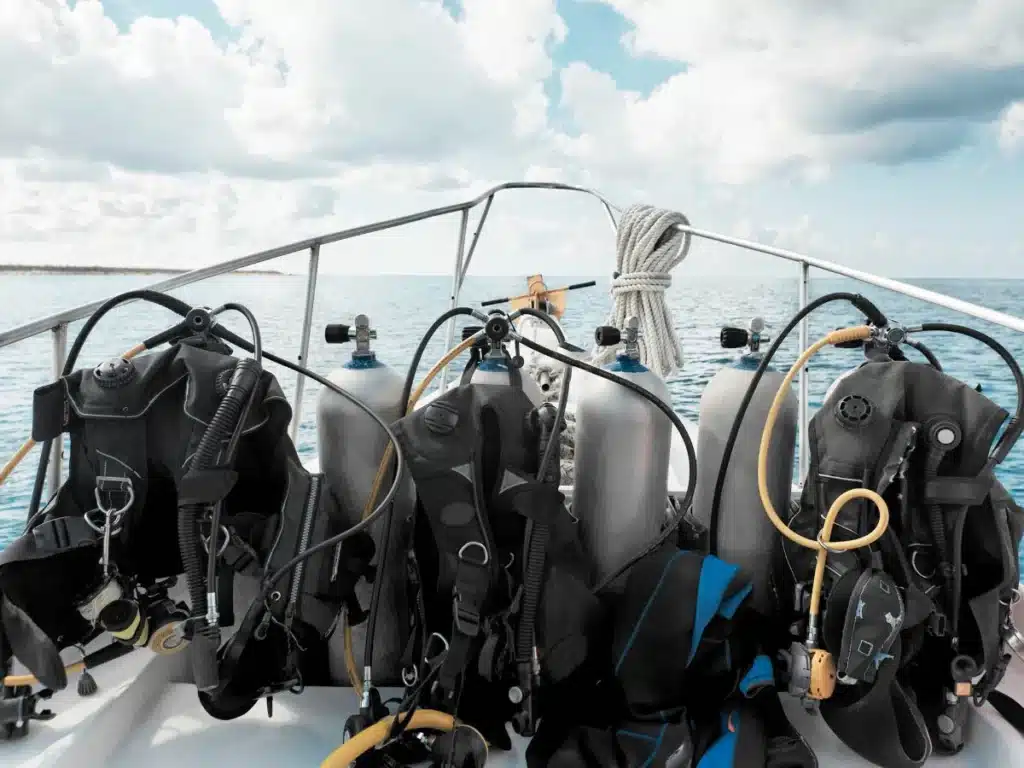
You do not need exotic equipment to night dive in Cozumel. However, your lighting setup is non-negotiable. Here is what to bring, and what we can provide.
Essential Night Dive Gear
| Item | Your Responsibility | Can Rent? |
| Primary dive light (min. 700 lumens) | Recommended to own | Yes, $10–$20 USD |
| Backup/secondary light | Required | Yes, included or $5–$10 USD |
| Tank, BCD, regulator | Rental available | Yes |
| Wetsuit (3mm minimum) | Recommended | Yes |
| Dive computer | Strongly recommended | Yes |
| Cozumel Marine Park fee (~$13 USD) | You must bring cash | No |
Primary Light: What to Look For
Your primary light should produce at least 700–1,000 lumens with a focused beam to illuminate coral structures. Wide-angle floodlights are better suited for photography; narrow beams are better for navigation and spotting nocturnal wildlife in crevices. If you are traveling light and do not want to pack a dive torch, our team rents high-quality primary lights that are serviced between every use.
The Backup Light Rule
Carrying a backup light is not optional on a guided night dive in Cozumel, it is a hard safety requirement. If your primary light fails at 50 feet in a mild drift current, your backup light is how your divemaster locates you and how you signal your group. We recommend clipping it to your BCD D-ring so it is reachable with one hand.
The Best Night Dive Sites in Cozumel
Cozumel has more than 30 named dive sites inside the marine park. Not all of them are equally suited for night diving. After years of guiding divers after dark, these are the sites we return to most consistently.
Paradise Reef , Best for Beginners
Paradise Reef sits just south of San Miguel at a maximum depth of around 40 feet. The coral structures are dense and close together, which means there is always something to aim your light at. The mild current makes drift navigation easy without being stressful. It is our first recommendation for any diver who is nervous about their first night dive.
What you will see here: Caribbean reef octopus, sleeping parrotfish in mucus cocoons, spotted moray eels hunting in the open, and, on the right night, bioluminescent plankton lighting up with every fin kick.
Tormentos Reef , Best for Marine Life Density
Tormentos Reef is one of Cozumel’s most celebrated shallow dives, and its reputation grows even stronger after dark. The sandy channels between coral heads are packed with nocturnal foragers. Basket stars unfurl from their daytime hiding spots to form spectacular feeding formations. Arrow crabs emerge from every crevice.
What you will see here: Basket stars in full bloom, flamingo tongue snails, secretary blennies, and, if you are lucky, a Splendid Toadfish calling from inside a coral head.
Palancar Reef , Best for Experienced Night Divers
Palancar Reef is Cozumel’s most iconic dive, and its deeper sections (60–80+ feet) take on an entirely different character at night. The Mesoamerican Barrier Reef, the second longest in the world, drops away into blue-black water, and the sheer wall diving experience becomes something genuinely otherworldly.
We recommend Palancar for night dives only with divers who have solid buoyancy skills and comfort in open water. If you want to work toward that level, our Advanced Open Water course in Cozumel covers deep diving and night diving as core modules.
Nocturnal Marine Life: What You Will See After Dark in Cozumel
This section is the reason most people go. The reef that looked familiar and beautiful during the day becomes genuinely wild after sunset. Here is the full nocturnal cast of characters.
Caribbean Reef Octopus
The octopus is the undisputed star of every Cozumel night dive. During the day, octopuses hide, brilliantly, inside coral crevices, their skin texture matching the surrounding rock so precisely that they are nearly impossible to spot. At night, they emerge to hunt. Watch for a rippling, color-shifting shape moving along the rubble with precise, deliberate movements. If your light catches its eye-shine first, you may have 30–60 seconds of close observation before it jets away.
Photography tip: Approach slowly, avoid shining your light directly at its eyes, and shoot on a wide aperture to capture the natural ambient blue of deeper water.
Bioluminescence
On calm nights with little moon, the water around Cozumel can light up with bioluminescent dinoflagellates, microscopic plankton that produce cold blue light when agitated. Turn off your torch at 40 feet and wave your hand in front of your face. If conditions are right, every movement trails a faint galaxy of blue sparks. It is one of the most quietly magnificent things you can experience underwater.
Basket Stars
By day, basket stars look like a knot of pale rope tucked into a coral head, easy to overlook. By night, they extend dozens of branching, curling arms into the current to filter-feed, creating formations that look like living sculptures. Tormentos Reef is our best site for basket star sightings.
Sleeping Marine Life
Night diving reveals behaviors completely invisible during daylight:
- Parrotfish secrete a transparent mucus cocoon around themselves to sleep, possibly to mask their scent from predators.
- Sea turtles often rest motionless on coral ledges, accessible for careful, non-contact observation.
- Surgeonfish and angelfish hover in semi-torpor against coral walls, allowing divers to approach far more closely than during the day.
Lobster, Crabs, and Other Invertebrates
Spiny lobsters, which spend all day in dark dens, march across open sand flats at night in large groups during certain seasons. Caribbean king crabs and arrow crabs emerge from the rubble. Flamingo tongue snails, small and brilliantly orange, move across sea fans in search of polyps.
The Splendid Toadfish (Cozumel’s Endemic Icon)
The Splendid Toadfish (Sanopus splendidus) is found nowhere else on Earth but Cozumel. It is a reclusive daytime hider, but at dusk it begins calling from inside coral heads with a distinctive, almost mechanical drone that carries surprisingly well underwater. Shining your light into a deep coral crevice at Tormentos or Paradise Reef is often the best strategy for a sighting.
Drift Diving at Night: How Cozumel’s Currents Change After Dark
Cozumel is famous for its drift diving, the longshore current that runs along the west coast allows divers to glide effortlessly along the reef without fighting the water. That same current does not stop at sunset.
Here is what changes at night and how we handle it:
Current behavior: The Cozumel current is generally predictable, running north-to-south or south-to-north depending on tidal cycles. Your divemaster checks conditions before every departure and selects sites and entry points accordingly. We do not drop divers on a site if the current is outside safe parameters for a night dive.
Navigation at night: During day dives, you navigate partly by visual landmarks, the drop of a wall, the shape of a coral head, the direction of ambient light. At night, your spatial awareness relies primarily on your divemaster, your depth gauge, and the current direction. Stay close to the group, keep your light aimed slightly down and ahead, and let the current do the work.
Light signals you must know before you go in:
| Signal | Meaning |
| Light moving in slow circles | OK / I am fine |
| Light moving rapidly back and forth | Attention / Emergency |
| Light pointing straight up (stationary) | Emergency at surface |
| Two short flashes | Descend / come to me |
| One long flash | Ascend / come up |
These signals are covered in every pre-dive briefing we run. If you want deeper preparation, our drift diving guide for Cozumel covers current dynamics, entry techniques, and buoyancy management in detail.
How Much Does a Night Dive in Cozumel Cost?
Pricing in Cozumel is competitive and fairly consistent across reputable operators. Here is a realistic breakdown of what to budget.
Night Dive Pricing Overview
| Trip Type | Typical Price Range |
| 1-tank guided night dive (boat) | $70–$95 USD |
| 2-tank twilight + night dive (boat) | $110–$130 USD |
| Light rental (primary) | $10–$20 USD |
| Light rental (backup, if not included) | $5–$10 USD |
| Cozumel Marine Park fee | ~$13 USD (cash) |
| Full gear rental (if needed) | $25–$40 USD |
What Is the Cozumel Marine Park Fee?
Every diver inside the Cozumel Marine Park pays a conservation fee. As of 2025, this fee is approximately $13 USD per person and must be paid in cash. The revenue funds reef monitoring, mooring buoy maintenance, and marine ranger operations. It is non-optional, and some dive shops collect it directly; others ask you to pay at the dock. Bring cash for this regardless.
Is Night Diving in Cozumel Safe? Addressing Common Fears
We hear the same anxieties from divers before their first night dive, and they are all completely valid. Here is our honest answer to each one.
“What if I panic in the dark?”
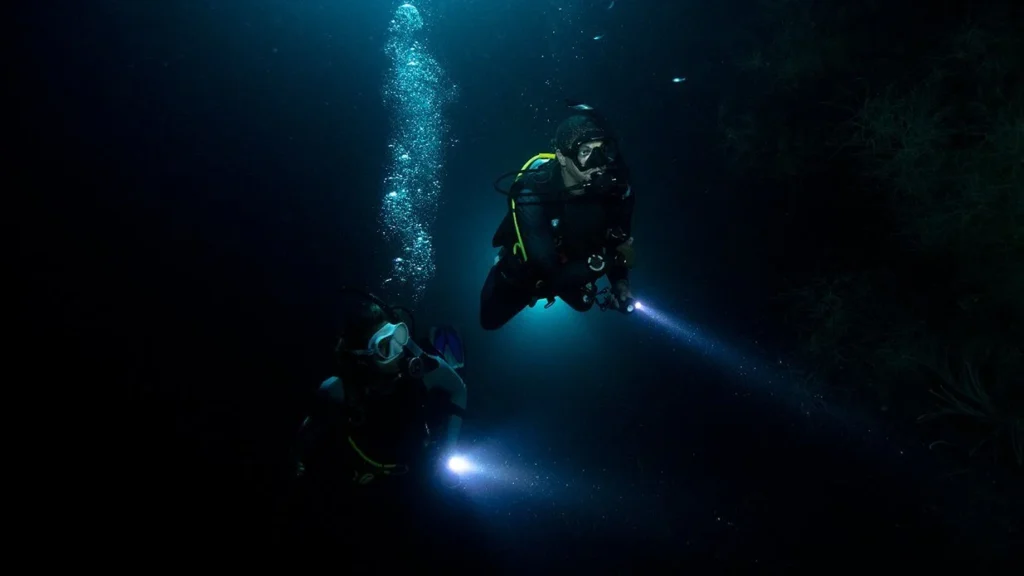
The most common fear is darkness itself. Here is the reality: you are never truly in the dark on a night dive. Your primary light illuminates a vivid cone of reef in front of you. Your divemaster’s light is always visible. The boat has lights on the surface above you. The darkness exists at the edges of your beam, but your focus is always on what your light is illuminating. Most divers report that after the first two minutes, the darkness feels less threatening than interesting.
“What about sharks at night?”
Reef sharks are present in Cozumel’s waters year-round, including at night. In our experience guiding thousands of night dives, shark encounters at night are occasional, brief, and not aggressive. Reef sharks are curious animals that typically make one or two passes and continue on their patrol. A nurse shark resting on the sand is a far more common sighting. If shark encounters concern you, discuss them with your divemaster before the dive, context and education make an enormous difference.
“What if I lose the group?”
This is a legitimate concern and why light signals and the buddy system matter so much at night. Our protocol: if you lose visual contact with your divemaster, stop, inflate your SMB (surface marker buoy), and ascend slowly. Do not chase lights you cannot identify. The boat crew is always watching for ascending divers.
“Is my buoyancy good enough?”
Night diving amplifies buoyancy errors because you lose some visual depth cues from the surface. If you find yourself consistently over- or under-shooting your target depth during the day, address this before a night dive. Our Discover Scuba Diving refresher and the Open Water course both spend significant time on buoyancy control fundamentals.
How to Book a Night Dive in Cozumel with Pelagic Ventures Scuba
Booking a night dive with us is straightforward. Here is how the process works:
- Check our night dive schedule at pelagicventuresscuba.com/night-diving-in-cozumel for current departure times and availability.
- Reserve your spot online or by contacting us directly. Night dive groups are kept small, typically 4–6 divers per divemaster, to ensure personalized attention.
- Bring your certification card (physical or digital), dive log if you have one, and cash for the marine park fee.
- Arrive 20–30 minutes before departure for gear setup and your pre-dive briefing.
- Relax. Your divemaster handles everything from site selection to surface support.
We also offer bundle packages that combine a morning 2-tank boat dive with an evening night dive, which is the most efficient way to pack maximum reef time into a single day. View our full boat diving options in Cozumel for current pricing and schedules.
Night Diving Tips from Our Divemasters: What Makes the Difference
After years of guiding night dives in Cozumel, these are the habits that separate a good night dive from a truly memorable one.
Move slowly. Every creature on the reef responds to the sudden arrival of light. If you approach slowly and keep your beam slightly off-center from an animal’s position, you get far longer observation windows before it retreats.
Turn your light off for 60 seconds. Pick a moment during the dive, preferably on a sandy bottom away from the coral, and ask your divemaster to signal a 60-second blackout. Let your eyes adjust. The bioluminescence, if present, will appear. It is worth the planning.
Watch the coral, not just the sand. New night divers often focus on the open sandy areas because they are easier to navigate. The most interesting creatures, octopuses, toadfish, spotted morays, are inside and underneath the coral structure.
Stay shallower on your first night dive. Depths under 40 feet give you more time, more ambient light during a twilight dive, and a more comfortable margin if your air consumption is higher than usual due to excitement.
Manage your air more conservatively. Excitement, slightly colder water (surface temperatures drop 1–2°F after dark), and the natural adrenaline of a new experience all increase air consumption. Plan your turnaround at 1800 PSI rather than 1500 PSI until you know how your body responds.
Frequently Asked Questions About Night Diving in Cozumel
Can a beginner night dive in Cozumel?
Yes. Open Water certified divers with recent dive experience are welcome on guided night dives. Sites like Paradise Reef are specifically suited to less experienced divers, shallow, calm, and rich with easy-to-spot nocturnal marine life.
What time do night dives start in Cozumel?
Twilight dives typically depart between 5:30 PM and 6:30 PM depending on the season. True night dives depart after full dark, usually between 7:30 PM and 9:00 PM. Check with your operator, as departure times vary by season and sunset time.
Do I need to bring my own dive lights?
No. If you do not own dive lights, virtually every reputable dive operator in Cozumel rents primary and backup lights. Rental fees range from $10–$30 USD depending on the equipment. At Pelagic Ventures, lights are frequently included in night dive packages.
Is night diving in Cozumel worth it?
Without question. The nocturnal transformation of Cozumel’s reef is one of the most genuinely surprising experiences in Caribbean diving. Marine life that is completely hidden during the day, octopuses, basket stars, bioluminescent plankton, the endemic Splendid Toadfish, becomes accessible, visible, and memorable in ways that daylight dives simply cannot replicate.
How is drift diving different at night in Cozumel?
The current dynamics are the same, but your spatial reference changes significantly. You rely more on your depth gauge, your divemaster’s light, and the direction of water movement rather than visual landmarks. This is why a confident divemaster and clear light communication signals are essential. Our drift diving guide covers night-specific drift techniques in detail.
Is the Cozumel Marine Park fee mandatory?
Yes. Every diver in the park pays the fee, currently approximately $13 USD. It funds reef conservation and monitoring. Bring cash, many collection points do not accept cards.
Ready to Night Dive in Cozumel?
The reef you spent all day exploring is still down there, but it is unrecognizable now. New creatures, behaviors and reasons to stay longer.
Book your Cozumel night dive with Pelagic Ventures Scuba
Our small-group, expert-guided night charters depart from the heart of San Miguel and keep groups small enough that your divemaster knows your name and your comfort level before you ever enter the water. Whether you are nervous about the dark or hunting the perfect toadfish photograph, we run the right dive for where you are as a diver.
Not certified yet, or need a refresher before stepping into the night? Our Open Water course in Cozumel and Advanced Open Water program get you there. The night reef will still be waiting.